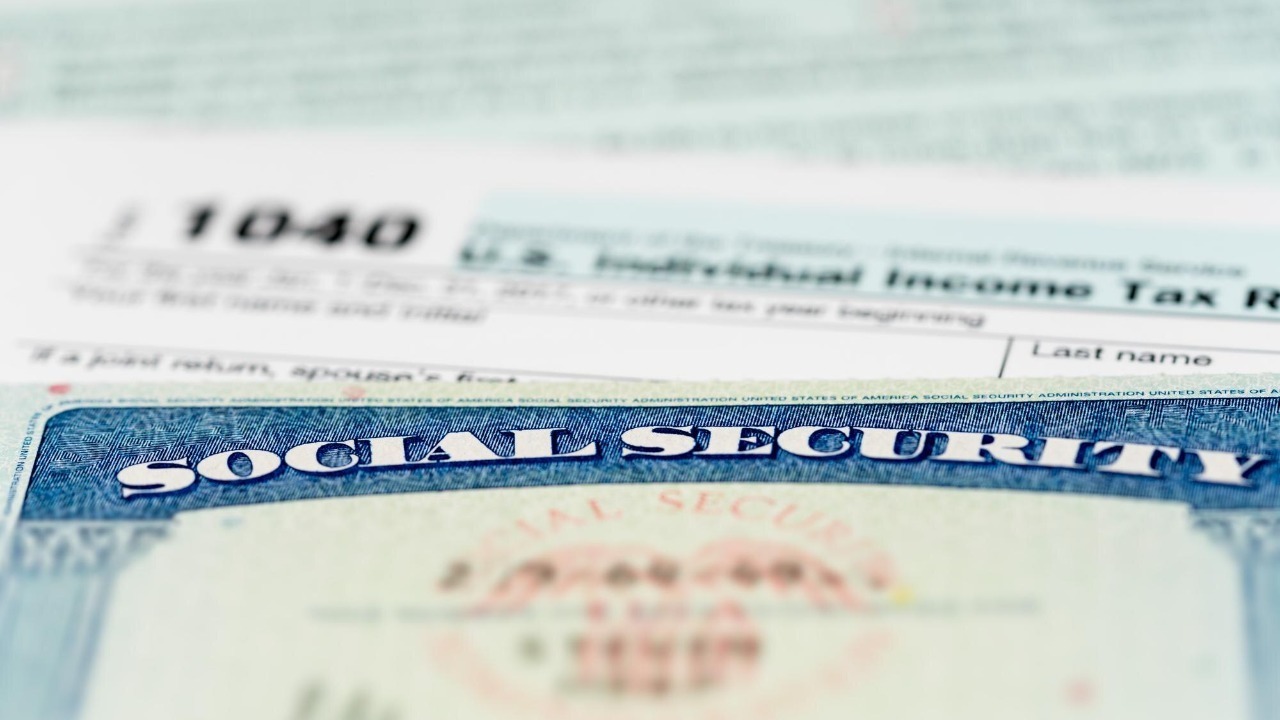
When Congress first decided to tax Social Security benefits, it drew the income lines that decide who pays and wrote fixed dollar figures into the law. Those figures were never linked to inflation, and they have not moved since. Decade after decade, ordinary cost-of-living raises and rising incomes push more retirees across lines that were set for a very different economy. The result is a slow, automatic expansion of who owes tax on benefits that were once taxed for almost no one.
How provisional income decides the tax
Whether benefits are taxed turns on a measure the government calls combined, or provisional, income: adjusted gross income, plus any tax-exempt interest, plus half of the year’s Social Security benefits. The Social Security Administration’s guidance on benefit taxation lays out the tiers. For a single filer, none of the benefit is taxed below $25,000 of provisional income; between $25,000 and $34,000, up to half can be taxed; above $34,000, up to 85 percent becomes taxable. For a married couple filing jointly, the corresponding lines sit at $32,000 and $44,000.
Those four numbers are the whole architecture of the tax. A retiree a few hundred dollars under a threshold pays nothing on that tier; a retiree a few hundred dollars over can see a large share of benefits pulled into taxable income. Because the lines are dollar amounts rather than percentages, exactly where a household falls depends entirely on figures that were fixed long ago.
Free retirement updates: One number can cost or save hundreds a month in retirement. The free Retirement Shield newsletter surfaces the ones worth knowing. Sign up free.
Thresholds frozen since the 1980s
The $25,000 and $32,000 base amounts date to the 1983 Social Security amendments and took effect in 1984, when taxing benefits was designed to reach only higher-income recipients. The upper tier, taxing as much as 85 percent of benefits above $34,000 and $44,000, was added in 1993. In the decades since, none of those numbers has been adjusted for inflation. Social Security’s own research office has documented that the base amounts were set as fixed thresholds rather than indexed values, a design choice that guaranteed the tax would reach further over time.
The contrast with the rest of the benefit is sharp. The monthly benefit itself rises with a cost-of-living adjustment nearly every year, and much of the tax code, including standard deductions and bracket boundaries, is indexed to inflation. The Social Security taxation thresholds are a rare corner of federal tax law left deliberately, and permanently, still.
Why more retirees cross the line each year
Frozen thresholds interact with rising benefits in a predictable way. Each annual cost-of-living increase lifts a retiree’s benefit and, with it, the provisional-income figure, while the lines those figures are measured against stay put. A household that fell just under $25,000 or $32,000 a few years ago can drift over it through cost-of-living raises alone, without any real gain in buying power. The Internal Revenue Service worksheet for figuring taxable benefits applies the same unchanging base amounts every filing season, so the arithmetic quietly captures a larger group of retirees over time.
What was originally pitched as a tax on comparatively affluent beneficiaries now reaches a substantial and growing share of ordinary retirees, including many who would not consider themselves well off. The mechanism is not a new law or a rate increase; it is the simple effect of holding dollar thresholds constant while incomes and benefits climb around them.
What retirees can control around the thresholds
Because provisional income drives the outcome, the levers that matter are the ones that move that figure. Withdrawals from traditional IRAs and 401(k) accounts count toward provisional income, so the timing of those distributions can nudge a household above or below a threshold in a given year. Tax-exempt municipal-bond interest, often assumed to be invisible, is added back into the provisional-income calculation and can push benefits into the taxable range. Roth withdrawals, by contrast, generally do not count, which is part of why the sequence and source of retirement withdrawals can change the tax on benefits even when total spending stays the same.
None of that changes the underlying reality that the thresholds themselves are fixed and, absent a change in law, will keep pulling more benefits into taxation with every passing year. Retirees planning distributions, weighing a Roth conversion, or timing the sale of an asset are effectively planning around lines that were drawn in 1984 and 1993 and never redrawn. Understanding that those numbers do not move, while nearly everything around them does, is the starting point for keeping more of a benefit that was earned over a working lifetime.
This article was produced with AI assistance and reviewed by The Financial Wire editorial team.
More Financial Reading
- What really happens to your joint savings account when you die?
- Bank statements: how long to keep them and when to toss them