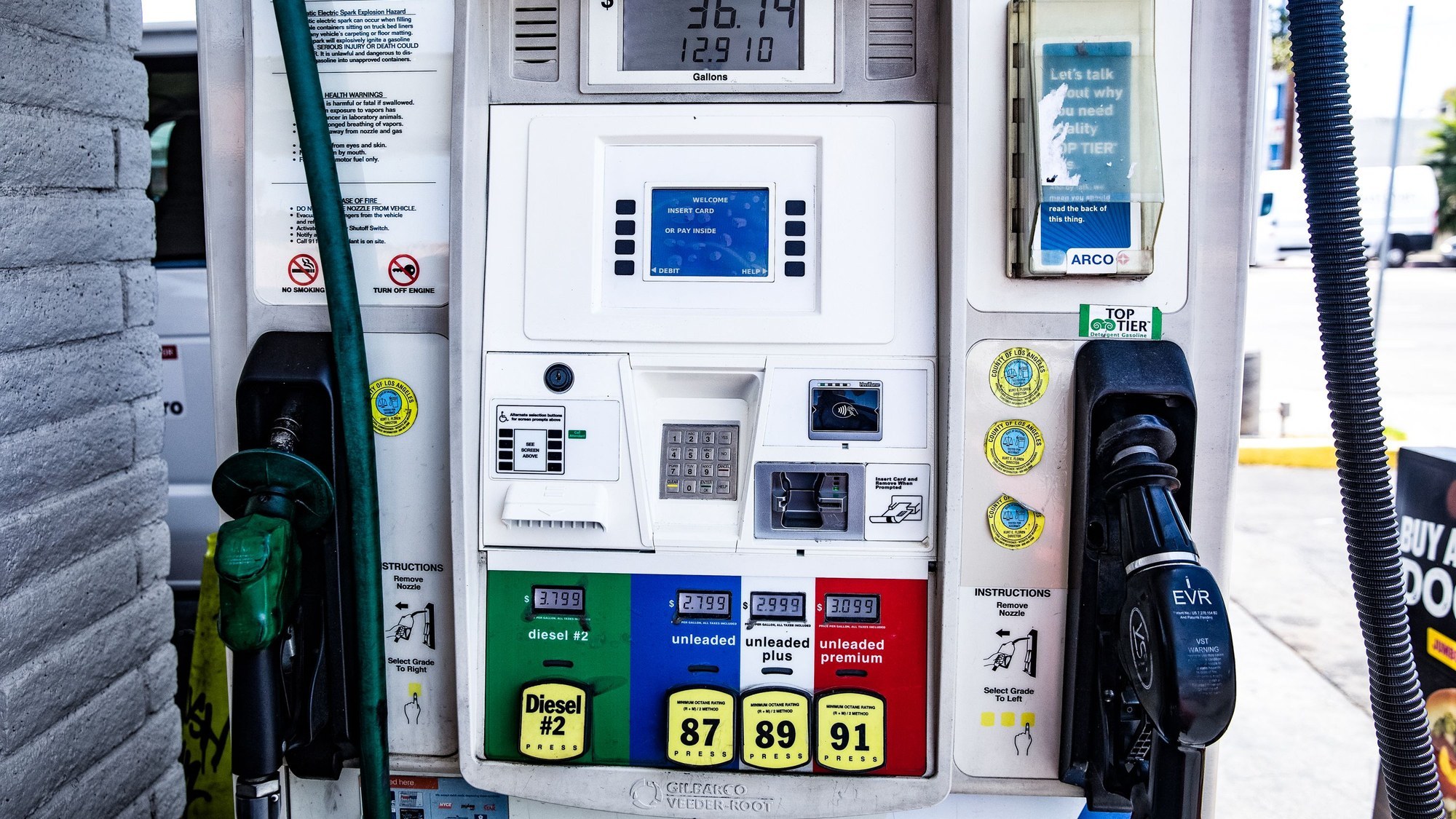
The IRS will not penalize anyone who sells dyed diesel for highway use, or uses it on the highway, from October 1 through December 31, 2026. The agency announced the relief on October 14, following President Trump’s October 5 executive order, which says restricted global diesel supply has led to rising prices. The break covers penalties, not the fuel tax itself.
What the dyed diesel penalty break covers
Under IRS release IR-2026-122, the agency will not impose penalties tied to the excise tax on dyed diesel sold for use or used in diesel-powered vehicles on highways nationwide. The covered penalties include those for missing semimonthly tax deposits and for failing to keep adequate records.
Dyed diesel normally carries no excise tax when it is used for exempt purposes such as farming. It becomes taxable if it is sold for highway use or burned to power a vehicle on the highway. The retail seller is generally liable, or the vehicle operator when the fuel was not bought at retail.
Anyone who sells dyed diesel for highway use or runs it on the highway falls under the relief. Taxpayers do not need to keep records to substantiate their eligibility, and sellers and distributors are not required to investigate or document where the dyed fuel ends up.
Retirement deadlines, in your inbox: Miss an enrollment or claim deadline and the money can be gone. Join the Retirement Money Brief and we’ll send you our 2026 Government Check Reality Tracker as a welcome gift.
Get the Brief + the check tracker →
We may earn a commission from links on this page.
The October 5 order behind it
President Trump signed Executive Order 14435, “Emergency Tax Relief on Diesel Fuel,” on October 5. The order states that “restricted global diesel supply has led to rising prices” and says farmers and truckers have been especially hard hit. Its stated purpose is to defer certain diesel fuel tax payment obligations and provide penalty relief.
It told Treasury to determine within five days whether it could defer payment of certain diesel excise taxes incurred from October 5 through December 31, 2026, without penalties or interest. It also told the IRS to announce it will not impose certain penalties on dyed diesel sold or used on highways during that period.
The order reaches beyond the IRS. The Transportation Department’s motor carrier safety agency is to coordinate with states, industry and labor while continuing existing compliance enforcement. The Agriculture Department is to help make sure dyed diesel reaches farmers in high-demand areas, and the White House is to encourage states to adopt matching policies.
The order also asks Treasury to explore legislation that would eliminate the deferred amounts, and to assess and publicly announce how the IRS should use its fuel inspection and sampling resources during the relief period.
The excise tax has not been erased
The IRS says it expects to issue guidance on postponing payment of the taxes imposed on diesel under sections 4041(a)(1)(A) and 4041(b)(1)(B) of the tax code. It also says it will explore ways to eliminate the obligation to pay deferred amounts. Later guidance will explain how the relief applies to Form 720 and other forms.
The law firm Holland & Knight wrote that “importantly, the announcement does not eliminate the excise tax itself.” In its client analysis, the firm doubts Treasury has the authority to erase the tax, because section 7508A covers only time-limited relief from penalties, interest and additions to tax.
The firm also questions the practical effect. It says the order seems aimed at agricultural and commercial users, and that retail sale of dyed diesel has little supporting infrastructure. For context, section 6715(a) carries penalties of up to $1,000 for dyed fuel used for a non-exempt purpose when the person knew or had reason to know. The IRS release gives no dollar amounts.
One date detail separates the two documents. The IRS says its relief is retroactive to October 1. The executive order’s own relief period begins October 5, according to the firm. Both end December 31, 2026, and the IRS has not said what happens to deferred taxes after that date.
State fuel taxes and notices
The IRS relief applies only to federal tax. It does not touch state fuel taxes or state penalties. The IRS says many states, but not all, have provided similar relief, and it tells taxpayers to check with their state agencies for the rules where they buy or sell fuel.
During the relief period the IRS suspends ordinary collection and enforcement procedures on this fuel, has reassigned its Fuel Compliance Officers and says no federal inspections of on-road dyed fuel use will take place. That is a pause in enforcement for these months, not a change in what the tax law requires.
Taxpayers who believe they qualify but still receive a penalty notice should follow the notice’s instructions or contact the IRS. New guidance on the deferral is expected, and the IRS newsroom is where the agency posts its releases.
The order’s stated concern is price. A penalty break lowers the compliance risk for people who sell or use dyed diesel on the road, but neither the executive order nor the IRS sets a pump price or promises one will fall.
Which programs cover a household’s heating and energy bills?
The IRS break changes penalties for people who sell or burn dyed diesel on the highway. It does nothing for a household paying more for energy, and the programs that do help with heating and other costs must be applied for.
This turns the question from diesel penalties to household costs. The Benefits Checklist scans 11 benefit programs, including SNAP, heating help and weatherization assistance, and it lays out the 2026 income limits next to a 50-state phone directory of the offices that take applications.
Run the 10-minute benefits scan, heating help included, in one checklist →
More Financial Reading
- 21 Ways to Stretch a $2,087 Social Security Check
- 15 Places to Find Your Share of the $4.25 Billion States Give Back
- The New $6,000 Senior Deduction and 14 More Tax Moves for Retirees
This article was produced with AI assistance and edited for accuracy against the sources linked above.