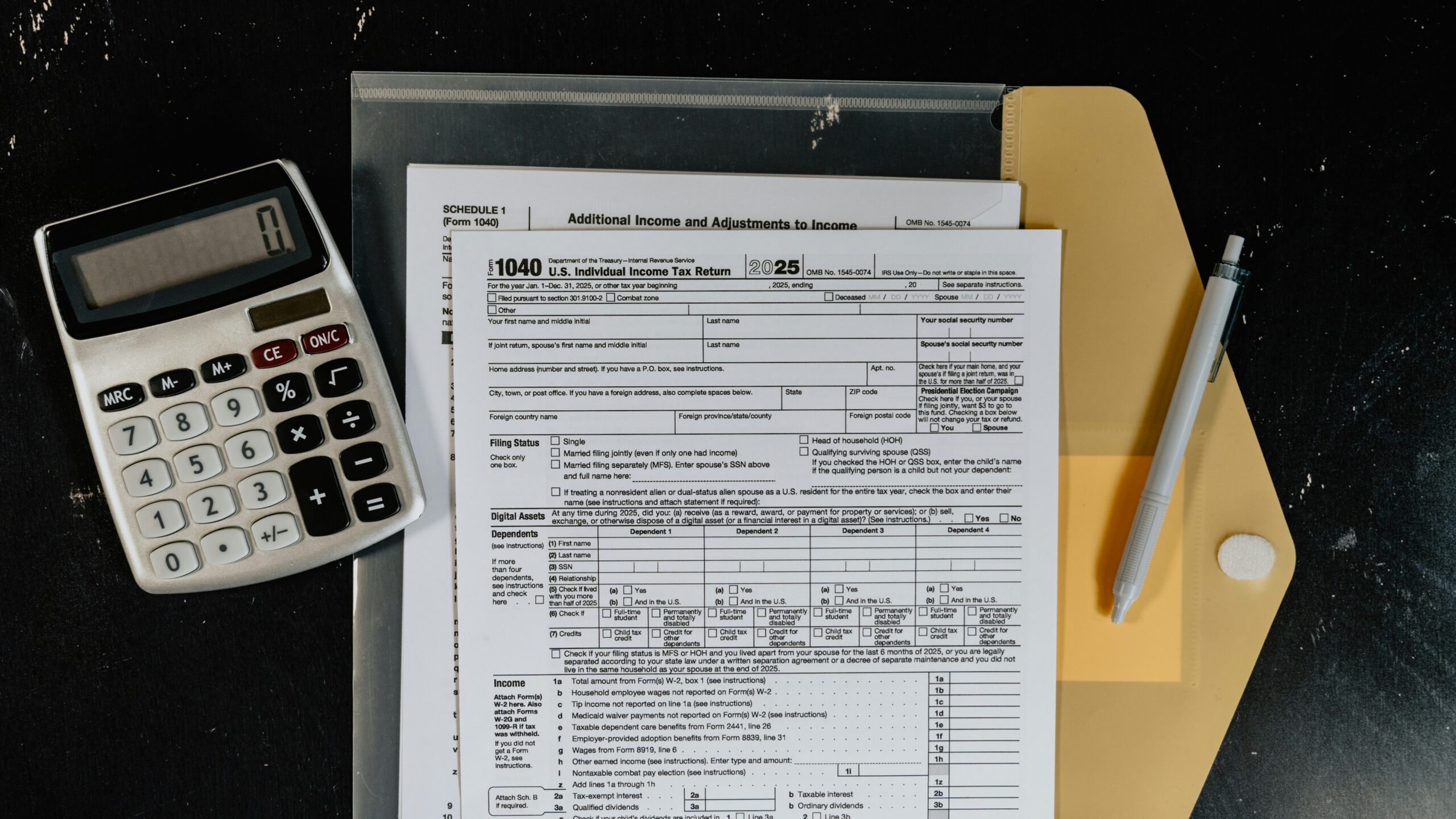
Roughly 830,000 federal tax refunds are sitting in limbo this filing season, held by the IRS because the banking information on those returns was missing, wrong, or rejected by a financial institution. If yours is one of them, you probably already have a letter in hand: a CP53E notice telling you the agency approved your refund but could not deliver it electronically. You now have 30 days from the date on that notice to fix the problem. Miss the window, and the IRS will mail a paper check, but not for another six weeks.
For families counting on that money to cover rent, a car repair, or a medical bill, a delay that stretches into late spring or summer is not an inconvenience. It is a crisis. And the problem is not a glitch. The CP53E notice is a direct result of the federal government’s push to eliminate paper checks entirely, which means filers without reliable direct deposit access will face this same bottleneck next year and beyond.
Where the 830,000 number comes from
The IRS reported during the 2026 filing season that about one percent of all individual returns triggered a CP53E notice. With more than 80 million returns processed through late March, that one percent works out to an estimated 830,000 frozen refunds. The IRS has not published an exact count, so the figure is an approximation based on the agency’s own percentage and processing totals.
The CP53E notice is not a rejection and not an audit flag. It means the IRS attempted to send your refund electronically and the deposit failed. Common triggers include a closed bank account, a mistyped routing or account number, or filing a return with no direct deposit information at all. Once the notice goes out, the IRS holds the refund and gives the taxpayer 30 days to supply valid account details or formally request a paper check. If neither happens, the agency defaults to mailing a check six weeks after the notice date.
Why this is happening now
The freeze is tied to a broader federal policy shift. The U.S. Department of the Treasury set September 30, 2025, as its target date to end most federal paper check disbursements, and the IRS followed with its own plan to phase out paper refund checks for individual taxpayers on the same timeline. The agency cited the higher risk that paper checks are lost, stolen, altered, or delayed compared with electronic deposits.
As of spring 2026, that transition is actively underway, and the CP53E notice is one of its most visible consequences. The IRS has not publicly clarified whether the September 2025 cutoff is being enforced across the board or whether informal extensions remain in place for certain categories of filers.
The agency is right that electronic delivery is faster and safer on the merits: for e-filed returns with no errors, direct deposit refunds typically arrive within 21 days of filing, while paper checks have always taken longer and carry more risk of being lost in transit or stolen from mailboxes.
What to do if you received a CP53E notice
The clock starts on the date printed on your notice, not the day it arrives in your mailbox. Here is what the IRS says you should do:
- Update your bank account information. Follow the instructions on the notice to provide a valid routing and account number. You can do this online through your IRS account at irs.gov/account or by calling the number listed on the notice. Prepaid debit cards that accept direct deposits and have a routing number can also work.
- Request a paper check exception. If you do not have a bank account or cannot use direct deposit, the notice explains how to request that the IRS mail a check instead. You must make this request within the 30-day window.
- Track your refund status. Use the IRS “Where’s My Refund?” tool at irs.gov/refunds or the IRS2Go mobile app to check whether your refund has been released.
- Do not ignore the notice. If you take no action within 30 days, the IRS will eventually send a paper check, but the six-week wait starts from the notice date, not from the end of the 30-day window. That means total delays can stretch well beyond two months from your original filing date.
The IRS Taxpayer Advocate Service has confirmed that the CP53E is a legitimate notice and not a scam. If you are unsure whether a letter you received is real, you can verify it through the IRS notice lookup page or by calling the Taxpayer Advocate at 877-777-4778.
Who gets hit hardest
The IRS has not released a breakdown of CP53E notices by state, income level, or age group. That gap matters because the filers most likely to lack direct deposit overlap heavily with the populations that depend most on their refunds.
According to the FDIC’s 2023 National Survey of Unbanked and Underbanked Households, about 4.2 percent of U.S. households have no bank account at all. Those households skew lower-income, younger, and disproportionately Black and Hispanic. Many of these same filers rely on refunds boosted by the Earned Income Tax Credit as a financial lifeline in the first months of the year.
Advocacy groups have raised concerns that the broader paper-check phase-out could leave behind taxpayers who face real barriers to opening or maintaining a bank account: people in rural areas with limited branch access, individuals flagged in ChexSystems for past banking problems, and people with disabilities that make online banking difficult. For filers in those situations, programs like Bank On, which certifies low-cost, no-overdraft-fee accounts at participating banks and credit unions, may offer a path to direct deposit access, but awareness of those options remains low.
What the IRS still has not disclosed
Several important questions remain unanswered as of late May 2026. The IRS has not said how many of the estimated 830,000 affected taxpayers successfully updated their banking information within the 30-day window versus how many defaulted to a paper check. The agency has not published data on exception requests, approval rates, or the average total delay experienced by CP53E recipients.
The Taxpayer Advocate Service, which typically publishes reports on systemic problems affecting large groups of taxpayers, has not yet released findings specific to the CP53E rollout. That report, when it comes, will likely be the best independent measure of whether the new process is working as intended or creating avoidable hardship for the people least equipped to absorb a weeks-long delay.
How to avoid a frozen refund next filing season
The facts right now are straightforward: if you filed a federal return and your direct deposit information was missing or rejected, your refund is on hold. You have 30 days from the date on your CP53E notice to fix it. If you do not act, you are waiting at least six weeks for a paper check.
But the larger takeaway extends beyond this filing season. As the federal government continues pushing toward all-electronic payments, filers without a working bank account on record should expect this kind of hold to become routine. If you are filing next year, the single most important step you can take to avoid a frozen refund is to have a valid bank account or prepaid card with direct deposit capability ready before you submit your return. The IRS is not going back to paper voluntarily, and the CP53E notice is the clearest signal yet that the old system is being phased out whether every taxpayer is ready or not.