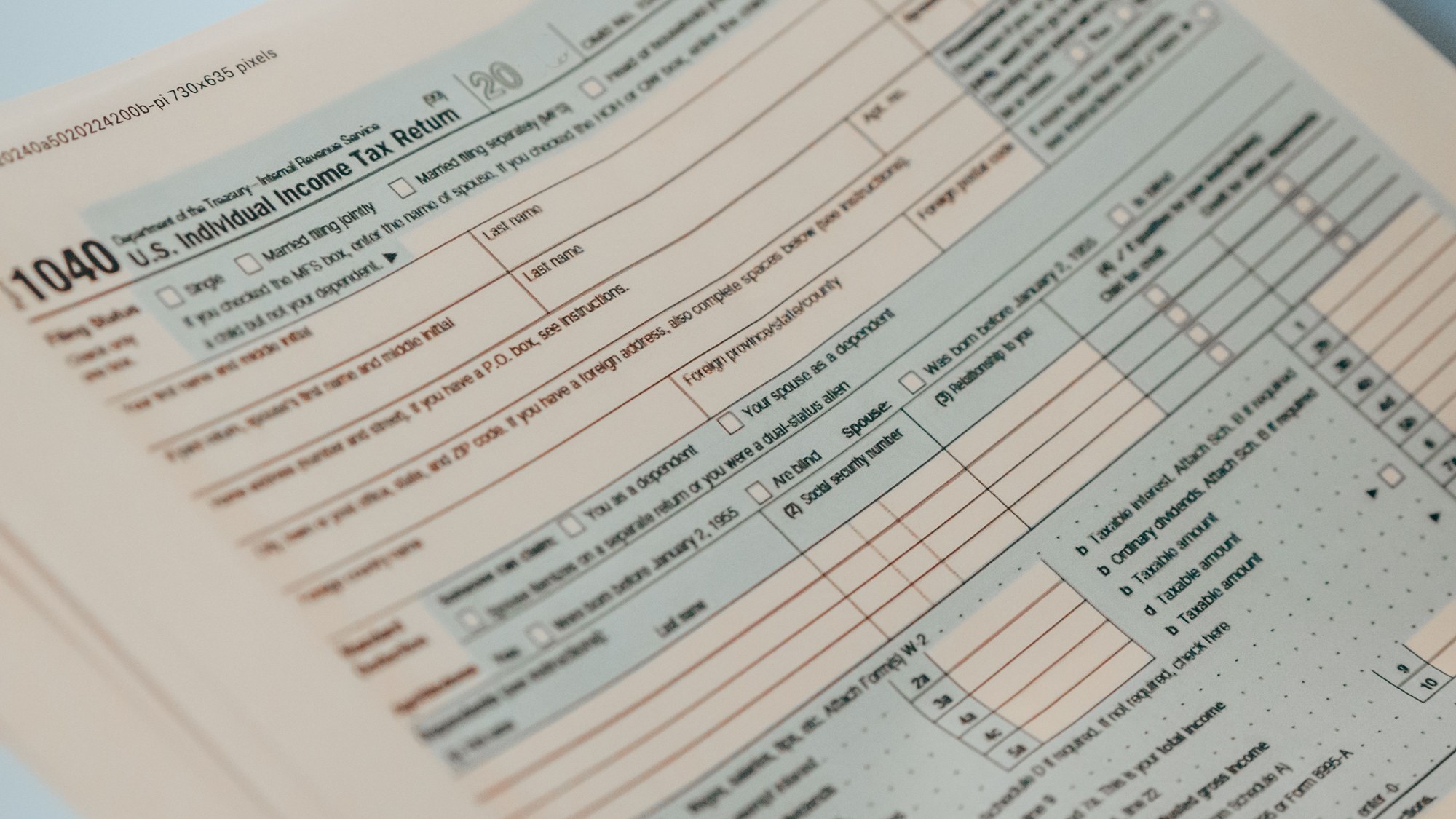
The IRS holds an income tax refund whenever its records show an earlier return is past due, and the money behind an unfiled return has a three-year shelf life that starts at that return’s due date. The two rules sit side by side in the agency’s Topic 153 guidance. Together they punish the year that was skipped twice: first with a frozen refund, then with a closing window.
How a past-due return freezes this year’s refund
The IRS puts the rule in a single sentence in its Topic 153 guidance: it holds income tax refunds in cases where its records show that one or more income tax returns are past due. The agency keeps the money until it receives the missing return or an acceptable reason for not filing.
The hold follows the taxpayer, not the tax year. Someone who filed 2025 on time but never filed an earlier year can see the 2025 refund stop, because the IRS is looking at every return it expects to have on file. Anyone who has watched a refund stall with no notice in the mail has a reason to check whether an older year is missing.
Retirement deadlines, in your inbox: Miss an enrollment or claim deadline and the money can be gone. Join the Retirement Money Brief and we’ll send you our IRS Refund Delay Tracker as a welcome gift.
Get the Brief + the refund tracker →
We may earn a commission from links on this page.
An archived 2017 IRS tax tip shows how this worked in practice. The agency said it could hold 2013 refunds from taxpayers who had not filed for 2014 and 2015, and that held money could also cover overdue child support or past-due federal debts such as student loans. The IRS marks that tip as historical content, but the logic matches the current guidance.
The three-year clock on an unfiled return
Topic 153 also sets the deadline for the money itself: a taxpayer must file the return to claim a refund within 3 years of the return due date. The same limit applies to refunds from withheld tax or estimated payments, and to credits such as the Earned Income Credit. The IRS warns that filers risk losing the refund if they do not file.
Nothing in the guidance softens the limit. A late filer can still send the return, but once the three years pass, the refund it shows falls outside the claim period. For a taxpayer who is owed money, the due date for each skipped year is the date that counts.
A separate IRS rule on the time limit to claim a credit or refund explains how the dates are counted. A return filed before its due date is treated as filed on the due date, and withheld tax and estimated payments are treated as paid on the return due date. Extensions of time to file also stretch the window.
The general rule there is the later of two dates: 3 years from when the return was filed, or 2 years from when the tax was paid. The IRS calls the result the Refund Statute Expiration Date. For a return that was never filed, Topic 153 measures from the due date, which is the date the clock started.
Exceptions that buy more time
A few situations extend the claim period, according to the IRS. A presidentially declared disaster can add up to 1 more year. Combat zone and contingency operation service can add time, with requirements spelled out in Publication 3. A written agreement to extend the assessment period moves the claim deadline to the agreement’s limit plus 6 months.
Losses from bad debts and worthless securities get the longest runway. The IRS says a claim based on one has 7 years from the return due date for that year. Those are narrow cases tied to a specific loss. They do not reopen an ordinary refund from a missed wage-earner return.
Filers who already sent a return can use Form 1040-X to amend it. The IRS says that form can be filed electronically for the current year or the 2 prior tax years, with up to 3 amended returns per tax year. The same claim limits apply to an amended return.
When the IRS files the missing return instead
The agency does not have to wait. Topic 153 says that if a taxpayer fails to file, the IRS may file a substitute return, and that return might not give credit for deductions and exemptions the taxpayer is entitled to. That is the IRS version of a missing year, filed without the taxpayer’s input.
The next step is a Notice of Deficiency, CP3219N, known as the 90-day letter. It proposes a tax assessment, and the taxpayer has 90 days to file a return or petition the Tax Court. The IRS says a taxpayer who received a CP3219N cannot request an extension to file.
Missing records are fixable. The IRS says Form 4506-T, with the box on line 8 checked, gets wage and income information, and Get Transcript can pull a prior-year return or account transcript. Help is available at 800-829-1040, and forms can be ordered at 800-829-3676. VITA and Tax Counseling for the Elderly programs help with preparing a return.
The IRS lists levies on wages or bank accounts and federal tax liens among the actions that can follow. Its advice is to file the past-due return and pay now to limit interest and late payment penalties. The question for anyone with a gap year is which due dates are still inside the three years.
Is an old unfiled return holding up a refund?
A refund tied to a skipped year can be lost once the three-year window after that return’s due date closes, and a past-due return can freeze the refund from a year already filed. The IRS may also file a substitute return that leaves out deductions the taxpayer is owed.
The IRS Refund Recovery Kit includes the 3-year refund deadline, so each skipped year can be set against its own cutoff. Part 6, A Smaller Refund, or None at All, covers the ways a refund shrinks or disappears, and a refund status tracker spreadsheet follows the paperwork.
Set the three-year refund deadline for each skipped year with the recovery kit →
More Financial Reading
- 21 Ways to Stretch a $2,087 Social Security Check
- 15 Places to Find Your Share of the $4.25 Billion States Give Back
- 15 Steps to Stop the Scams That Took $7.7 Billion From Seniors
This article was produced with AI assistance and edited for accuracy against the sources linked above.