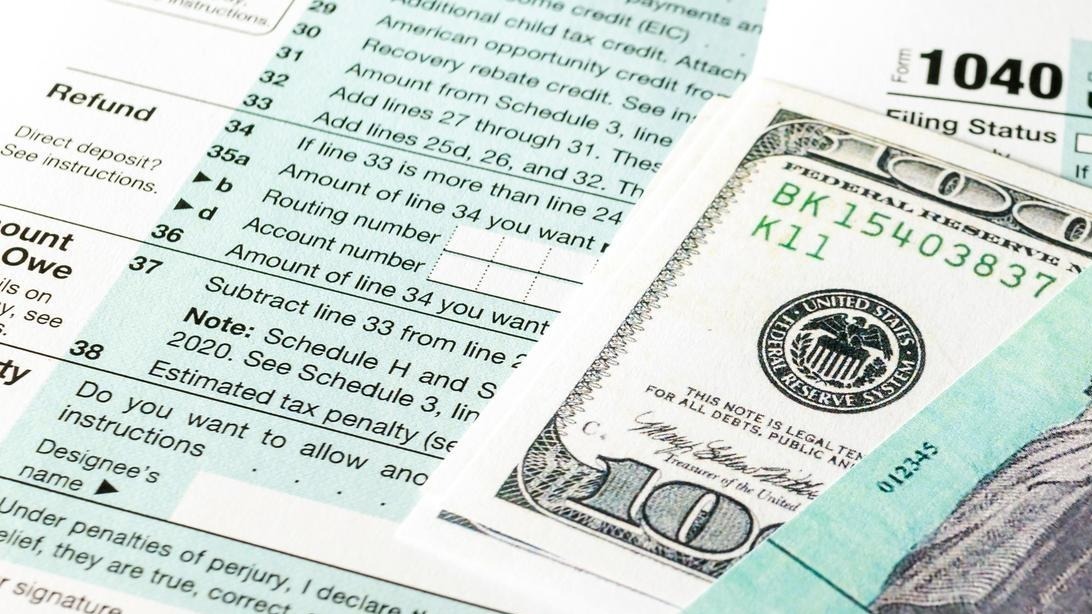
Millions of taxpayers who were hit with failure-to-pay penalties on their 2020 and 2021 federal returns during the pandemic could still be owed money by the IRS, but the window to file a protective refund claim closes on July 10, 2026. With just five days left, anyone who paid penalties or interest during the COVID national disaster period and has not yet submitted a formal claim risks losing that money for good. The agency has already returned $1.2 billion in penalties to 1.6 million taxpayers through automatic relief, yet a separate category of refunds tied to disaster-period timing requires individual action before the deadline passes.
Five days left to claim pandemic penalty refunds
The IRS paused its automated collection reminder notices during the pandemic, leaving many taxpayers unaware they owed additional penalties until bills arrived months or years later. When the agency resumed those notices, it acknowledged the disruption by granting automatic failure-to-pay penalty relief for 2020 and 2021 returns where the assessed tax fell under $100,000 and where initial balance-due notices such as CP14 or CP161 were issued between Feb. 5, 2022 and Dec. 7, 2023, according to IRS guidance. That automatic relief, governed by Notice 2024-7, covered a wide swath of individual and business filers.
But a second, less publicized avenue exists for taxpayers who paid penalties or interest that were assessed during the national COVID disaster period plus 60 days. The National Taxpayer Advocate has urged these filers to submit Form 843 as either a formal or protective claim before the July 10, 2026 cutoff, warning that rights to those refunds expire permanently once the deadline passes. A protective claim preserves a taxpayer’s place in line while legal questions are still being resolved and can be filed even when the exact refund amount is not yet known. There is no public data to support the idea that waiting until the final days improves the odds of success; what matters is filing a complete claim before the statute of limitations closes.
Taxpayers considering a claim should start by confirming whether they were charged failure-to-pay penalties or related interest tied to 2020 or 2021 liabilities during the disaster window. That information appears on IRS account transcripts and on prior balance-due notices. If penalties were assessed and later paid, a Form 843 claim can ask for abatement and refund based on the argument that collection actions were unfairly delayed or distorted by the suspension of notices during the pandemic.
Automatic relief, active litigation, and the Form 843 path
The scale of pandemic penalty relief has been significant. The IRS announced it would waive roughly $1 billion in penalties for individuals and businesses owing back taxes for 2020 or 2021, and separately confirmed that $1.2 billion had already been refunded to 1.6 million taxpayers through its broad-based COVID penalty relief program. Businesses and tax-exempt organizations also qualified under parallel rules tied to the same Notice 2024-7 framework.
A pending federal lawsuit adds another dimension. The case of Kwong v. United States, filed in the Court of Federal Claims, concerns refund claims for penalties and interest assessed during the national COVID disaster period plus 60 days. If the court rules favorably, it could open the door to broader refunds beyond what the IRS has granted through administrative relief. The Taxpayer Advocate Service has specifically cited this litigation as a reason for taxpayers to protect their rights now, rather than waiting to see how the case ultimately turns out.
Form 843 is the primary vehicle for requesting these additional refunds. Taxpayers must identify the specific tax year, type of penalty, and amount at issue, and explain why relief is warranted. For protective claims, the explanation typically references the ongoing litigation or unresolved legal questions and notes that the claim amount may change depending on the final outcome. Claims should be mailed to the IRS service center listed in the Form 843 instructions, and taxpayers are advised to keep proof of mailing in case of later disputes over timeliness.
Because the rules are technical and the documentation requirements strict, many filers may benefit from professional help. Enrolled agents, CPAs, and tax attorneys familiar with IRS procedures can help reconstruct account histories, match penalty assessments to the disaster-period timeline, and frame arguments consistent with existing guidance. However, taxpayers who cannot afford representation can still file on their own; the form is available on the main IRS website, and the Taxpayer Advocate Service has published plain-language explanations of the issues.
With the deadline approaching, the IRS has not announced any extension of the July 10, 2026 date. Taxpayers who suspect they might qualify for relief should not wait for additional announcements or court decisions. Checking the IRS “What’s Hot” section at the newsroom can help confirm whether any last-minute changes emerge, but the safest course is to submit a timely claim now and amend later if needed.
For millions who struggled through the pandemic and quietly paid mounting penalties and interest, these refund opportunities may be the last chance to recoup money that, under evolving legal theories, may never have been owed. Acting before the statute closes is the only way to keep that possibility alive.