The IRS paid out about $13.89 million on false claims for a COVID-era sick and family leave credit, and the North Carolina tax-preparation owner behind them was sentenced to 60 months in prison on October 1. Nejlai Mitchell ran a tax business in Lumberton and Hope Mills. The Justice Department says Mitchell and seven employees filed the false returns.
Five of those employees were sentenced earlier, and none got more than 26 months. The owner’s term is more than twice the longest of theirs.
Five years for the owner, six months for the shortest term
The Justice Department’s October 13 release lists the earlier sentences. Tiffany Moody got 26 months on September 3. Shaneen Ray and Eyoubo McBurney each got 18 months on July 8, and Sylvia Swindell got 16 months the same day. Katrena Stanback got six months on July 9.
Mitchell was convicted of conspiring to prepare false returns that claimed fraudulent refunds based on COVID-19 paid sick and family leave credits. The scheme ran from about April 2022 through May 2023. Prosecutors say about $23.9 million in refunds was claimed, and the IRS paid about $13,890,697 of it.
How the owner pleaded and what the law allows
Mitchell pleaded guilty on June 23, and the Justice Department’s plea announcement named eight preparers in all. Assistant Attorney General Colin M. McDonald of the Justice Department’s National Fraud Enforcement Division said the group “engineered a calculated scheme to enrich themselves by submitting false returns.”
The guilty pleas came in waves. Jeannie Negron and Swindell pleaded on August 20, 2025, and McBurney and Stanback on September 24. Moody and Ray followed on December 9. Whitnee Leach pleaded on May 19, 2026, and Mitchell admitted the conspiracy shortly after. Mitchell and Leach each pleaded to conspiracy and to assisting in the preparation of false returns.
The conspiracy count carries up to five years, and the false-return count up to three. The sentence of 60 months is the five-year ceiling on the conspiracy count alone. U.S. Attorney W. Ellis Boyle of the Eastern District of North Carolina announced the case with McDonald.
Anyone who had a return prepared at an office like this has a fair question to ask. Could a preparer’s fake credit claims come back on the person whose name is on the return? The IRS has an answer, and it does not depend on what happens to the preparer.
Retirement deadlines, in your inbox: Miss an enrollment or claim deadline and the money can be gone. The Retirement Money Brief keeps you ahead of the ones that matter, every weekday.
Get the Retirement Money Brief →
We may earn a commission from links on this page.
What the IRS says about the taxpayer’s side
In a July 2024 fact sheet on false credit claims, the IRS said the sick and family leave credits for self-employed people could be claimed only on 2020 and 2021 returns. They are not available for 2022 or 2023, it said.
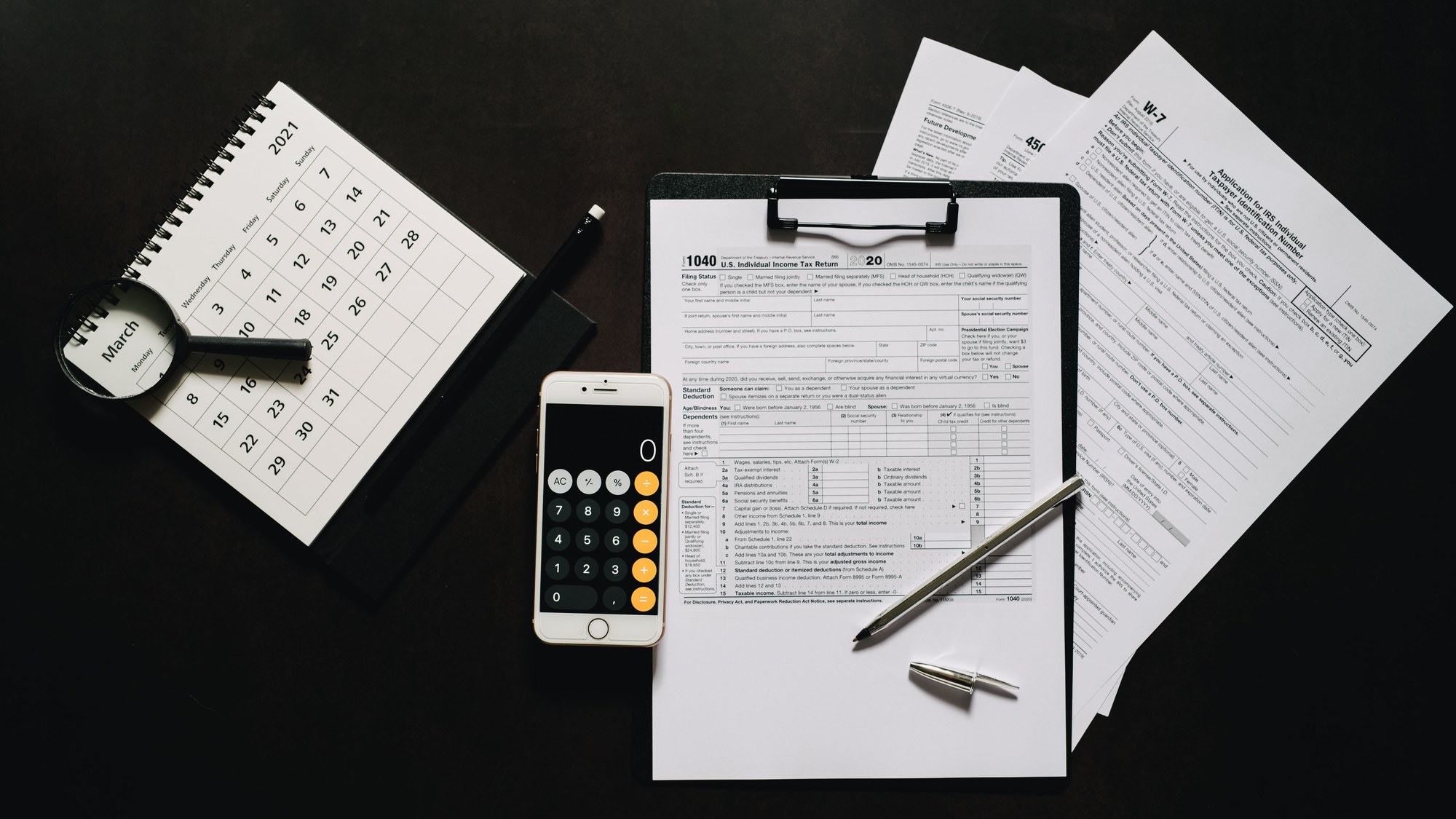
The same fact sheet names two common versions of the fraud. One is a Form 7202 that claims the credit on income earned as a W-2 employee rather than as a self-employed person. The other is a Schedule H listing household employees who never existed. The Justice Department releases on Mitchell do not say which forms the North Carolina returns used.
A false claim can mean a held refund and an audit in which the taxpayer must document eligibility. The tax code adds a $5,000 penalty for each return that claims an improper credit, and each spouse on a joint return can be assessed.
The IRS advises anyone who receives a letter about such a claim to file a complete, accurate return within 30 days of the letter, which may include amended returns for each affected period. It says to follow the instructions in letter 3176C and not to visit a Taxpayer Assistance Center or try to authenticate online or by phone.
One case in a national sweep
The Mitchell sentence is one of the results in the Justice Department’s October 14 roundup of a national tax enforcement surge. The surge ran from early September to October 14 and drew in 35 U.S. Attorneys’ Offices.
The department says the cases involve 76 defendants and an estimated intended loss of more than $490 million. About 39 of the actions were trials, guilty pleas and sentencings, affecting 45 defendants. The other 23 were new charges against 31 defendants.
Attorney General Todd Blanche said in the roundup: “Every dollar stolen through tax fraud is a dollar taken from the American people.” IRS Criminal Investigation Chief Jarod Koopman said the cases send a message that people who deliberately cheat the tax system “will be held accountable.”
What the releases do not say about the clients
None of the three releases says how many people had returns filed through Mitchell’s offices, or whether any of them have been contacted by the IRS. They also list no sentence yet for office manager Whitnee Leach or for Jeannie Negron, who pleaded guilty in August 2025.
That leaves the reader’s question where the IRS put it. If a return carried a credit that should not have been there, the letter’s 30-day clock is the one that counts, and the fix is an accurate return filed on time.
Did a preparer claim a COVID sick-leave credit on your return?
A false credit that a preparer put on a return does not stay the preparer’s problem. The IRS can hold the refund, open an audit and assess $5,000 for each return, and the letter that starts the 30-day clock is easy to misread.
The IRS Refund Recovery Kit includes a notice decoder and a refund status tracker spreadsheet. Its Part 6, A Smaller Refund, or None at All, covers the cases where a refund is reduced or held, so the letter and the dollar amount can be read together.
Read the IRS notice and log the refund in the IRS Refund Recovery Kit tracker →
More Financial Reading
- 21 Ways to Stretch a $2,087 Social Security Check
- 15 Places to Find Your Share of the $4.25 Billion States Give Back
- The New $6,000 Senior Deduction and 14 More Tax Moves for Retirees
This article was produced with the assistance of AI and reviewed by the editorial team.