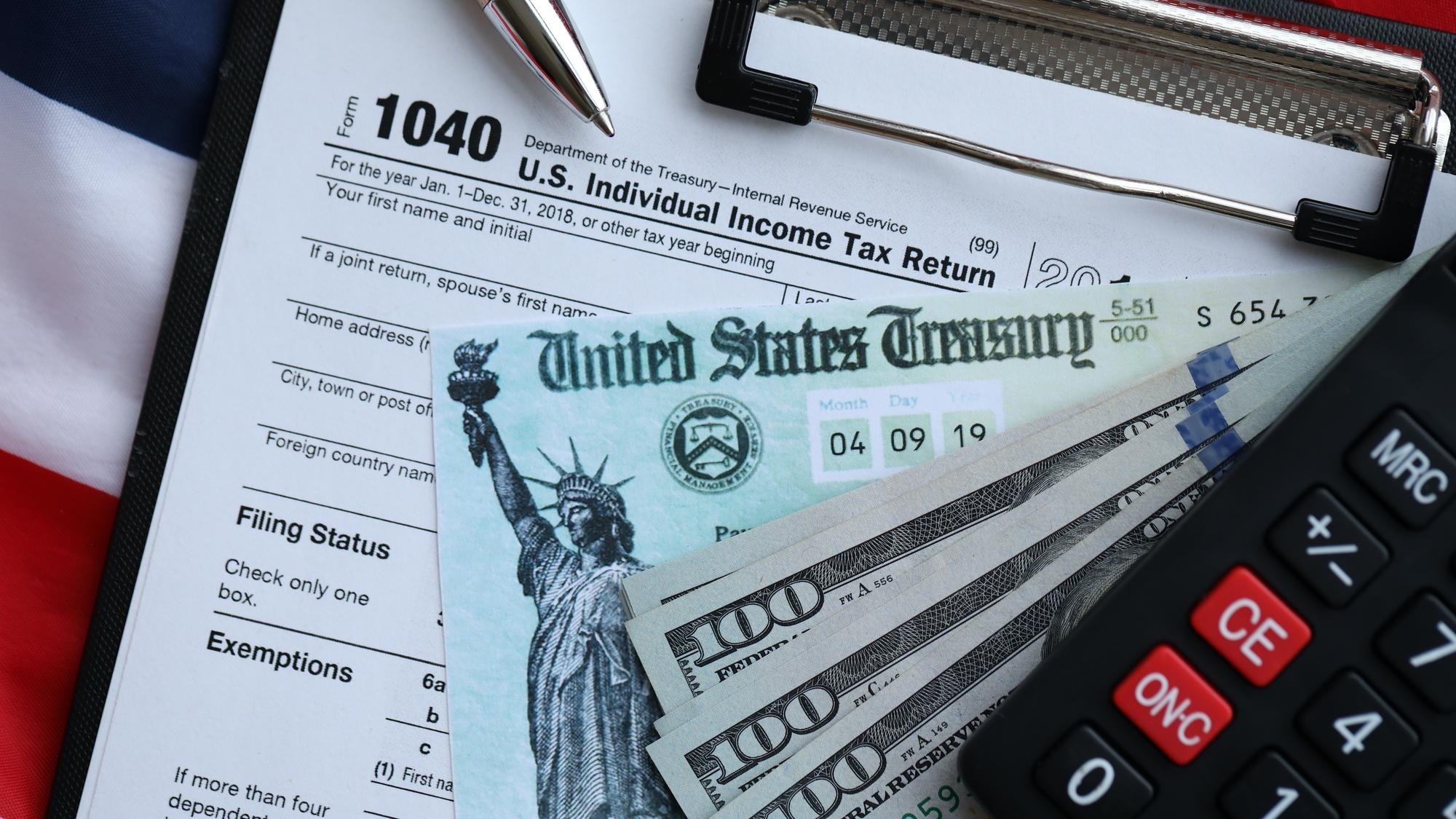
If you filed your 2025 federal tax return without direct deposit information and you’ve been waiting weeks for a refund check that never arrived, there is a reason: the check is not coming. Starting with the 2026 filing season, the IRS no longer mails paper refund checks to most individual taxpayers. Instead, filers without bank details on file receive a notice called the CP53E, which gives them 30 days to provide direct deposit information through the agency’s online portal. The CP53E is a relatively new notice, introduced as part of the broader transition away from paper checks. As stated on the IRS CP53E page, if that deadline passes without a response, a paper check may eventually follow, but not for at least six more weeks.
That means a filer expecting a $3,200 refund in February could still be waiting in May or June 2026 if they missed the notice or could not respond in time.
The change traces back to a federal policy shift that took effect on September 30, 2025, when the IRS and the U.S. Treasury Department officially stopped issuing paper refund checks for most individual filers. This is the first full filing season under those rules, and the disruption is hitting hardest among people who were never warned it was coming.
How the CP53E notice works
When the IRS processes a return and finds no direct deposit information on file, it no longer defaults to a paper check. Instead, it mails a CP53E notice to the taxpayer’s last known address. The notice instructs the filer to log into or create an IRS Online Account and enter a bank routing number and account number, or provide details for a qualifying prepaid debit card.
A critical detail that catches people off guard: calling the IRS will not fix this. According to the agency’s own CP53E guidance, IRS employees are not authorized to add or change bank account information over the phone. The only option is the online portal.
The 30-day clock starts when the notice is mailed, not when you open it. If you have moved and have not updated your address, you may never see the notice at all, and the deadline will expire without your knowledge.
Why the IRS ended paper refund checks
This was not a unilateral IRS decision. The U.S. Treasury Department ended paper check disbursements for most federal payments as of September 30, 2025, covering tax refunds, benefit payments, and vendor contracts. The stated rationale: check fraud losses across U.S. financial institutions have surged in recent years, with the Treasury citing mail theft of paper checks as a growing vulnerability. Electronic payments are faster, cheaper to process, and harder to intercept.
The legal authority sits in 31 CFR Part 208, a federal regulation that generally requires recipients of federal payments to receive funds electronically. Hardship waivers exist for individuals with disabilities, people without access to a bank or credit union, and those in areas with limited financial infrastructure. But the regulation places the burden on the individual to request the waiver, not on the government to identify who qualifies.
For the roughly 90% of individual filers who already use direct deposit, the transition is invisible. For everyone else, it represents a significant new obstacle between filing a return and receiving a refund.
Who is getting hit hardest
The burden falls unevenly. According to the FDIC’s 2023 National Survey of Unbanked and Underbanked Households, roughly 4.5% of U.S. households, about 5.6 million, had no bank account at all. The unbanked rate was significantly higher among Black households (10.4%), Hispanic households (8.4%), and households earning less than $30,000 a year (12.2%). These are the filers most likely to have no direct deposit information on file and least likely to have easy access to the online portal.
Older adults face a compounding problem. Many still file paper returns, are less likely to have an IRS Online Account, and may lack the internet access or digital comfort needed to navigate identity verification through ID.me within a 30-day window. Rural communities with limited broadband and few nearby bank branches add another layer.
Taxpayers who file with an Individual Taxpayer Identification Number (ITIN) rather than a Social Security Number face a distinct barrier. Some financial institutions will not open accounts for ITIN holders, which makes satisfying the direct deposit requirement especially difficult. ITIN filers in this situation should first check whether a local credit union or community development financial institution (CDFI) offers accounts to ITIN holders, as many do. If no banking option is available, ITIN filers can call the Bureau of the Fiscal Service at 1-855-290-1117 to ask about requesting a hardship waiver under 31 CFR Part 208. The Taxpayer Advocate Service (1-877-777-4778) can also assist ITIN filers who are experiencing refund delays due to the direct deposit requirement.
To put the scale in perspective: the IRS issued more than 100 million individual refunds during the 2025 filing season, according to the agency’s own filing season statistics. Even a small percentage of those going to filers without direct deposit represents millions of potentially delayed refunds. The IRS has not published data on how many CP53E notices it has sent during the 2026 season, how many refunds are currently held, or how many filers have responded within the 30-day window.
What to do if your refund is frozen
If you filed your return and your refund has not arrived, work through these steps:
Check for the CP53E notice. It arrives by mail to the address on your most recent return. If you have moved, file a Form 8822 to update your address. You can also check your refund status using the Where’s My Refund tool on IRS.gov, which may indicate whether your refund is being held.
Log into your IRS Online Account immediately. You will need to verify your identity through ID.me or IRS credentials. Once inside, you can enter your bank routing and account numbers or a qualifying prepaid card. Do not wait. The 30-day deadline is measured from the date the notice was mailed.
If you do not have a bank account, open one now. The FDIC’s Bank On initiative certifies low-cost and no-fee accounts at banks and credit unions nationwide, specifically designed for people outside the traditional banking system. Many of these accounts have no minimum balance requirements and no overdraft fees. Prepaid debit cards that accept direct deposit are also accepted by the IRS.
If you have not filed yet, add direct deposit when you file. The IRS Free File program offers free tax preparation software for eligible filers and walks you through entering direct deposit information during the process. Setting up direct deposit at the time of filing is the simplest way to avoid a CP53E hold entirely.
If you truly cannot receive electronic payments, request a hardship waiver. Under 31 CFR Part 208, you can request an exemption by calling the Treasury’s Bureau of the Fiscal Service at 1-855-290-1117. A representative can walk you through the waiver request process. Be prepared to explain and document your circumstances, including why you cannot open a bank account or use a prepaid card. Published guidance on approval rates and processing times is limited, so file the request as early as possible.
Get free help. The IRS’s Volunteer Income Tax Assistance (VITA) program offers in-person help at thousands of locations, and the Taxpayer Advocate Service (1-877-777-4778) can intervene on behalf of filers who are experiencing financial hardship because of a delayed refund.
A policy gap that still needs answers
Reducing check fraud and cutting costs are legitimate goals. The Treasury’s push toward electronic payments addresses a real and well-documented vulnerability in the paper check system. But the success of any transition like this depends on whether the people most affected can actually make the switch, and right now, the public record has significant holes.
The IRS has not reported CP53E response rates, waiver processing times, or the number of refunds stuck beyond the six-week fallback window. The Taxpayer Advocate Service, which publishes an annual report to Congress identifying the most serious problems facing taxpayers, has not yet released a detailed assessment of the 2026 filing season’s impact on unbanked and underbanked filers. Neither has the Government Accountability Office.
What is clear right now: if you are expecting a federal tax refund and you do not have direct deposit set up with the IRS, your money is not on its way. Check your mail. Check your IRS Online Account. And do not assume a paper check will arrive on its own. That system is gone, and the new one requires you to act first.