About 13.6 percent of the Additional Child Tax Credit dollars the IRS paid out in fiscal year 2025 were improper, a rate that works out to an estimated $4.5 billion, according to a Treasury inspector general report issued July 27, 2026. The credit is the refundable portion of the Child Tax Credit, and the estimate makes it the second-largest source of improper payments among the four refundable credits examined. The finding concerns payments that were wrong, whether through error or ineligibility, and the report does not call the figure fraud.
The assessment comes from the Treasury Inspector General for Tax Administration (TIGTA) and covers a fiscal year that has already ended, so it reads as a published audit result rather than a fresh event. The sections below separate what the report says about this credit from what it says about the Earned Income Tax Credit.
A $4.5 billion subset of the $28.1 billion total
In TIGTA report 2026-400-039, titled “Assessment of Fiscal Year 2025 Compliance With Improper Payment Reporting Requirements,” the Additional Child Tax Credit is measured against about $33.4 billion in payments. The 13.6 percent rate applied to that base produces the $4.5 billion estimate. The report on Oversight.gov places it inside a combined estimate of about $28.1 billion for four credits, and the other pieces are $21.1 billion for the Earned Income Tax Credit, $1.5 billion for the American Opportunity Tax Credit and $0.8 billion for the Net Premium Tax Credit.
The $4.5 billion is therefore about 16 percent of the combined estimate and is not additional to it. The figure is an IRS estimate that TIGTA assessed, and the report is signed by Diana M. Tengesdal, Deputy Inspector General for Audit.
A lower rate than the EITC, still above the legal line
The ACTC rate of 13.6 percent is well under the 32.7 percent the report records for the EITC, which is the main reason its dollar total is a fraction of the larger credit. It is still above the benchmark. The Payment Integrity Information Act sets a threshold of less than 10 percent, and the report treats the ACTC as exceeding it.
For all four credits, the report says the IRS would have to cut improper payments by $17.5 billion to reach the 10 percent mark. The ACTC alone would need its rate to fall by roughly a quarter to clear the line, based on the report’s own 13.6 percent figure.
How the Additional Child Tax Credit is built
The mechanics differ from the EITC, which is tied to earnings tiers and a children-count schedule. The IRS describes the Additional Child Tax Credit as the refundable part of the Child Tax Credit, available when the credit exceeds a taxpayer’s tax liability. The IRS Child Tax Credit page says it is worth up to $1,700 per qualifying child for tax year 2025, calculated as 15 percent of earned income above $2,500.
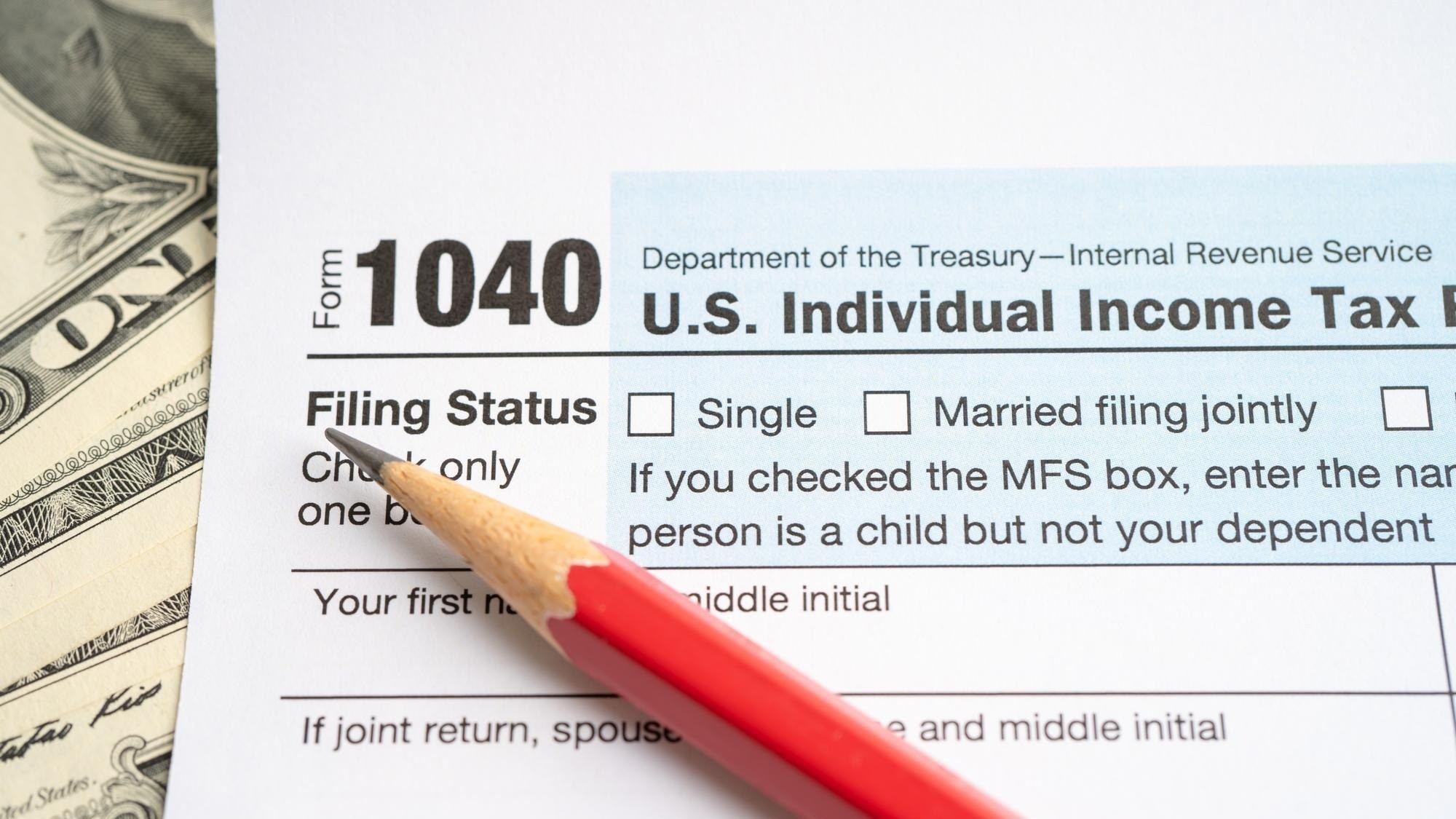
The child must be under 17 at the end of the year, be claimed as a dependent, and hold a Social Security number issued before the due date of the return. The credit is claimed on Schedule 8812 attached to Form 1040. Because the credit follows the dependent claim, the central question is who is entitled to claim a particular child, and that is the part the report says the IRS cannot verify at filing.
Relationship checks and duplicate dependent claims
On root causes the report is general rather than program-specific. It describes complex statutory eligibility rules and an inability to verify taxpayer-provided information, and for the ACTC it singles out that relationship eligibility criteria cannot be verified at the time of filing. It also ties noncompliance to duplicate dependent claims, where two returns claim the same child.
That is a different failure from the one that dominates the EITC discussion. The EITC turns on residency and household arrangements across several tests plus an earned income calculation. The ACTC error pattern in the report centers on whether the claimed child is a dependent of the person claiming, and whether anyone else has claimed the same child. The IRS told TIGTA it has proposed a legislative change aimed at duplicate dependent claims.
Examination coverage and what the IRS has proposed
As with the EITC, the IRS looks at a small share of claims before money goes out. The report says pre-refund and post-refund examinations covered less than 1 percent of ACTC claims. The agency has favored outreach and education over more examinations, and the report records pre-refund examinations falling by about 70 percent between fiscal 2023 and 2025 for the EITC.
Math error authority, which lets the IRS correct certain mistakes without a full audit, is narrow. The report says it covers mathematical errors, taxpayer identification numbers and amounts over statutory limits, and cannot systematically test a refundable credit claim for ineligibility. Over fiscal 2023 to 2025 it stopped approximately $7.6 billion in refundable credit claims across all the credits.
TIGTA’s five recommendations apply to all the refundable credits, and the IRS agreed with each. They call for legislative proposals to simplify and streamline eligibility, identifying where additional correctable error authority is warranted, working with external partners and data to verify eligibility systematically, using funding for more social media outreach, and monitoring how well paid social media performs.
What disallowance triggers for later returns
A claim that is reduced or disallowed carries a procedural consequence. The IRS says Form 8862, “Information To Claim Certain Credits After Disallowance,” must be attached to a later return when the Child Tax Credit or the Additional Child Tax Credit was reduced or disallowed for any reason other than a math or clerical error, described on the IRS Form 8862 page.
The figure in the headline therefore has a precise meaning: an estimated $4.5 billion in improper Additional Child Tax Credit payments in fiscal 2025, a 13.6 percent rate on $33.4 billion in payments, as assessed in TIGTA report 2026-400-039 of July 27, 2026.
Notices, offsets and refund traces for delayed IRS refunds
Anyone who files a return can end up waiting on a refund that is held, reduced by an offset or sent but never received. Each of those outcomes comes with its own IRS notice and its own next step, and they are easy to mix up.
The IRS Refund Recovery Kit is a 13-page kit with a notice decoder, the Form 3911 refund-trace steps and a refund status tracker spreadsheet.
Open the notice decoder and tracker spreadsheet in The IRS Refund Recovery Kit →
AI tools helped draft this report summary, and the figures were matched against the TIGTA report and the IRS pages linked above.