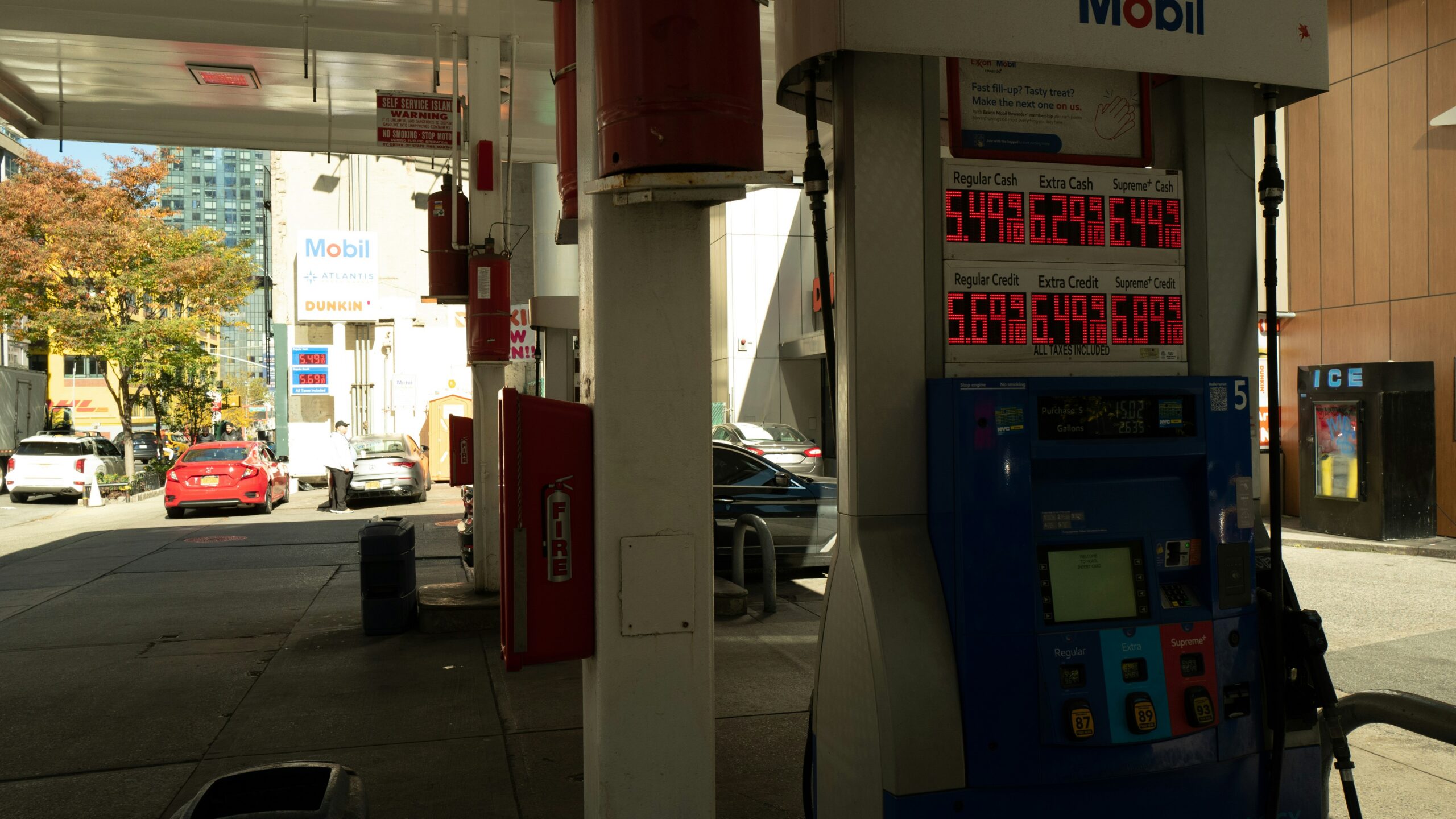
American drivers are catching a break at the pump after months of record-setting fuel costs. The national average price for a gallon of regular gasoline has dropped below $4 for the first time since March, according to AAA data. That 20 percent decline from the June 14 peak of $5.02 per gallon has not, however, reached every state equally. California motorists still face an average of $5.71, a gap that points to persistent regional forces keeping West Coast prices elevated even as the broader market cools.
A 20 percent drop and why California missed it
The national average crossing below $4 carried real psychological weight for households that had watched prices climb without pause through the spring. Prices peaked at $5.02 on June 14 and then fell steadily, shedding roughly a dollar per gallon in under two months. For a driver filling a 15-gallon tank, that translates to about $15 in savings per trip compared to the summer high.
California’s $5.71 average, though, tells a different story. The state’s refining sector operates under tighter environmental fuel-blend requirements than most of the country, and its refineries run closer to full capacity with less slack to absorb disruptions. When scheduled maintenance or unplanned outages take a facility offline, the state cannot simply import replacement supply from Gulf Coast refineries the way Texas or Florida can. Pipeline connections to California are limited, and shipping fuel by tanker from overseas or from other domestic ports adds cost and time. Those structural constraints act as a floor under California prices even when crude oil benchmarks soften nationally.
The result is a price premium that persists regardless of what happens to national inventories. Crude oil is a global commodity, and its price affects every state. But the last mile of turning crude into finished gasoline and delivering it to a neighborhood station depends on local refinery output, distribution networks, and state taxes. California layers on some of the highest fuel taxes and carbon-program costs in the country, widening the spread further.
Federal data and what drove the national pullback
The federal energy agency tracked the full arc of the price cycle, reporting that retail gasoline prices rose through the summer months but ended 2022 lower than where they started the year. Analysts there linked the swing to shifts in crude oil costs, inventory levels, and broader market uncertainty, all of which showed up in its weekly petroleum statistics and related market commentary.
Even after the decline, pump prices remained roughly 25 percent higher than a year earlier, according to the Associated Press, citing AAA figures. That year-over-year gap means the relief is partial. Families spending more on fuel have less to direct toward groceries, rent, or discretionary purchases, and the cumulative effect of months of elevated prices does not vanish the moment the national average dips below a round number.
The AAA data that major wire services and federal analysts rely on serves as a standard benchmark for retail fuel tracking. Drawing from tens of thousands of stations nationwide, the figures smooth out day-to-day volatility and highlight regional differences that can be masked by a single national average. Those differences have grown more pronounced as refinery outages, weather events, and state-level policies interact with global crude markets.
Why regional gaps persist
Several layers of cost help explain why California and a handful of Western states sit far above the national mean. First is geography: the West Coast is relatively isolated from the dense refinery and pipeline network that links the Gulf Coast, Midwest, and East Coast. When demand surges or a local refinery goes down, replacement barrels must travel farther, often by ship, which adds transportation and insurance costs.
Second, the state’s fuel specifications are more stringent than in most of the country. California requires a cleaner-burning gasoline blend to meet air-quality goals, and not every refinery elsewhere is configured to produce it. That limits the number of potential suppliers and leaves the market more vulnerable when one of the in-state plants experiences trouble. In a tight market, even a modest disruption can push wholesale prices sharply higher.
Taxes and environmental surcharges add another layer. While every driver pays federal gasoline tax, California stacks on state excise taxes, sales taxes, and fees tied to its cap-and-trade and low-carbon fuel programs. Each component may be small on its own, but together they help explain why prices in the state can remain well above $5 even after crude oil benchmarks and national averages retreat.
What lower prices mean for drivers and the economy
For households outside the highest-cost regions, the slide from just over $5 to under $4 is meaningful. Commuters who drive long distances see direct savings each week, and businesses that rely on vehicle fleets can reallocate some fuel spending to wages, maintenance, or expansion. Over time, lower gasoline costs can ease headline inflation and temper expectations of future price increases.
Yet the uneven nature of the relief underscores how energy costs are shaped as much by local infrastructure and policy choices as by global oil markets. California’s experience illustrates that even when the national narrative turns toward falling prices, millions of drivers can remain stuck with some of the highest fuel bills in the country. Until the state adds more flexibility to its fuel supply system or rethinks the cumulative burden of taxes and fees, its motorists are likely to keep paying a premium at the pump, even in periods that feel like a reprieve almost everywhere else.