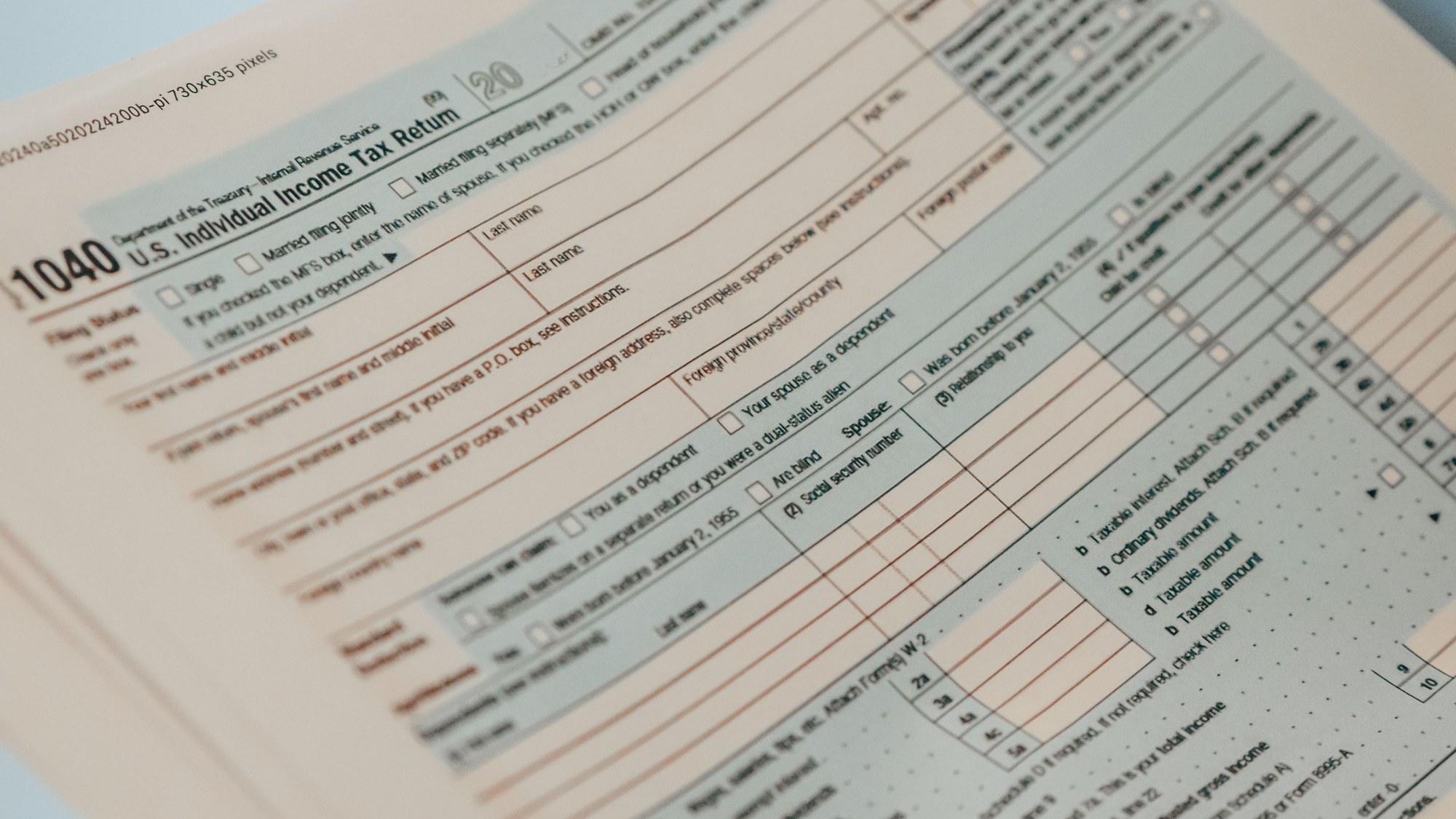
A single parent earning $20,000 a year and raising two children will see roughly $2,625 in refundable Child Tax Credit payments when filing a 2025 return. That money arrives as a direct deposit or paper check even if the parent owes zero federal income tax. The scenario became possible under permanent law on July 4, 2025, when the One Big Beautiful Bill Act (OBBBA) was signed as Public Law 119-21. The statute sets the Child Tax Credit at $2,200 per qualifying child under 17 and makes up to $1,700 of that amount refundable, turning the credit into a reliable annual cash transfer for millions of lower-income households.
As of June 2026, the first full filing season under the new rules has wrapped up, and the credit’s real-world reach is coming into sharper focus.
What the law actually changed
Before the OBBBA, the Child Tax Credit stood at $2,000 per child, with up to $1,700 of that refundable under parameters carried forward from the 2017 Tax Cuts and Jobs Act. Those provisions were scheduled to expire after 2025. The new law bumps the total credit to $2,200, keeps the refundable ceiling at $1,700, and makes both figures permanent. Families no longer need to wonder whether Congress will extend or expand the credit from one year to the next.
The credit still works the same way mechanically. Parents claim it on Form 1040, and it phases out for higher earners: the credit shrinks by $50 for every $1,000 of modified adjusted gross income above $200,000 for single filers and $400,000 for married couples filing jointly. Those thresholds are unchanged from prior law. Children must meet age, relationship, residency, and Social Security number requirements, all of which carry over from existing rules outlined in IRS guidance on the OBBBA.
One detail worth noting: neither the $2,200 credit nor the $1,700 refundable cap is indexed to inflation. The amounts are fixed in nominal dollars, which means their purchasing power will erode over time unless Congress acts to adjust them.
For context, the 2021 American Rescue Plan temporarily raised the credit to $3,000 per child ages 6 through 17 and $3,600 per child under 6, making the entire amount refundable and delivering half of it through monthly advance payments. That expansion expired after one year. The OBBBA’s $2,200 credit is smaller than the pandemic-era version but far more durable: it is written into the tax code permanently, not tethered to an expiration date.
How the refundable portion works, and who it leaves short
The $1,700 refundable share does not arrive as a flat payment to every family. It phases in based on earned income. Under the formula, the refundable credit equals 15 percent of a household’s earnings above $2,500. That calculation determines how much of the $1,700-per-child refundable cap a family can actually claim.
Here is what that looks like at different income levels for a family with two qualifying children (maximum refundable credit: $3,400):
- $5,000 in earnings: 15% of ($5,000 minus $2,500) = $375. The family receives $375 total, split across both children, well below the $3,400 maximum.
- $15,000 in earnings: 15% of ($15,000 minus $2,500) = $1,875. The family receives $1,875, still short of the $3,400 cap.
- $25,000 in earnings: 15% of ($25,000 minus $2,500) = $3,375. The family receives $3,375, nearly the full amount.
- $30,000 in earnings: The phase-in calculation exceeds $3,400, so the family receives the full $3,400 refundable credit.
This design is intentional: it ties the benefit to work. But it also means the families with the lowest incomes, often those whose children face the steepest material hardship, receive the smallest payments. Research from Brookings Institution analysts has flagged this tension, noting that the phase-in structure limits full access for households earning below roughly $25,000. A parent working part-time at minimum wage may qualify for only a fraction of the advertised refund. Families with no earned income at all receive nothing.
Whether that trade-off meaningfully reduces child poverty depends on how many families fall into that lowest-income band and how much the partial credit actually changes their financial picture. Neither the Joint Committee on Taxation nor the Treasury Department has released updated distributional tables reflecting the enacted law, so analysts are still working from pre-enactment estimates.
What the first filing season revealed
The spring 2026 filing season was the first full test of the new credit. Tax preparers across the country processed returns under the $2,200 ceiling, and early reports from practitioner groups suggest the transition was relatively smooth for families already accustomed to claiming the credit. The higher amount showed up on updated IRS forms and in commercial tax software without major disruption.
But comprehensive data on uptake remains scarce. The IRS has not yet published statistics on how many returns claimed the refundable portion, what the average refund amount was, or whether error rates differed from prior years. Those numbers typically appear in IRS data releases later in the calendar year. Until they arrive, any claim about how many families received the full $1,700 refundable amount per child, or how many were limited by the phase-in, is an estimate rather than a measured outcome.
Administrative questions also linger. Employers and payroll providers spent much of late 2025 and early 2026 adjusting withholding tables to reflect the new credit, and some workers may have experienced over- or under-withholding during the transition. Tax professionals have reported anecdotal cases of confusion, but no systematic accounting of implementation problems has surfaced publicly.
What families should know heading into 2026 returns
For parents preparing to file 2026 returns next spring, the rules are now settled. The $2,200 credit and $1,700 refundable cap are permanent and do not require congressional renewal. Here is what matters most:
- Eligibility: Each qualifying child must be under 17 at the end of the tax year, must have a valid Social Security number, and must meet relationship and residency tests. The child must have lived with the taxpayer for more than half the year.
- Income limits: The credit begins phasing out at $200,000 of modified adjusted gross income for single filers and $400,000 for joint filers. Families above those thresholds still receive a partial credit until it phases out entirely.
- Refundability: Up to $1,700 per child is refundable, but the actual refund depends on earned income. Families with very low earnings will receive less than the maximum.
- No advance payments: Unlike the 2021 expansion, the OBBBA credit is claimed entirely on the annual tax return. There are no monthly checks.
- SSN requirement: The child’s Social Security number must be issued by the due date of the return (including extensions). Children with Individual Taxpayer Identification Numbers (ITINs) do not qualify for the credit.
Families who did not file a return in prior years because their income was too low to trigger a filing requirement should still consider filing. The refundable credit is available only to those who submit a return, and free filing options through the IRS Free File program and Volunteer Income Tax Assistance (VITA) sites can help.
Where the credit falls short and what comes next
The OBBBA’s permanent Child Tax Credit is a genuine expansion: $200 more per child than prior law, locked in without an expiration date. For the broad middle of the income distribution, families earning between roughly $30,000 and $200,000, the credit will deliver its full $2,200 value with little complication.
The harder question is whether the credit reaches far enough down the income ladder. The phase-in structure means the poorest working families still receive less than the headline amount, and families with no earned income receive nothing. Advocacy groups and some members of Congress have already signaled interest in revisiting the design if early IRS data confirms that millions of children in the lowest-income households are receiving only partial benefits.
Then there is the inflation problem. Because the $2,200 and $1,700 figures are not adjusted for rising prices, the credit’s real value will shrink each year. At a sustained 3 percent annual inflation rate, the credit would lose roughly a quarter of its purchasing power within a decade. Congress could address this with indexing legislation, but no such proposal has advanced as of June 2026.
The law itself is clear and permanent. The open questions are about outcomes: how many families actually claim the full refundable amount, whether the fixed dollar figures hold their value over time, and whether Congress will act again if the data show the credit is falling short of its stated goal of supporting working families raising children. Those answers will emerge as IRS filing statistics accumulate and as researchers compare post-enactment poverty measures against the pre-OBBBA baseline.