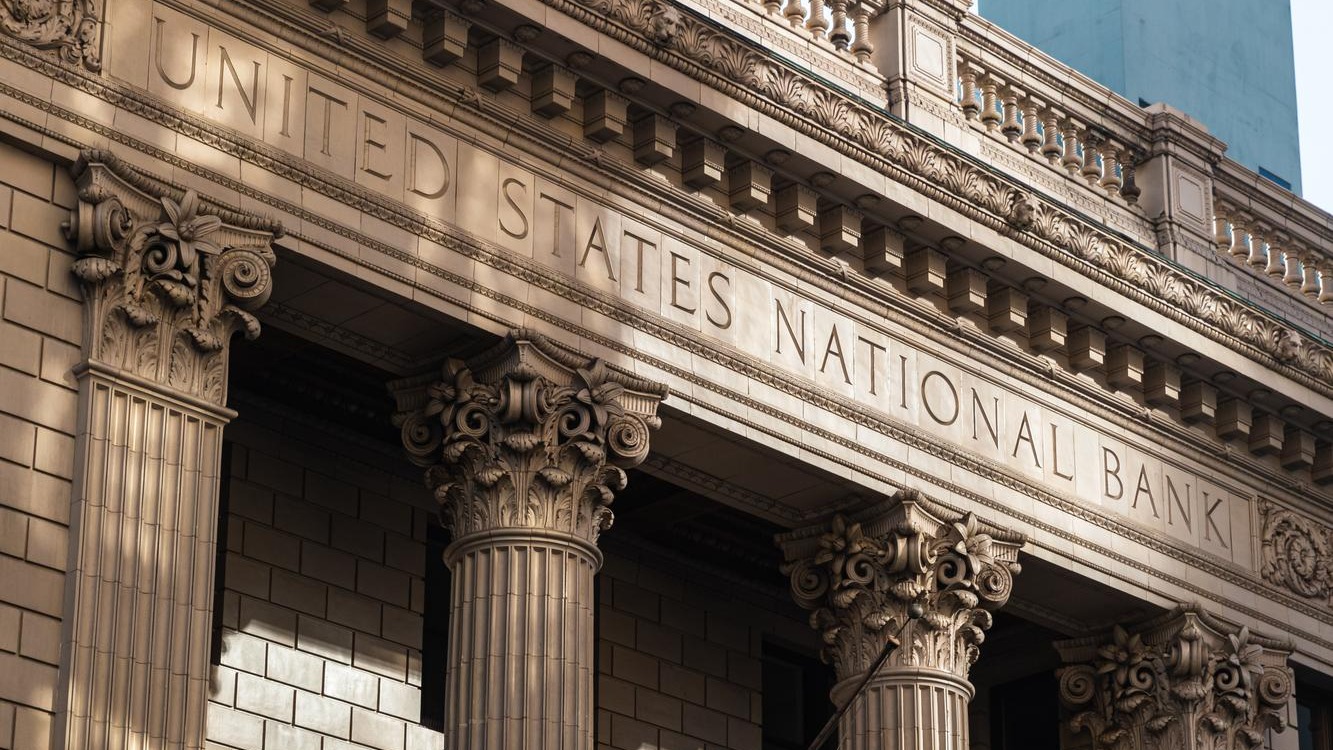
In 31 days, a pair of interim final actions from the Office of the Comptroller of the Currency will give every national bank and federal savings association explicit authority to charge interchange fees on the full amount of a card transaction. The orders override Illinois’s Interchange Fee Prohibition Act, the first state law to ban interchange on tips and sales tax, and by extension block any similar state-level cap that exists or might follow.
For restaurant owners, grocery stores, and other merchants in Illinois who had been counting on lower processing costs, the anticipated savings disappear. For the banking industry, billions of dollars in annual interchange revenue remain untouched. And for state legislators across the country who had been drafting copycat bills, the message from Washington is blunt: federal authority controls how nationally chartered banks price card payments.
Two actions, one message
The OCC published two companion measures in late April 2026, designed to work in tandem. The first is an interim final rule amending 12 CFR 7.4002, detailed in OCC Bulletin 2026-18. It clarifies that national banks may “assess, collect, or receive” non-interest charges and fees, and it names interchange fees from payment card activity specifically. The rule states this authority holds even when fee amounts are set by or in consultation with third parties such as Visa or Mastercard.
That language closes a legal gray area that had persisted for years: whether a bank’s federally granted fee authority covers amounts determined partly by card networks rather than by the bank itself. The OCC’s position is unambiguous.
The second action is an interim final order preempting the Illinois IFPA, outlined in OCC Bulletin 2026-17. Under that order, OCC-regulated institutions are not required to comply with IFPA provisions that prohibit interchange fees on portions of transactions attributable to tips and sales tax. The OCC concluded that federal law preempts those restrictions for the banks and federal savings associations it supervises.
In its public release tying the two actions together, the agency called the Illinois law “complex and unworkable.” That is not a minor technical objection. It signals the OCC views state-by-state interchange regulation as fundamentally incompatible with how national banks process millions of card transactions across jurisdictions every day.
How interchange actually works on a restaurant bill
Consider a $100 dinner in Illinois. The food and drinks total $80. Sales tax adds $8. The diner leaves a $12 tip. Under the IFPA, interchange fees would have applied only to the $80 subtotal. Assuming a credit card interchange rate in the range of 1.5% to 2.5%, which varies by card type, network, and merchant category, that would shave roughly 30 to 50 cents off the merchant’s processing cost on a single transaction. Multiply that across thousands of transactions per month, and the savings for a busy restaurant become real money.
Under the OCC’s preemption, national banks and their network partners can charge interchange on the full $100. For the restaurant owner, the anticipated relief vanishes. For the issuing bank, per-transaction revenue stays intact.
This math is why the Illinois law attracted national attention when it passed. Merchant trade groups, including the National Restaurant Association and the Merchants Payments Coalition, saw it as a template for other states. Card networks and bank lobbies saw it as a threat to a fee structure that generates an estimated $170 billion-plus in global interchange revenue annually, with U.S. merchants bearing the largest share.
The legal foundation
The Federal Register entry for the preemption order carries the citation 91 FR 23150, filed as document 2026-08341. That filing contains the OCC’s full preemption analysis, the statutory provisions invoked, and the categories of institutions covered. It is the formal record that bank compliance teams will use to adjust operations.
Both actions were published as interim final measures, meaning they take effect without the standard notice-and-comment rulemaking period that typically precedes major regulatory changes. The OCC will accept public comments after the fact, but the rules are operative in the meantime. That procedural shortcut reflects the agency’s judgment that banks needed immediate clarity, particularly those that had already begun building systems to comply with the IFPA before its enforcement date.
The scope of the OCC’s authority matters here. The agency supervises national banks and federal savings associations. State-chartered banks, regulated by state banking departments and the FDIC or Federal Reserve, are not directly covered by these orders. Credit unions, overseen by the National Credit Union Administration, fall outside the OCC’s jurisdiction entirely. The result is a regulatory split: a national bank operating in Illinois can charge interchange on tips and tax, while a state-chartered competitor across the street may still be bound by the IFPA. That asymmetry could create competitive distortions, particularly for community banks that hold state charters.
Where the Durbin Amendment fits
Federal interchange regulation already has a significant precedent in the Durbin Amendment, enacted as part of the 2010 Dodd-Frank Act. That provision directed the Federal Reserve to cap debit card interchange fees for banks with more than $10 billion in assets. The current regulated cap stands at 21 cents plus 5 basis points per transaction, with a 1-cent fraud-prevention adjustment. The Fed proposed lowering that cap in October 2023, but the effort has been mired in litigation and has not taken effect.
The Durbin Amendment applies to debit transactions specifically and is enforced by the Fed, not the OCC. The OCC’s new rule and preemption order address a different question: whether states can impose their own limits on interchange, including on credit card transactions, which no federal law currently caps. By asserting broad preemption, the OCC is telling states that the federal regulatory framework, not a patchwork of state statutes, governs how nationally chartered banks set and collect these fees.
What Illinois and other states might do next
As of late May 2026, no public statement or legal filing from the Illinois Attorney General or state banking regulators has appeared in response to the preemption order. Whether Illinois will challenge the OCC’s authority in federal court, pursue legislative workarounds, or accept the outcome remains an open question. The IFPA was designed to protect consumers and merchants from interchange charges on non-sale portions of transactions, and state officials may view the preemption as a direct assault on that policy goal.
A legal challenge would likely center on the scope of the National Bank Act’s preemption provisions and whether the OCC exceeded its interpretive authority. Courts have historically given federal banking regulators significant deference on preemption questions. But the Supreme Court’s June 2024 decision in Loper Bright Enterprises v. Raimondo, which overturned the longstanding Chevron doctrine, reshapes that landscape. Without Chevron deference, a reviewing court would assess the OCC’s statutory interpretation independently rather than automatically deferring to the agency’s reading. That shift could give Illinois a stronger foothold to argue the preemption overreaches.
Other states watching from the sidelines have reason to recalibrate. Legislators in several states had floated proposals to limit interchange on specific transaction components or cap rates outright. The OCC’s sweeping language about operational complexity, combined with its willingness to bypass the slower notice-and-comment process, sends a clear signal: the agency will move quickly to block state laws it considers incompatible with national bank operations.
Who absorbs the cost now
For merchants in Illinois, the practical effect depends on how card networks and acquiring banks adjust their fee schedules. If Visa and Mastercard restore or maintain interchange on the full ticket amount, including tax and tip, merchants will see higher processing costs than they had anticipated under the IFPA. Whether those costs translate into higher menu prices, reduced tip suggestions on payment terminals, or thinner margins will vary by business size and sector.
Banks that had already invested in system changes to comply with the Illinois law face a different kind of cost. Reconfiguring point-of-sale routing rules, card network settings, and merchant disclosures takes time and money. Some institutions may keep IFPA-compliant systems in place for state-chartered competitors or as a hedge against future litigation. Others will revert to standard interchange practices as quickly as possible.
Consumer advocates and merchant trade groups are unlikely to let the issue rest. Congressional interest in interchange reform has resurfaced repeatedly, most recently through the bipartisan Credit Card Competition Act introduced by Senators Dick Durbin and Roger Marshall. That bill, which would require large credit card-issuing banks to offer merchants a choice of at least two networks for routing transactions, has not advanced out of committee. But the OCC’s preemption could renew momentum by sharpening the argument that without congressional action, neither states nor merchants have meaningful leverage over how interchange fees are set.
The regulatory landscape, as of June 2026, is clearer but more centralized. National banks have explicit federal backing to charge interchange without regard to state-imposed limits. State-chartered institutions do not. And for every merchant, bank compliance officer, and state legislator tracking this issue, the 31-day countdown to the effective date is the only deadline that matters right now.