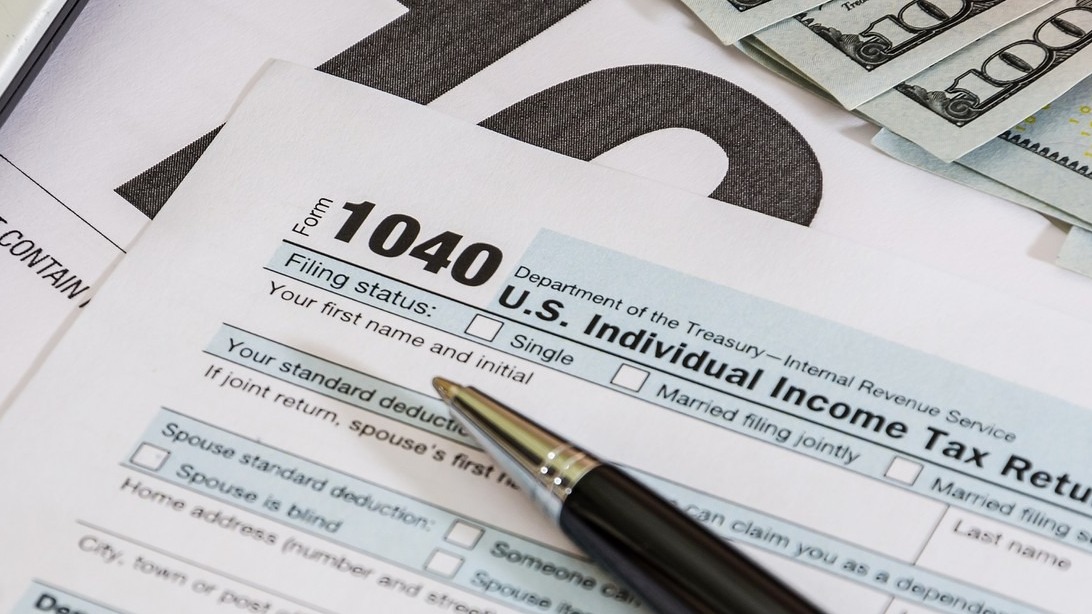
Taxpayers in high-tax states just got their biggest federal relief in nearly a decade. The cap on state and local tax deductions has quadrupled from the $10,000 ceiling that applied under the 2017 Tax Cuts and Jobs Act, jumping to $40,400 for tax year 2026. The increase, enacted through P.L. 119-21, is temporary: the cap rises by 1 percent each year through 2029 before snapping back to $10,000 in 2030, setting up a four-year window that will reshape how millions of filers approach itemized deductions.
How the $40,400 SALT cap changes 2026 tax planning
The new ceiling applies to the combined total of state and local income, sales, and property taxes that an individual can deduct on Schedule A. For married couples filing separately, the limit is $20,200. Those figures come directly from an IRS corrections notice for the 2026 Form 1040-ES, which replaced an earlier draft that contained an error. The corrected guidance also spells out a phase-down for higher earners: the deduction shrinks for single filers with modified adjusted gross income above $505,000 and for married-filing-separately filers above $252,500, but it never drops below $10,000 or $5,000 respectively.
That phase-down creates a sharp incentive cliff. A household earning $500,000 in a state like New Jersey or California, where combined property and income taxes routinely exceed $40,000, can now deduct the full amount. A household earning $550,000 faces a 30 percent reduction that erodes much of the benefit. The practical result is that taxpayers with incomes just below the threshold gain the most, while those well above it see a smaller change from the old $10,000 cap.
For many upper-middle-income homeowners, the higher limit will push their total itemized deductions above the standard deduction for the first time since 2017. Mortgage interest, charitable contributions, and medical expenses will suddenly matter again in year-end planning, because the larger SALT line item makes it easier for all those deductions combined to exceed the standard amount. Tax professionals expect a resurgence of “bunching” strategies, in which filers accelerate charitable gifts or property-tax payments into a single year to maximize the benefit of itemizing under the higher cap.
The interaction with state-level workarounds will also shift. Over the past several years, many states adopted pass-through entity taxes that let owners of S corporations and partnerships effectively bypass the $10,000 limit at the business level. With a $40,400 cap available on individual returns, some owners may find those structures less critical or may revisit whether entity-level elections still make sense compared with simply claiming a larger personal deduction.
The statutory clock behind the 1-percent annual escalator
The fourfold increase did not happen overnight. P.L. 119-21, Section 70120, set the base at $40,000 for tax year 2025 and built in a 1 percent annual escalator through 2029, as confirmed in the preliminary tax code for 26 U.S.C. Section 164. That means the cap rises to roughly $40,800 in 2027, $41,200 in 2028, and $41,600 in 2029 before resetting to $10,000 in 2030. The Congressional Budget Office’s baseline outlook confirms the escalator structure and the higher-income phase-down in its 2026-to-2036 projections. The Congressional Research Service, in its nonpartisan summary of the reconciliation law, describes the same timeline and the hard 2030 reset.
The temporary nature of the increase matters because it concentrates the tax benefit into a narrow window. Filers who previously took the standard deduction because their SALT payments exceeded the old cap by only a modest margin now have reason to itemize again. When the cap drops back to $10,000, many of those same households will revert to the standard deduction, effectively compressing several years of potential tax savings into the late-2020s period.
That timing dynamic will influence behavior beyond simple filing choices. Homebuyers in high-tax suburbs, for example, may find that property-tax burdens feel more manageable while the higher cap is in place, only to face a larger after-tax cost once the limit resets. Likewise, state policymakers weighing hikes in income or property taxes will know that, for a few years, more of those increases can be written off on federal returns, softening the political blow.
Who stands to benefit most
The biggest winners are taxpayers with high SALT payments and incomes below the phase-down thresholds. A dual-income household earning $350,000 in a high-tax metropolitan area, paying $25,000 in property tax and $18,000 in state income tax, will be able to deduct nearly all of that combined burden. Under the old $10,000 cap, most of their state and local payments provided no federal benefit.
By contrast, very high earners will see more modest gains. Because the phase-down never reduces the deduction below $10,000, they are guaranteed at least the same write-off they had under prior law. But the marginal benefit of the higher cap shrinks quickly as income rises above the thresholds, limiting the overall revenue loss to the federal government while still offering targeted relief to upper-middle-income filers in expensive states.
Taxpayers considering how to take advantage of the new limit should start by reviewing their expected state and local liabilities and comparing the projected SALT deduction, plus other itemized amounts, to the standard deduction. The IRS’s general guidance on itemized deductions outlines which expenses qualify and how they interact. With the clock ticking toward the 2030 reset, the next several filing seasons will be unusually important for anyone looking to maximize federal relief from state and local taxes.