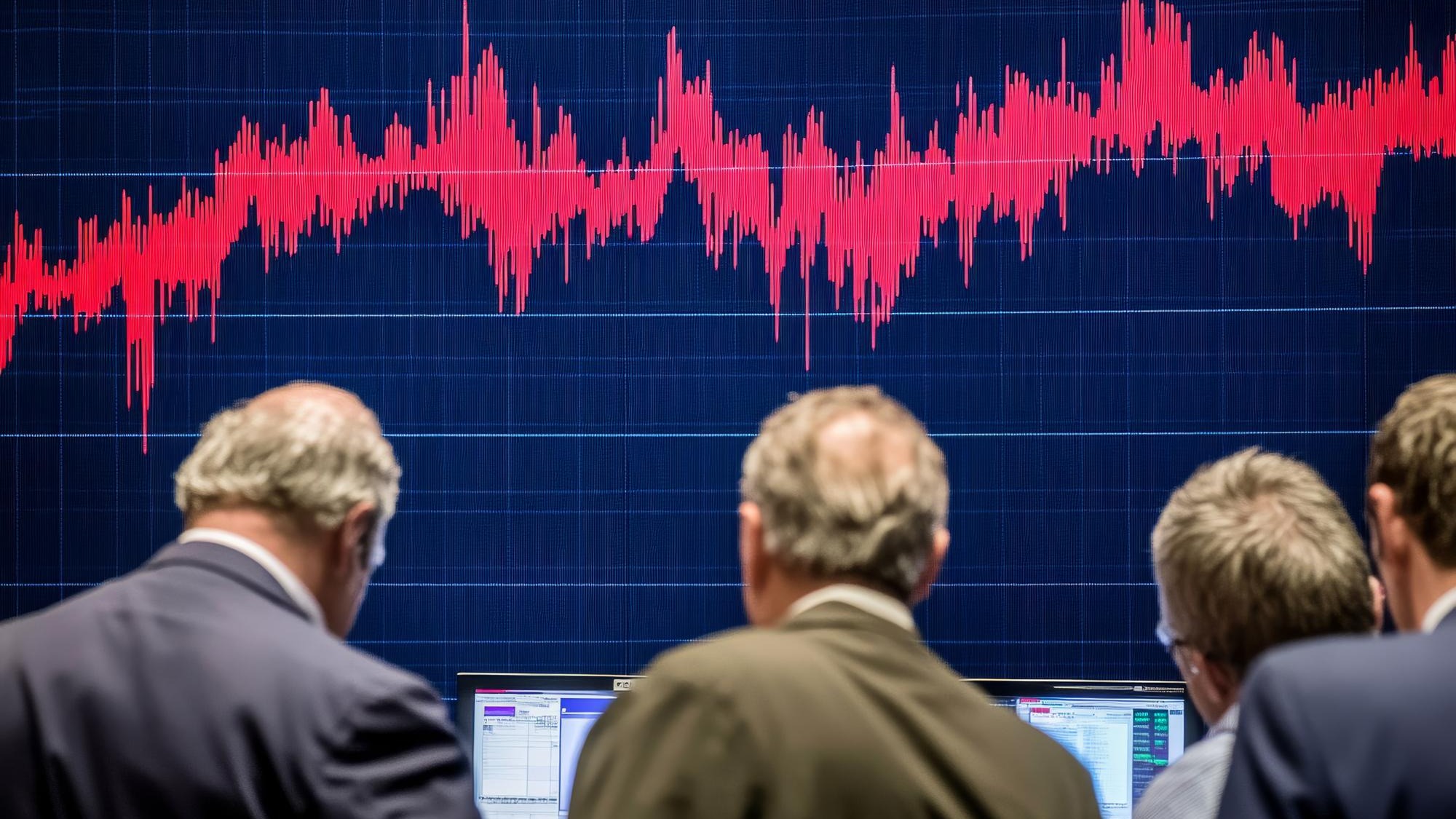
Stocks sold off hard on Friday, May 15, 2026, after the 10-year Treasury yield surged to roughly 4.65%, a level that would represent its highest in about a year based on U.S. Treasury Department records, and a rally in crude oil prices revived inflation fears that many investors had been eager to dismiss. The combination punished the same growth stocks that had powered weeks of nearly uninterrupted gains and left all three major indexes deep in the red by the closing bell.
Based on preliminary closing data, the S&P 500 dropped approximately 92.74 points, or 1.24%, to around 7,408.50. The Dow Jones Industrial Average fell roughly 537.29 points, or 1.1%, settling near 49,526.17 and slipping back below the 50,000 mark it had cleared only days earlier. The Nasdaq Composite took the worst hit, shedding about 410.08 points, or 1.5%, to finish near 26,225.14, weighed down by mega-cap technology names. Figures are based on market data reported by the Associated Press; final settlement numbers may differ slightly.
The session also coincided with monthly options expiration, when billions of dollars in contracts settle and dealers unwind hedges. That mechanical pressure likely amplified selling that was already building momentum. The Cboe Volatility Index, or VIX, which had been trading in the mid-teens earlier in the week, spiked into the low 20s as traders scrambled to reprice risk across the board.
A bond market jolt set the tone
The catalyst was the 10-year Treasury yield’s climb to approximately 4.65%, which would mark its highest reading in roughly a year according to the U.S. Treasury Department’s daily yield curve data and the Federal Reserve’s H.15 statistical release. The benchmark had been drifting higher for several sessions, but Friday’s move was sharp enough to jolt equity traders who had been counting on a more forgiving rate environment.
Higher long-term rates raise borrowing costs for businesses and consumers. They also make the guaranteed return on government bonds more competitive with the uncertain upside of stocks. That tradeoff hits growth stocks hardest: when the discount rate used to value future earnings rises, the present value of profits projected years out shrinks, and the stocks most dependent on those distant cash flows lose their premium fastest.
A rally in crude oil prices deepened the bond selloff by reigniting concerns about sticky inflation. Rising energy costs feed directly into transportation, manufacturing, and consumer goods prices, and bond traders responded by demanding higher compensation for inflation risk. Data from the U.S. Energy Information Administration showed oil markets had already been tightening heading into mid-May, and Friday’s move intensified the pressure.
For bond traders, the oil rally raised a pointed question: if energy costs are reaccelerating, can the Federal Reserve justify holding rates steady, let alone cutting them? The yield curve’s answer on Friday was a firm “not yet.”
Tech and AI stocks reversed hard
Technology and artificial intelligence stocks absorbed the worst of the repricing. Nvidia, whose enormous weighting in the S&P 500 gives it outsized influence on the index, was among the session’s biggest individual drags. The chipmaker has become Wall Street’s go-to barometer for AI sentiment, and when it sells off, the damage tends to cascade through the semiconductor supply chain and into adjacent software and cloud-computing names.
The selling was broad. Breadth readings showed decliners outnumbering advancers by a wide margin on both the New York Stock Exchange and the Nasdaq. That kind of lopsided participation signals wholesale risk reduction, not a surgical rotation from one sector into another.
Analysts at Charles Schwab noted in the firm’s market commentary that a move this fast in the 10-year yield tends to reprice the most expensive corners of the market first, effectively telling equity investors that the easy gains from the prior rally were behind them.
International markets also pulled back from recent highs as the bond-market strain crossed borders, though the steepest losses were concentrated in U.S. growth sectors where valuations had stretched the furthest.
Defensive sectors offered limited shelter
Utilities and consumer staples, the traditional hiding spots during risk-off sessions, posted milder losses but failed to turn positive. Even the perceived safety of dividend-paying blue chips could not fully offset the gravitational pull of rising yields, which make bond income more attractive relative to stock dividends.
Financial stocks traded in a tight range as investors weighed two competing forces. Higher long-term rates can widen bank net interest margins, a positive for earnings. But tighter financial conditions also raise the odds of slower loan growth and rising credit stress down the road. The net effect left the sector roughly flat relative to the broader market’s decline.
CPI, retail sales, and Fed speakers may determine whether the pullback deepens or fades
Friday’s selloff was sharp, but it did not erase the bulk of the rally that preceded it. All three major indexes remain within striking distance of their recent records, and a single ugly session does not by itself mark the start of a sustained correction. Still, the speed of the reversal exposed how stretched valuations had become after weeks of steady gains and underscored how sensitive this market remains to moves in the bond market.
Several data points in the back half of May 2026 could determine whether the pullback deepens or fades. The Bureau of Labor Statistics is expected to release its Consumer Price Index report around May 27, which would show whether the inflationary pressures implied by rising oil have started filtering into broader price measures. The Census Bureau’s advance retail sales data, expected around May 29, will offer a read on consumer spending momentum. And remarks from multiple Fed governors and regional bank presidents in late May could clarify how much tightening in financial conditions officials are willing to tolerate before adjusting their policy stance.
The Federal Reserve has not publicly commented on the yield surge, and the fed funds rate remains unchanged. Futures markets heading into the weekend reflected reduced expectations for a rate cut at the Fed’s next meeting, a shift that, if sustained, would remove one of the pillars supporting equity valuations in recent months.
The most defensible read on Friday’s action is that it was a contained but forceful repricing driven by a jump in long-term interest rates and a reassessment of richly valued growth stocks. If oil prices stabilize and yields settle back, the pullback may prove to be little more than a healthy pause in a broader uptrend. If they don’t, this session could look less like a one-day shakeout and more like the opening act of a choppier stretch ahead.