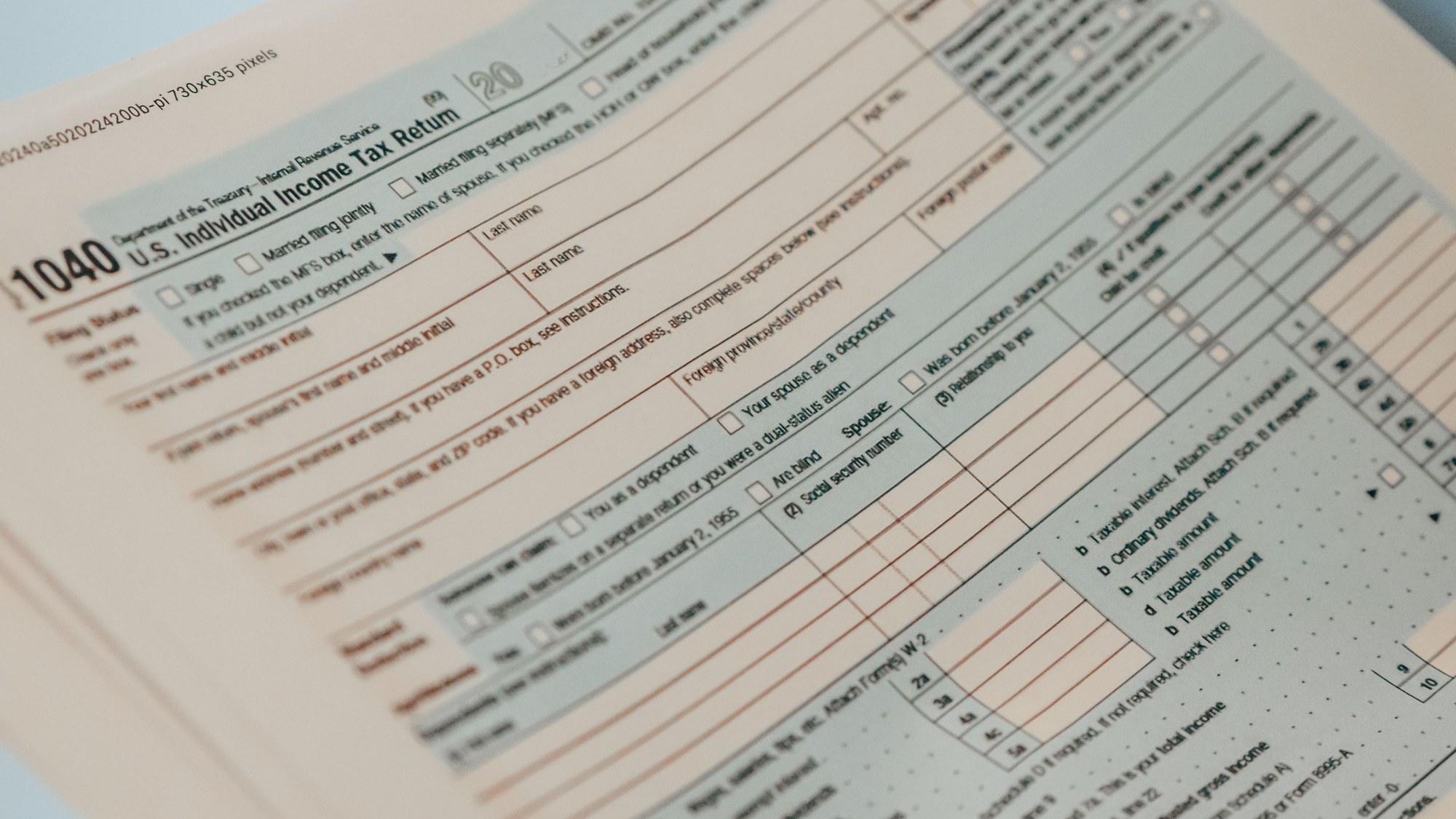
When the IRS opened its electronic filing system for 2025 tax returns in early 2026, it accepted a deduction that had never existed before: up to $25,000 in qualifying tips, subtracted directly from a worker’s taxable income. A full-time bartender in Las Vegas reporting $22,000 in gratuities could keep roughly $2,600 that would have gone to the federal government. A rideshare driver in Atlanta earning $18,000 in passenger tips might hold onto an extra $2,100. The numbers vary by income and bracket, but the mechanism is now law, written into the One, Big, Beautiful Bill and effective for tax years 2025 through 2028.
By June 2026, the IRS has published filing guidance, proposed regulations listing which occupations qualify, and a step-by-step bulletin for claiming the deduction on 2025 returns. Yet the gap between what the statute promises and what payroll systems can actually document has created real friction during this first filing season, leaving millions of servers, hairstylists, hotel workers, and gig drivers to sort through incomplete W-2s and shifting rules.
Who qualifies and how the deduction works
The deduction is available to both traditional W-2 employees and self-employed workers, and it sits above the line. That means filers do not need to itemize to claim it. A server who takes the standard deduction can still subtract qualifying tips from taxable income, lowering the federal tax owed dollar for dollar at their marginal rate.
The IRS laid out the basic framework in its no-tax-on-tips overview. Key rules:
- Eligible workers can deduct up to $25,000 in qualified tips per tax year.
- For self-employed filers, the deduction cannot exceed net income from the tipped trade or business, a guardrail that prevents someone from using a side gig’s tips to create a paper loss against other earnings.
- The deduction phases out for single filers with modified adjusted gross income above $160,000 and is fully eliminated at higher thresholds, per the legislative text of the One, Big, Beautiful Bill.
For the vast majority of tipped workers, that income ceiling is irrelevant. But higher earners in tipped professions, think fine-dining sommeliers or high-volume bartenders at destination resorts, should verify their MAGI before assuming they qualify for the full amount.
The provision is temporary. It covers tax years 2025 through 2028 and sunsets automatically unless Congress votes to extend it. In separate guidance aimed at gig economy workers, the IRS frames the change as part of a broader update to tax rules for platform-based work, putting app-based drivers and delivery couriers on the same legal footing as restaurant servers.
Which jobs made the list
Treasury and the IRS moved quickly to define qualifying occupations. Under proposed regulations identified as IR-2025-92, the agencies published a draft roster of jobs where workers “customarily and regularly” receive tips:
- Front-of-house restaurant staff: servers, bussers, and hosts who participate in tip pools
- Bartenders and barbacks
- Hotel bell staff, valets, and concierges
- Personal care providers, including hairstylists, barbers, and nail technicians
- Transportation and delivery workers where customers can add a gratuity through an app
The proposed rule also confirms that amounts received through formal tip pools and shared gratuities count as qualified tips, provided they are reported as income.
Because these regulations remain in proposed form and are open for public comment through the Federal Register, the final roster could change. Employers, payroll providers, and worker advocacy groups still have a window to argue that certain roles should be added or removed before the rules are finalized.
What the deduction is actually worth
The dollar value hinges on two variables: how much a worker earns in qualifying tips and their marginal federal tax rate. A few illustrative scenarios using 2025 brackets:
- Full-time server reporting $25,000 in tips, total taxable income in the 12% bracket: up to $3,000 in federal income tax savings.
- Hairstylist reporting $15,000 in tips at the 12% rate: roughly $1,800 saved.
- Rideshare driver netting $10,000 in tips (after business expenses) with other income placing them in the 22% bracket: approximately $2,200 saved.
These are simplified estimates that do not account for other credits, deductions, or individual circumstances. But they show why the break hits hardest for workers in the 12% and 22% brackets, where even a couple thousand dollars of tax relief can meaningfully change a refund check or shrink a balance owed.
One critical distinction: the deduction reduces federal income tax only. It does not eliminate Social Security or Medicare (FICA) taxes on tips for W-2 employees, and it does not reduce self-employment tax for 1099 workers. State income taxes are also unaffected unless a state passes its own conforming legislation. As of June 2026, no state has enacted a blanket conformity provision, though several legislatures have introduced bills.
There is a potential upside the law’s authors did not emphasize: because the deduction lowers adjusted gross income, some filers may see increased eligibility for the Earned Income Tax Credit, which phases in and out based on AGI. Workers who fall near EITC thresholds should run the numbers carefully or consult a tax professional, since the interaction could add hundreds of dollars beyond the deduction itself.
The paperwork problem
This is where the new law collides with old infrastructure. The IRS has acknowledged that W-2s and 1099s issued for the 2025 tax year may not separately identify qualified tips. Existing payroll software was designed to track total wages and total tips, not to distinguish between tips that meet the statute’s new legal definition and those that fall outside it.
That gap puts the documentation burden squarely on workers. The IRS’s filing-season bulletin (Tax Tip 2026-06) stresses recordkeeping and walks filers through claiming the break on their 2025 returns. It is the closest thing to a step-by-step playbook the agency has released.
Records worth keeping (or requesting retroactively from employers and platforms):
- Daily point-of-sale printouts showing tip amounts per shift
- App-based earnings summaries from platforms like Uber, DoorDash, or Lyft
- Tip pool allocation schedules provided by employers
- Pay stubs that break out reported tips separately from base wages
- A written daily tip log, especially important for cash tips that leave no digital trail
The agency has not yet explained how it will verify tip-pool allocations or reconcile self-reported figures against employer filings that were formatted before the law took effect. If a restaurant reports a single aggregate tip amount for all front-of-house staff, it remains unclear how an individual server should document their personal share beyond internal schedules the IRS may or may not request during an audit.
Gray areas the IRS has not resolved
Several practical questions remain open, and the proposed regulations do not address all of them.
Back-of-house restaurant staff present the most obvious ambiguity. A line cook who receives a share of a mandatory tip pool but never interacts directly with customers faces genuine uncertainty about whether those dollars count as “qualified tips” under the statute. Employers, meanwhile, lack clear direction on how to structure pools so that every participant can safely claim the deduction.
Treasury has not released projected revenue costs tied to the $25,000 cap, and no official estimate of how many workers fall into the listed occupations has been published. Bureau of Labor Statistics occupational employment data shows more than 5.5 million people working in food preparation and serving-related roles (SOC group 35-0000) as of its most recent release, and millions more work in personal care, hospitality, and gig-platform jobs. The actual reach of the deduction is likely broad, but without Treasury’s own fiscal projections, the budgetary weight remains an open question.
The IRS has also not published worked examples for specific job titles or income levels, a gap that leaves individual filers estimating their own benefit based on personal math or paid tax advice.
How to claim the deduction before the rules are final
The broad contours of the deduction are settled law. The $25,000 cap, the four-year window, the inclusion of both employees and independent contractors, and the above-the-line treatment are not going to change before the 2025 filing deadline. What could still shift is the final list of qualifying occupations and the precise definition of “qualified tips” once the proposed regulations clear the comment period.
For workers filing 2025 returns during the current season, the practical steps are concrete:
- Gather every tip record available, including POS printouts, app summaries, employer schedules, and personal logs.
- Check the IRS’s proposed occupation list under IR-2025-92 to confirm your job title appears or falls within a listed category.
- Calculate your qualified tip total and compare it against the $25,000 cap and your net self-employment income (if applicable).
- Verify your MAGI stays below the $160,000 single-filer phaseout threshold.
- Watch for final regulations, which could adjust the occupation roster or add reporting requirements before the extended filing deadline in October.
Workers whose employers or platforms generate detailed, itemized tip data will have the smoothest experience. Those who rely on cash tips or informal pool arrangements will need to do more of the documentation work themselves, and should consider consulting a tax professional if the amounts are significant.
The deduction represents the first time Congress has directly reduced the federal income tax burden on gratuity income. For millions of service workers, it is worth real money. How cleanly it works in practice depends on whether the IRS, employers, and payroll software providers finish catching up to the law before the last 2025 returns are filed.