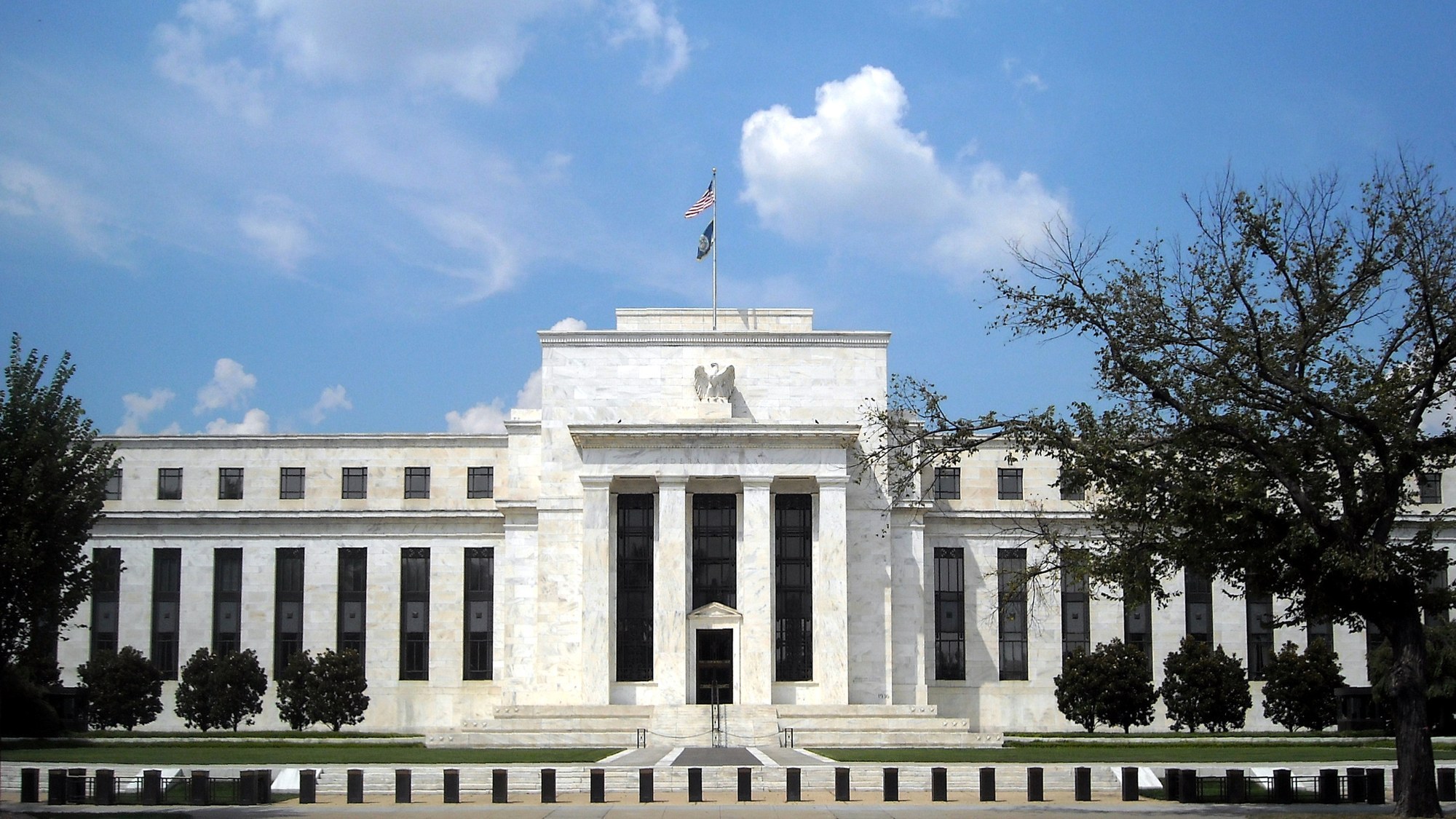
President Donald Trump and several senior administration officials spent the past week publicly urging the Federal Reserve to lower interest rates, days before the central bank’s rate-setting committee meets Tuesday and Wednesday to decide whether to raise, hold or cut its benchmark rate. The pressure lands on Kevin Warsh, the Fed’s new chairman, at a moment when the central bank’s target range has already sat at 3.5% to 3.75% since a July meeting where policymakers held steady over three dissenting votes. Because mortgage rates, credit card annual percentage rates, auto loans and savings account yields all eventually track the Fed’s benchmark, older households living on a fixed income have a direct stake in whatever the committee decides this week, in either direction. The Federal Open Market Committee’s decision, due Wednesday afternoon, will be the first real test of whether the administration’s public campaign has any bearing on how Warsh and his colleagues vote.
A Pressure Campaign Aimed at the Fed's New Chairman
In the span of a single week, Trump, Vice President JD Vance, Treasury Secretary Scott Bessent and senior economic counselor Peter Navarro all publicly pressed the Fed not to raise its benchmark rate, with several calling instead for a cut. Vance said the administration believes the Fed should be lowering interest rates. Navarro called a possible increase “careless,” described members of the rate-setting Federal Open Market Committee as “clowns,” and said Warsh is trying to do the right thing. Trump went further on September 4, threatening to halt trade with countries that run trade surpluses with the United States unless the Fed cuts rates, the first time he has tied tariffs directly to a Fed decision.
Warsh, sworn in as Fed chairman on May 22, 2026, succeeding Jerome Powell, has said the president has had no impact on his decisions, according to CNBC. He has pointed to the Fed’s choice to hold rates steady in July, rather than cut them, as evidence the central bank remains independent of the White House.
Free retirement updates: Want plain-English help keeping more of your money in retirement? The free Retirement Shield newsletter covers the benefits, deadlines, and money mistakes that cost retirees, a couple times a week. Subscribe free.
Where the Fed's Rate Actually Stands
The Federal Open Market Committee voted 9 to 3 to hold its target range at 3.5% to 3.75% at its July 28-29 meeting, according to the Fed’s own policy statement. The three dissenting votes, from Beth Hammack, Neel Kashkari and Lorie Logan, favored raising the range by a quarter point, not cutting it, underscoring how far Trump’s public demand sits from where the committee’s own voting members stood just weeks earlier. The statement cited inflation running elevated relative to the Committee’s 2 percent goal, pointing in part to supply shocks that have pushed up prices in sectors including energy. That hold has already kept the annual percentage yield on many savings accounts and certificates of deposit anchored where it has been since summer, since banks tend to reprice those products only when the Fed itself moves.
The Inflation Numbers Complicating a Cut
Administration officials have pointed to the recent three-month annualized rate of the core Consumer Price Index, running at 1.6%, as evidence inflation is contained. The Fed’s preferred gauge, the core Personal Consumption Expenditures price index, told a different story over the same stretch, rising at just over 3% on an annualized basis. Warsh used an August 28 speech at Jackson Hole to argue the Fed’s focus needs to stay on inflation, noting that 54% of the components in the PCE price measure had risen more than 3% over the previous year. Several Fed officials have said inflation has now run above the Fed’s 2% target for five straight years.
What a Fed Move Would Touch
Whichever way the Federal Open Market Committee moves this week, the effect travels through the same channels: adjustable-rate loans, credit card annual percentage rates, auto loans, and the yields banks pay on savings accounts and certificates of deposit all shift with the federal funds rate over time, while long-term mortgage rates respond more to what bond markets expect the Fed to do next. A cut would tend to ease borrowing costs while also trimming what savers earn on cash sitting in a bank account, a tradeoff that cuts both ways for a retiree living partly off interest income. Neither outcome is settled. No sitting FOMC member has publicly discussed cutting rates in recent weeks, and traders have instead priced in roughly a 60% probability of another quarter-point hike at the meeting, according to CME Group’s FedWatch tool, a reading that firmed after a stronger-than-expected August jobs report. Wage growth stayed contained even as that probability shifted: average hourly earnings rose 0.3% in August and 3.1% from a year earlier, while the unemployment rate held at 4.1%.
A Precedent From Trump's First Term
The current pressure campaign echoes one from Trump’s first term. In May 2019, Vice President Mike Pence, Treasury Secretary Steven Mnuchin and economic advisor Larry Kudlow all publicly weighed in on the need for the Fed to consider cutting rates. The Fed did not respond immediately, but it did cut rates two months later. The administration’s argument then, as now, is that growth from tax cuts and strong capital investment expands the economy’s capacity without generating inflation, a rejection of the traditional idea that an economy growing beyond its productive capacity tends to push prices higher.
The Number That Could Still Decide It
The remaining wild card is Friday’s inflation report. Fed officials have said the Consumer Price Index reading due before the meeting will be a critical gauge of whether price pressure is easing or still building, and could tip the committee toward another increase or a hold. Treasury Secretary Bessent has separately argued that the Fed typically waits for second- or third-order inflationary effects before raising rates during a supply shock, the reasoning the administration is using to press for patience rather than another increase, heading into a meeting that falls two months before the November midterm elections.
The Benefits Rates Never Reach
Separately, the fight over the Fed’s next move does nothing to change the household costs that keep rising regardless of what the committee decides. Energy bills, property tax bills and grocery costs still land on a fixed income the same way whether the federal funds rate goes up, down or nowhere, and the programs built for exactly that pressure, including LIHEAP energy help, senior property tax breaks and SNAP for people 60 and older, go unclaimed by many who qualify each year largely because none of them arrive automatically; a household has to file for them.
The Benefits Checklist covers eleven programs in 69 pages, with the 2026 income limits and the number to call in each of the fifty states.
See the eleven programs and the 2026 limits in The Benefits Checklist.
AI tools assisted in researching and drafting this article, which was reviewed prior to publication.