President Donald Trump touched down in Beijing on May 13, 2026, flanked by three of the most powerful executives in American technology: Apple CEO Tim Cook, Tesla and SpaceX chief Elon Musk, and Nvidia CEO Jensen Huang. No sitting U.S. president had visited China in nearly nine years, a period defined by a spiraling trade war, a pandemic that poisoned relations on both sides, and an intensifying contest over who will dominate artificial intelligence and advanced semiconductors.
This was not a courtesy call. Within hours of landing, Trump sat down with Chinese President Xi Jinping at the Great Hall of the People for formal talks on trade stability, investment access, and technology restrictions, according to a readout from China’s Ministry of Foreign Affairs. For the CEOs on the plane, the trip carried enormous personal stakes: Apple assembles the vast majority of its iPhones in China, Tesla runs its highest-output factory in Shanghai, and Nvidia has watched billions in potential Chinese revenue disappear under U.S. export controls targeting advanced AI chips.
What the official record confirms
The visit is backed by primary government documentation from both capitals. China’s Foreign Ministry confirmed that Xi Jinping personally extended the invitation for a state visit running May 13 through May 15. On the tarmac, Trump was received by Vice President Han Zheng, a protocol gesture that signals full state-level standing in Chinese diplomacy. The White House published video of the arrival, providing independent American confirmation of the event.
During the formal session, Trump told the room he had brought “the best representatives of American businesses,” per the Chinese readout, and addressed the business leaders directly. That phrase is the closest official language confirming the delegation’s composition, though the ministry document does not name Cook, Musk, or Huang individually. Multiple major outlets have reported all three as present, and their companies’ deep financial ties to China make their participation consistent with the trip’s stated purpose. As of May 14, none of the three had issued on-the-record statements through their companies confirming attendance.
Nine years of friction and a second-term gamble
The last time a U.S. president visited Beijing was November 2017, during Trump’s first term. What followed was a cascade of escalation. Tariffs on Chinese goods surged as high as 145% on certain categories by April 2025, before a Geneva agreement in May 2025 rolled combined rates back to around 30% for a 90-day window. Beijing imposed retaliatory duties at every stage. The COVID-19 pandemic, which each government blamed the other for mishandling, froze high-level engagement for years. In February 2023, the U.S. military shot down a Chinese surveillance balloon off the coast of South Carolina, triggering a diplomatic crisis that delayed Secretary of State Antony Blinken’s planned trip to Beijing by months.
Trump returned to office in January 2025 facing pressure from multiple directions. American manufacturers and agricultural exporters had grown vocal about the cost of prolonged tariff uncertainty, and polling throughout early 2026 showed voters ranking the economy and inflation well above foreign policy confrontation as priorities. A visible diplomatic opening with Beijing offered Trump a chance to claim credit for stabilizing supply chains and lowering consumer prices, goals that align with his domestic economic messaging. At the same time, hawks within his own party and national-security establishment have warned that any concessions on chip controls or Taiwan-related language could be exploited by Beijing. The trip, in other words, is a calculated bet that the economic upside of engagement outweighs the political risk of appearing soft on China.
Xi and various U.S. presidents met on the sidelines of international summits during the nine-year gap, but no American leader made the symbolic commitment of traveling to the Chinese capital. In Chinese political culture, a state visit to Beijing confers a level of respect and seriousness that a hallway pull-aside at the G20 does not. For Trump, the trip also sends a message to American business leaders who have spent years caught between Washington’s tightening semiconductor export controls and Beijing’s own restrictions on foreign cloud services, data transfers, and platform access.
Why these three executives
The delegation’s composition maps directly onto the biggest pressure points in the relationship. Apple relies on Chinese contract manufacturers, principally Foxconn, for the bulk of its hardware production. Despite years of diversification talk, China remains central to Apple’s supply chain. Tim Cook has cultivated a personal relationship with Chinese officials over more than a decade, making him a natural participant in any high-level economic dialogue.
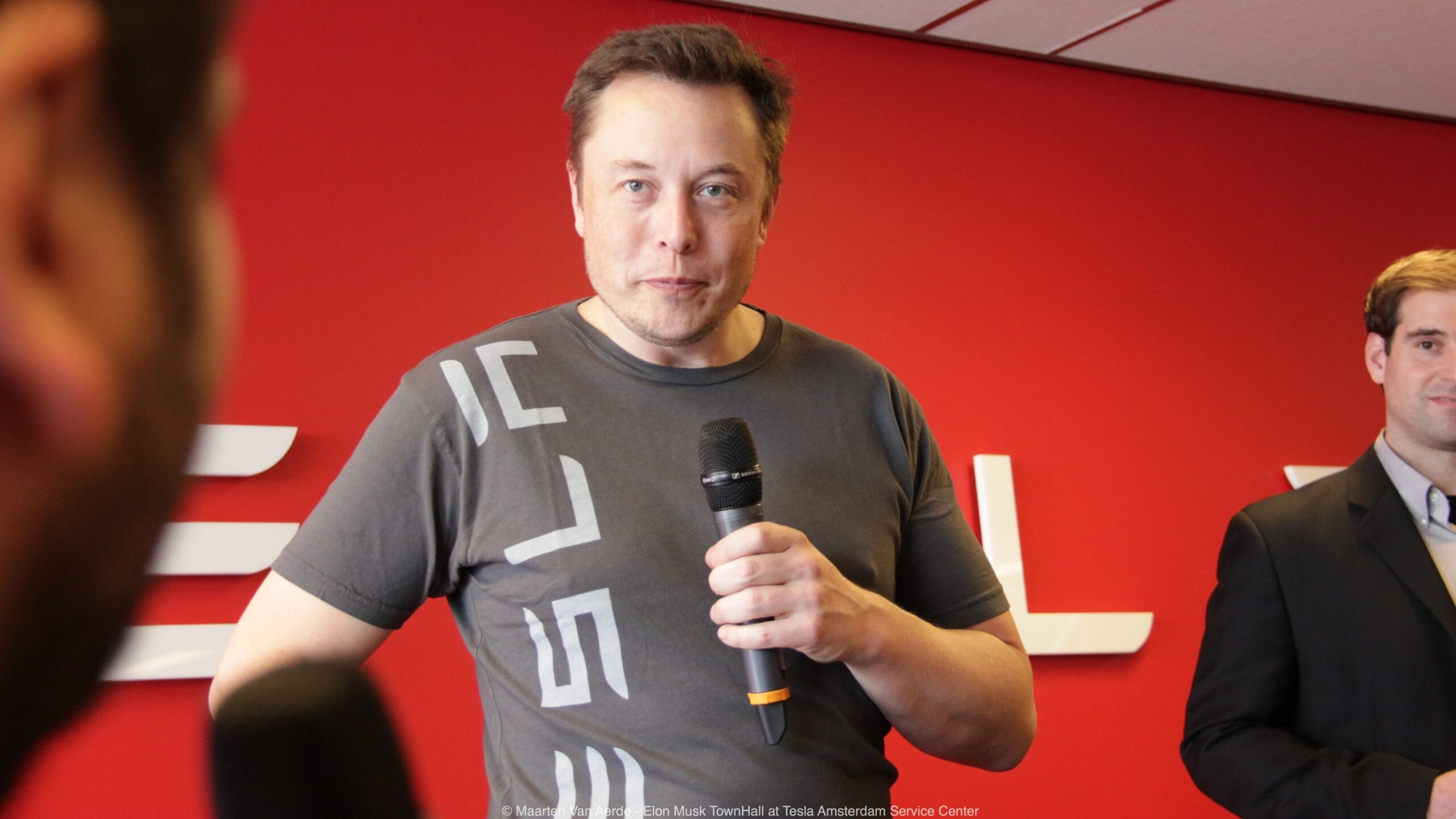
Tesla’s Shanghai Gigafactory has consistently ranked among the company’s highest-output plants, according to production figures Tesla has disclosed in its quarterly earnings reports, and it serves as the company’s gateway to the world’s largest electric vehicle market. Elon Musk, who visited Beijing independently in 2023 and met with senior Chinese officials, has a track record of direct engagement with Chinese leadership that predates this trip.
Jensen Huang’s presence may carry the most geopolitical weight. Nvidia’s advanced AI accelerators have been subject to increasingly strict U.S. export licensing requirements since the Bureau of Industry and Security issued its first major controls in October 2022, with further tightenings in October 2023 and beyond. Those restrictions have cut Nvidia off from a massive Chinese customer base. Huang has publicly described the lost revenue as significant, and any relaxation of chip export rules would directly benefit Nvidia’s bottom line.
No agreements on the table yet
For all the diplomatic staging, the official record through May 14 shows no specific agreements. The Chinese readout references “expanding practical cooperation” in clean energy and digital infrastructure but offers no details on semiconductor licensing, data localization rules, intellectual property enforcement, or any framework that would amount to a concrete trade breakthrough. There is no joint communique. There is no matching White House transcript or readout covering the substance of the Xi-Trump discussions.
That gap matters. Scott Kennedy, a senior adviser on Chinese economics at the Center for Strategic and International Studies, has noted in previous analyses of U.S.-China summits that asymmetric readouts allow each side to frame the narrative for domestic audiences, and that the absence of a joint statement typically signals unresolved disagreements rather than quiet progress. Until Washington releases its own account, reporters and observers are working with one side of the story.
Equally unclear is whether either government signaled flexibility on the restrictions that matter most to the tech industry. The Chinese readout emphasizes “mutual respect” and “win-win cooperation” but does not address U.S. controls on advanced chip exports. It says nothing about Chinese limits on foreign platforms or cloud services. Without corresponding language from the American side, there is no way to determine whether private discussions produced movement on these friction points or simply restated positions both governments have held for years.
What the remaining days in Beijing could produce
The visit is scheduled to continue through May 15, and additional meetings, side sessions with the business delegation, or joint statements could still emerge. Corporate disclosures from Apple, Tesla, or Nvidia in the coming days or weeks may clarify whether any executive secured specific regulatory commitments or market-access agreements.
What the record supports right now is this: Trump’s Beijing trip is a verified, high-level attempt to stabilize the most consequential economic relationship on the planet, conducted with full state-visit protocol and backed by a business delegation whose makeup signals that technology and trade sit at the center of whatever comes next. Whether the visit produces binding commitments or remains a carefully staged reset depends on documents and statements that have not yet been made public. The confirmed story, as it stands in May 2026, is significant but narrower than the sweeping narratives already forming around it.