President Trump suspended the U.S. Navy’s armed escort operation through the Strait of Hormuz after a single day of fighting with Iranian forces, halting a mission that had been pitched as the answer to weeks of Iranian threats against commercial shipping in the world’s most critical oil chokepoint.
During roughly 24 hours of operations in late May 2026, U.S. Central Command reported sinking seven Iranian fast-attack boats and intercepting missiles and drones fired at the convoy. Only two U.S.-flagged merchant ships completed the passage. Hundreds of commercial vessels, including tankers, bulk carriers, and container ships, remained anchored or drifting on either side of the strait, their operators unwilling to risk the corridor while shooting was underway.
Oil markets whipsawed. Brent crude futures surged to $116 a barrel as the engagement unfolded, then fell back to $108 by the close of trading after Trump announced the pause. That $8 intraday swing captured a market torn between two fears: a prolonged shutdown of the strait, which handles roughly 20% of the world’s traded oil, and the risk that Washington might escalate further.
What triggered the operation
Project Freedom was launched after weeks of escalating Iranian provocations in and around the strait. Iran’s Islamic Revolutionary Guard Corps Navy had seized or harassed commercial vessels, threatened to close the waterway entirely, and deployed fast-attack boats and shore-based anti-ship missile batteries along the Iranian coastline.
The insurance market responded before the military did. War-risk premiums for vessels transiting the Persian Gulf spiked sharply, according to Lloyd’s of London market communications, and many shipowners simply stopped sending vessels through the strait altogether.
The Trump administration framed the operation as a show of force to restore freedom of navigation. CENTCOM assembled a naval escort group, and the White House announced that American warships would guide commercial traffic through a designated corridor. The implicit promise: sail with us, and we will protect you.
Much of the shipping industry was skeptical from the start. Analysts and shipowners warned that a narrow waterway flanked by Iranian missile batteries was not a problem a few destroyers could solve. The strait is just 21 miles wide at its narrowest point, and the navigable shipping lanes are even tighter, giving shore-based defenders a significant advantage over any convoy trying to push through.
What happened during the transit
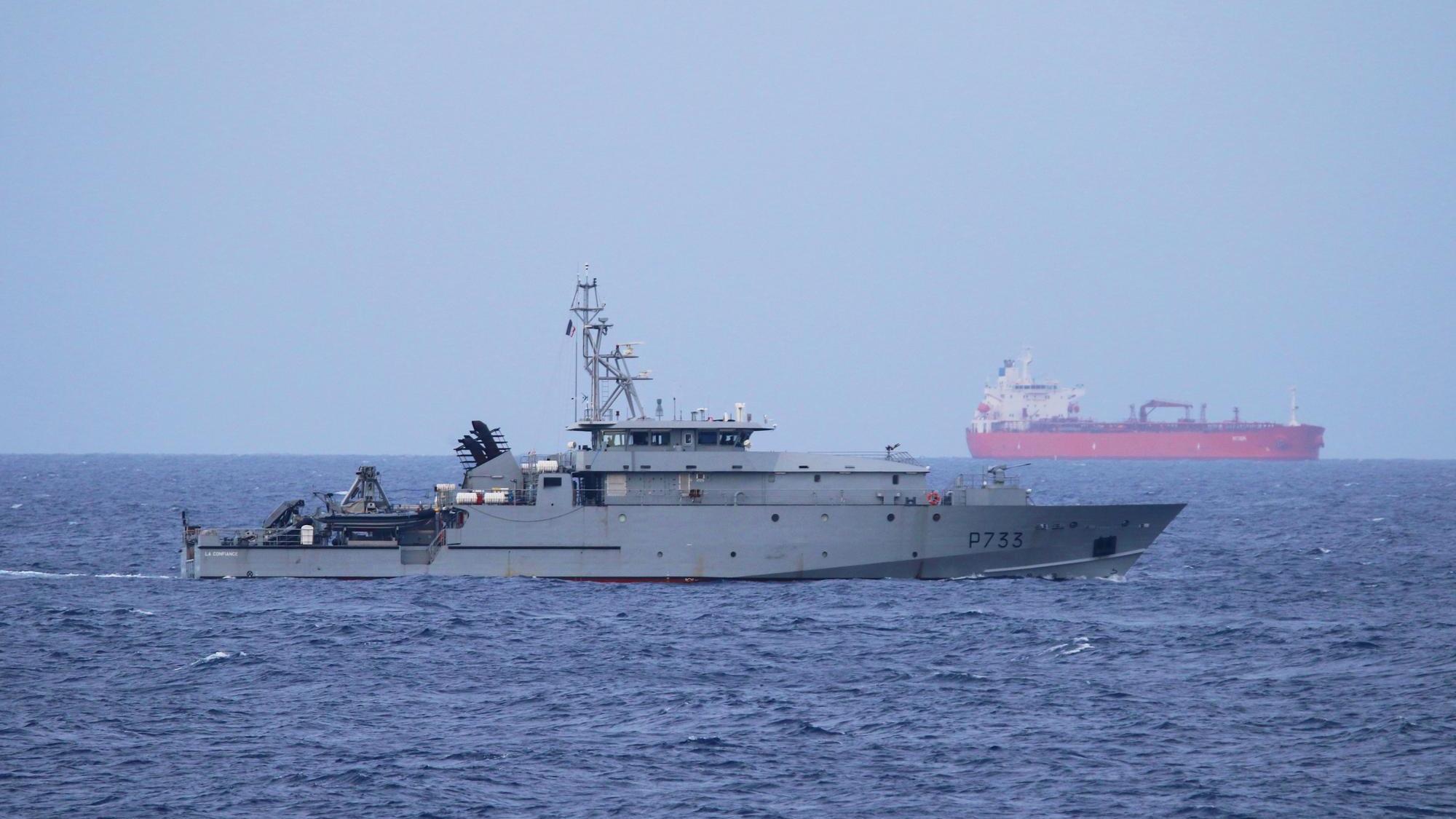
The operational details, based on CENTCOM’s public statements, describe a brief but violent engagement. As the two merchant ships moved through the escorted corridor, Iranian fast boats closed in and were engaged by Navy warships. CENTCOM said seven Iranian small boats were destroyed. The U.S. military also reported intercepting missiles and drones launched during the operation, though it did not specify whether those were aimed at the warships, the merchant vessels, or both.
Iran has not publicly confirmed the loss of any boats as of early June 2026. No independent verification from satellite imagery, neutral maritime observers, or open-source intelligence analysts has emerged. Both sides have strong incentives to shape the narrative, and the U.S. account remains a first-party claim until corroborated by outside evidence.
The outcome, however, is not in dispute: two ships got through, and the operation stopped. Trump announced the pause publicly, describing it as the completion of a “first phase.” But the gap between the stated goal of reopening the strait and the reality of hundreds of stranded vessels raised immediate questions about whether the administration had underestimated the resistance it would face.
Why commercial ships refused to follow
The most revealing number from Project Freedom’s first and only day is not the seven Iranian boats reportedly sunk. It is the number of commercial ships that entered the corridor: effectively zero, beyond the two that were already committed.
Shipowners and captains make decisions based on risk, and the math was punishing. Transiting the strait under fire meant exposing crews and cargo to missiles, drones, mines, and the possibility that the escort could be overwhelmed or pulled back without warning. War-risk insurance premiums for Persian Gulf transits had already climbed to levels that made many voyages commercially unviable, with some underwriters declining to offer coverage at all.
The alternative of rerouting around the Cape of Good Hope at the southern tip of Africa adds roughly 10 to 14 days and significant fuel costs to voyages between the Persian Gulf and Europe or the U.S. East Coast, according to shipping industry estimates on rerouting timelines. That is expensive, but for many operators it looked cheaper and safer than threading a corridor where shooting had already started.
For the vessels already stuck near the strait, costs are compounding daily. Demurrage fees, charged when ships are delayed beyond their scheduled loading or unloading windows, can run $30,000 to $80,000 per day for large tankers, according to shipping industry and insurance market estimates. Perishable cargo spoils. Supply chains built on just-in-time delivery are fracturing. Every day the strait remains effectively closed, the economic damage deepens.
What the oil price swing tells us
The move from $116 to $108 in a single session tells a compressed story about how traders processed the crisis. The initial spike reflected genuine fear that the strait could be shut down for days or weeks, choking off a significant share of global crude supply. The tanker wars of the 1980s, when Iranian and Iraqi attacks on shipping disrupted Gulf oil flows for years, offered a historical parallel that weighed on sentiment.
The retreat to $108 came after Trump’s pause announcement, which the market read as a signal that Washington was stepping back from immediate escalation. But $108 is still elevated by any recent standard, and the fact that prices did not fall further suggests traders are far from confident the crisis is over. A pause is not a resolution. If the operation resumes, or if Iran retaliates through proxies, sabotage, or direct strikes elsewhere, prices could spike again within hours.
For American consumers, the price of crude translates, with a lag, into gasoline prices, heating oil costs, and the price of anything that moves by truck, ship, or plane. A sustained stretch of $100-plus oil would ripple through the economy well beyond the gas pump, pressuring food prices, airline fares, and manufacturing costs.
Allied silence and Congressional pressure
Notably absent from the first day of Project Freedom was allied participation. The United Kingdom, France, and Gulf Cooperation Council states, all of which have naval assets in the region and direct economic stakes in keeping the strait open, have not publicly committed forces to the escort operation. That silence raises questions about whether Washington coordinated the mission with partners or acted unilaterally.
On Capitol Hill, lawmakers from both parties have demanded briefings from the Pentagon and the National Security Council. Senate Armed Services Committee members have pressed for details on the rules of engagement, the force composition, and whether the administration has a plan for sustained operations if the pause ends and fighting resumes. The White House has not publicly responded to those requests.
Where this leaves the strait and the stranded fleet
The administration has not said whether Project Freedom will resume, be redesigned, or be quietly shelved. A pause leaves every option open, which may be the point. Restarting the escorts with a larger naval force could deter Iranian attacks but would also raise the stakes of any miscalculation. Abandoning the operation would hand Iran a strategic victory and leave the strait effectively under its control. A diplomatic off-ramp, negotiated through intermediaries or back channels, remains possible but has not been publicly signaled by either side.
For now, the most reliable conclusions are narrow. The U.S. launched an armed escort operation, encountered resistance, got two ships through, and stopped. Oil markets reacted sharply to both the fighting and the pause. The vast majority of commercial vessels in and around the Strait of Hormuz have not moved.
Until ship traffic resumes in a sustained way, and until more verifiable evidence emerges about what happened during those hours of combat, the halted convoys, stranded cargoes, and volatile crude prices tell the story more honestly than the competing claims from Washington and Tehran.