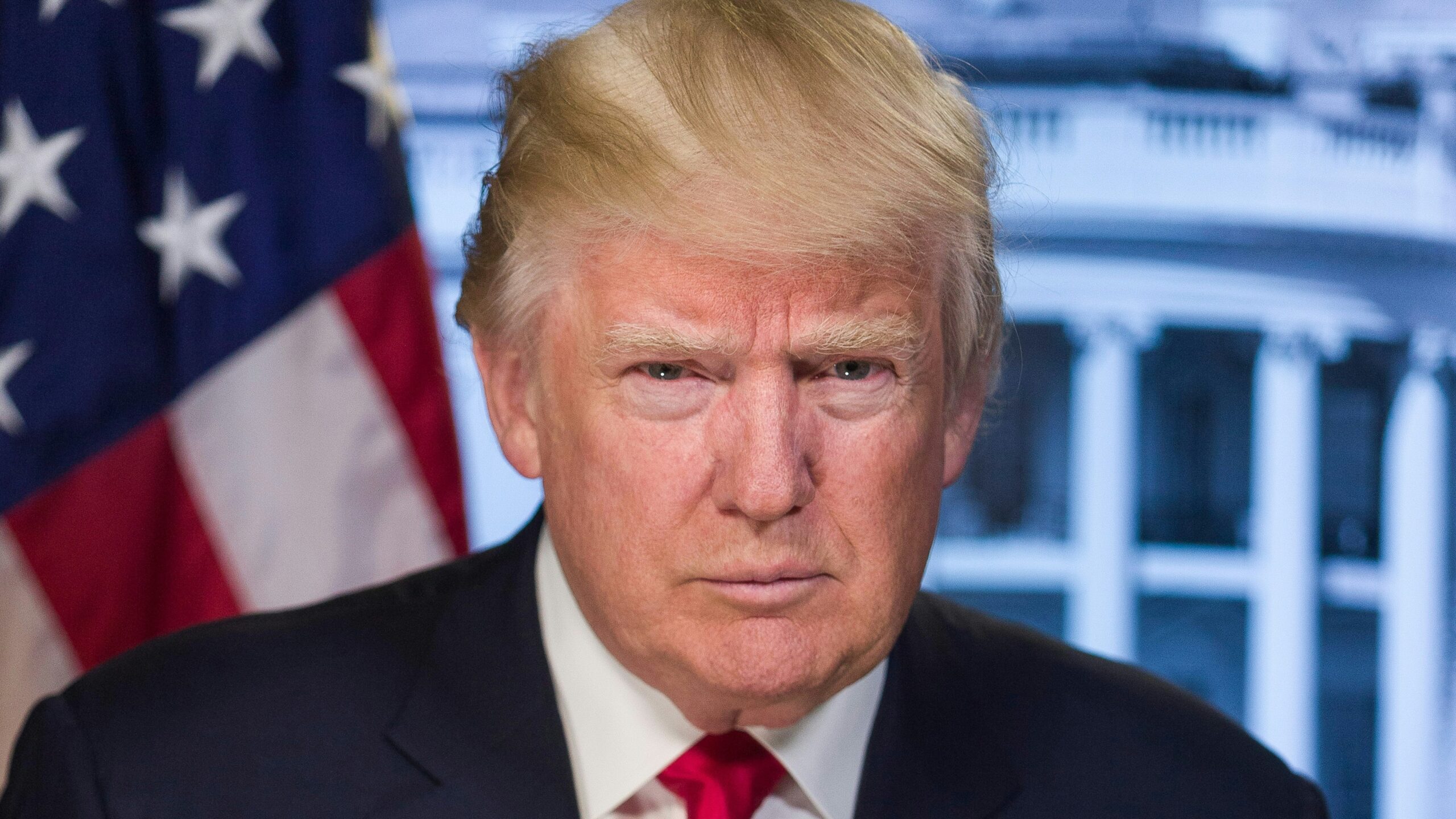
President Donald Trump told Iran on Sunday that it would be “bombed at a much higher level” if it refuses to sign a proposed 14-point peace deal, delivering the threat during a White House Mother’s Day lunch that doubled as the latest escalation in a standoff already rattling global energy markets. By Monday morning, crude benchmarks had bounced roughly 0.7%, according to Bloomberg, clawing back part of a sharp selloff driven days earlier by hopes that a deal was close. For American drivers already paying above $3.50 a gallon at the pump, the whiplash is a preview of what a prolonged standoff could mean heading into summer.
The threat, reported in real time by the Associated Press, was tied directly to Iran’s refusal to reopen the Strait of Hormuz. That narrow waterway between Iran and Oman carries roughly 21 million barrels per day of crude oil and petroleum products, according to the U.S. Energy Information Administration’s chokepoint analysis, making it the single most important bottleneck in global energy supply. When it is threatened, oil markets react within minutes.
The Deal Nobody Has Seen
Trump has referenced a 14-point framework multiple times, but the White House has not released the full text. Based on his public remarks and reporting from the AP and Bloomberg, the proposal appears to include demands that Iran reopen the Strait of Hormuz, accept limits on its nuclear enrichment program, and agree to verification mechanisms in exchange for some form of sanctions relief. Without the document itself, it is impossible to judge whether the terms represent a genuine negotiating framework or a set of conditions designed to be rejected.
Iran has not issued a formal public response. No official statement from Tehran’s government has surfaced in confirmed reporting as of late May 2026, leaving only one side of the negotiation visible. That gap matters: until Iranian officials signal whether they view the proposal as a starting point or an ultimatum, outside observers are working with half the picture.
It is also worth noting what a deal would actually unlock. Iranian crude exports are already under heavy U.S. sanctions, but Iran has continued selling significant volumes to China through workarounds that Washington has struggled to shut down. A formal agreement could bring those barrels into the open market and potentially add more, but the net increase in global supply would depend on how much Iranian production capacity has degraded under years of restricted investment.
Why Oil Moved and What It Signals
The price action over the past week tells a compressed story about how geopolitical risk travels through commodity markets. Earlier reports that the U.S. and Iran were nearing an agreement sent crude sharply lower. Traders bet that a deal would eventually bring Iranian barrels back onto the global market, easing supply constraints. Then Trump’s bombing threat reversed part of that decline, as the probability of disrupted supply through the Strait of Hormuz climbed back into the calculus.
The 0.7% morning bounce is modest on its own. But it sits on top of days of elevated volatility. Daily spot prices for West Texas Intermediate and Brent crude, published by the EIA’s official price series, show the kind of swings that eventually filter down to American gasoline pumps. AAA’s national average for regular unleaded was above $3.50 per gallon as of late May 2026, and sustained instability around the Strait could push prices higher just as summer driving season ramps up.
Helima Croft, head of global commodity strategy at RBC Capital Markets and a former CIA analyst, has repeatedly warned that the Strait of Hormuz remains the single most underpriced geopolitical risk in energy markets. That view has gained traction among traders who spent years discounting Middle East tensions only to watch supply disruptions materialize faster than expected.
Isolating a single presidential remark as the cause of a specific price tick is always imprecise. Technical trading levels, weekly inventory data, OPEC+ production decisions, and broader financial market moves all play a role. What can be said with confidence is that crude markets are treating every turn in the U.S.-Iran standoff as a first-order pricing event, and that sensitivity is unlikely to fade while the threat of military action remains on the table.
The Maximalist Playbook and Its Limits
Trump has a well-documented history of using extreme language as leverage. During his first term, he threatened North Korea with “fire and fury” in August 2017 before pivoting to direct diplomacy with Kim Jong Un. Markets learned, over time, to partially discount his most aggressive rhetoric. The question now is whether that pattern holds when the stakes involve a chokepoint responsible for roughly one-fifth of the world’s daily petroleum flow.
There are reasons for caution in both directions. No corroborating signals have emerged from the Pentagon or State Department to suggest that military operations are being actively prepared. Allied governments in the Gulf have not publicly shifted their posture. But the U.S. already has significant naval assets in the region, and the administration has shown a willingness to act on threats that previous presidents left rhetorical.
OPEC+ adds another layer of uncertainty. The producer group has been managing its own output targets, and its willingness to compensate for any disruption to Iranian supply would shape how severely a military escalation hits prices. Saudi Arabia holds the largest share of the world’s spare production capacity, but Riyadh has its own diplomatic calculations with both Washington and Tehran.
For energy analysts, the absence of a clear diplomatic off-ramp is the most concerning variable. A deal text that both sides can negotiate around would give markets something concrete to price. A cycle of public threats from Washington and silence from Tehran leaves traders guessing, and guessing in commodity markets tends to mean wider price swings and higher risk premiums baked into every barrel.
What Drivers and Markets Should Watch Now
The indicators worth tracking in the coming days are concrete, not rhetorical. The release of the full 14-point proposal would let analysts and foreign governments evaluate whether a deal is plausible. An official response from Tehran, whether through diplomatic channels or public statements, would fill the largest gap in the current picture. Any measurable shift in military posture around the Strait, such as additional carrier group deployments or Iranian naval exercises, would signal that the standoff is moving from words to positioning.
Until those pieces arrive, the confirmed record supports a narrow set of conclusions: the president issued a direct military threat tied to a specific diplomatic demand, oil markets are reacting to every headline out of the negotiations, and American consumers are exposed to the price consequences of a standoff that remains unresolved. The gap between a signed agreement and a bombing campaign may be wide in practice, but in the oil market, it is being priced in hours.