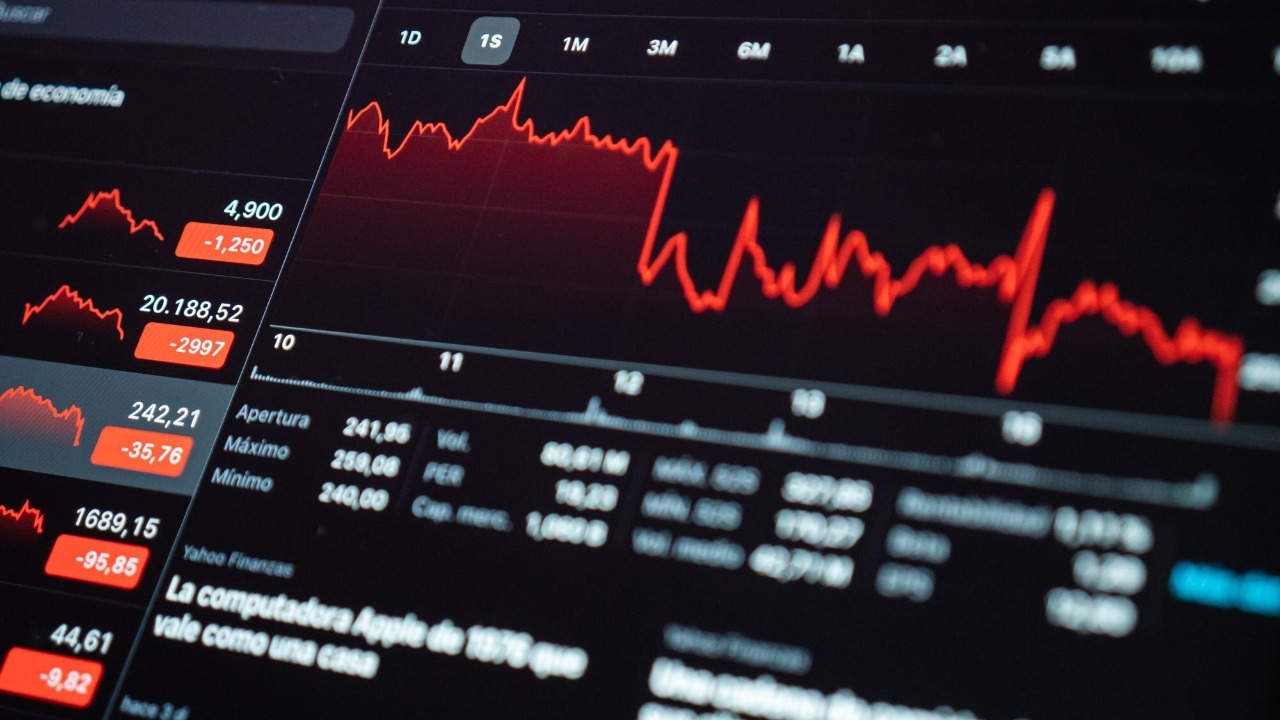
The S&P 500 set a fresh all-time high on June 2, 2026, only to lose 2.6 percent in a single session three days later. By June 22, the index sat about 1.8 percent below that early-month peak, and the Federal Reserve’s latest economic projections offered little reason to expect rate relief soon. For investors who rode a spring rally into record territory, the question is whether the retreat so far is a pause or the start of something deeper.
A three-week whiplash from record to retreat
The speed of the reversal is what sets this stretch apart. On June 2 the S&P 500 edged past its previous all-time high, capping weeks of steady gains driven by large-cap technology names. That record lasted barely long enough for headlines to circulate. A stronger-than-expected May jobs report landed on June 5, and traders repriced rate-cut expectations almost immediately. The S&P 500 dropped roughly 2.6 percent that Friday while the Nasdaq fell approximately 4.2 percent, according to Associated Press market data. Strong hiring figures, normally a sign of economic health, worked against stocks because they reduced the odds that the Fed would ease policy this summer.
The Federal Reserve Board and Federal Open Market Committee then released updated economic projections from the June 16–17 FOMC meeting. Those projections set the official policy backdrop heading into the second half of the year. With the labor market still running hot and the Fed signaling patience, the conditions that powered the spring rally have shifted. By June 22, the S&P 500 traded about 1.8 percent below its early-June peak, according to closing data compiled by the Associated Press.
Under the surface, the pullback has not been evenly distributed. Mega-cap technology and growth shares, which had led the advance, bore much of the downside as investors questioned how far valuations could stretch in a higher-for-longer rate environment. More defensive sectors such as utilities and consumer staples saw comparatively smaller declines, suggesting some rotation rather than an indiscriminate rush for the exits. Still, the broad index move was enough to unsettle investors who had grown accustomed to a one-way march higher through the spring.
Testing the case for a deeper summer slide
A working hypothesis helps frame what comes next: if the June FOMC dot plot holds steady and no fresh labor-market softening appears by mid-July, equity outflows could accelerate and push the S&P 500 at least 4 percent below its June peak within eight weeks. The logic rests on two pillars. First, many portfolios entered summer positioned for continued gains after the spring rally, meaning even modest disappointment on rates can trigger rebalancing. Second, the May employment data showed the economy adding jobs at a pace that gives the Fed cover to wait, removing the near-term rate-cut trigger that equity bulls had counted on.
The evidence so far partially supports this scenario. The June 5 selloff demonstrated how quickly sentiment can flip when rate expectations shift. A single payroll report erased days of gains in hours. The Fed’s June projections reinforced the message that officials see no urgency to cut, signaling that policy will stay restrictive until inflation progress is more secure. If the July jobs report, due in early August, again shows a resilient labor market, the argument for staying on the sidelines strengthens. The 1.8 percent gap between the index and its peak as of June 22 is modest, but it has not closed in the three weeks since the record was set, which suggests buyers are no longer willing to chase every dip.
At the same time, there are clear counterarguments to a deeper slide. Corporate earnings have generally held up, and many companies have managed to protect margins despite higher borrowing costs. Some strategists point out that a market that can absorb a hawkish shift in expectations with only a low-single-digit pullback may be demonstrating underlying resilience rather than fragility. In that view, the recent setback is a healthy consolidation after a strong run, not the start of a sustained downturn.
Volatility expectations reflect this tension. Options pricing has risen from the very low levels seen earlier in the spring but remains far from the extremes reached during past crises. That pattern is consistent with a market bracing for choppier trading rather than a full-blown shock. Inflows into money-market funds and short-term Treasurys show some investors are happy to earn higher yields on cash while they wait for clearer signals from the Fed and the data.
How investors are adjusting
For individual investors, the most important question is not whether the S&P 500 falls another few percentage points, but how their portfolios would respond to a range of outcomes. Financial planners often recommend revisiting asset allocation after sharp moves, and the recent rally-to-pullback sequence offers a natural moment to do so. Some market participants have already trimmed exposure to the most rate-sensitive corners of the market and added to bonds, locking in yields that had been unavailable for much of the past decade.
Others are using the weakness to add selectively to long-term positions, arguing that timing rate cycles is difficult and that gradual buying during periods of uncertainty has historically paid off. According to one Associated Press overview of recent trading, investors have been particularly focused on how large technology names react to each new piece of macroeconomic news, treating them as a barometer for broader risk appetite and short-term sentiment shifts across Wall Street.
Whether the early-summer setback deepens into a more pronounced slide will hinge on the same variables that drove the June reversal: incoming data and the Fed’s reaction. Until there is clearer evidence that inflation is cooling without derailing growth, markets are likely to remain sensitive to each new report. For now, the S&P 500’s retreat from record highs looks less like a verdict on the economy and more like an adjustment to the realization that easy money is not returning as quickly as many investors had hoped.