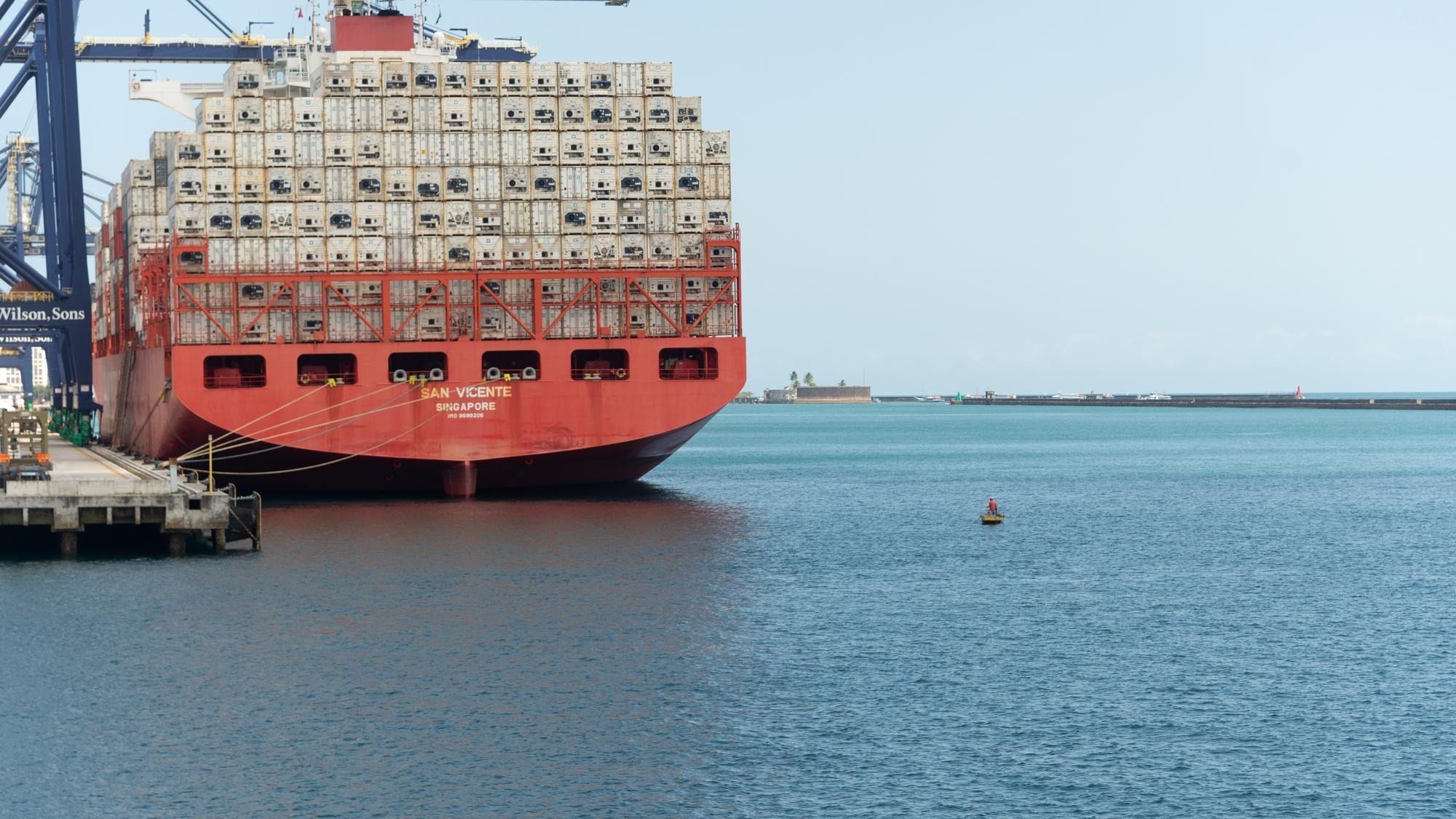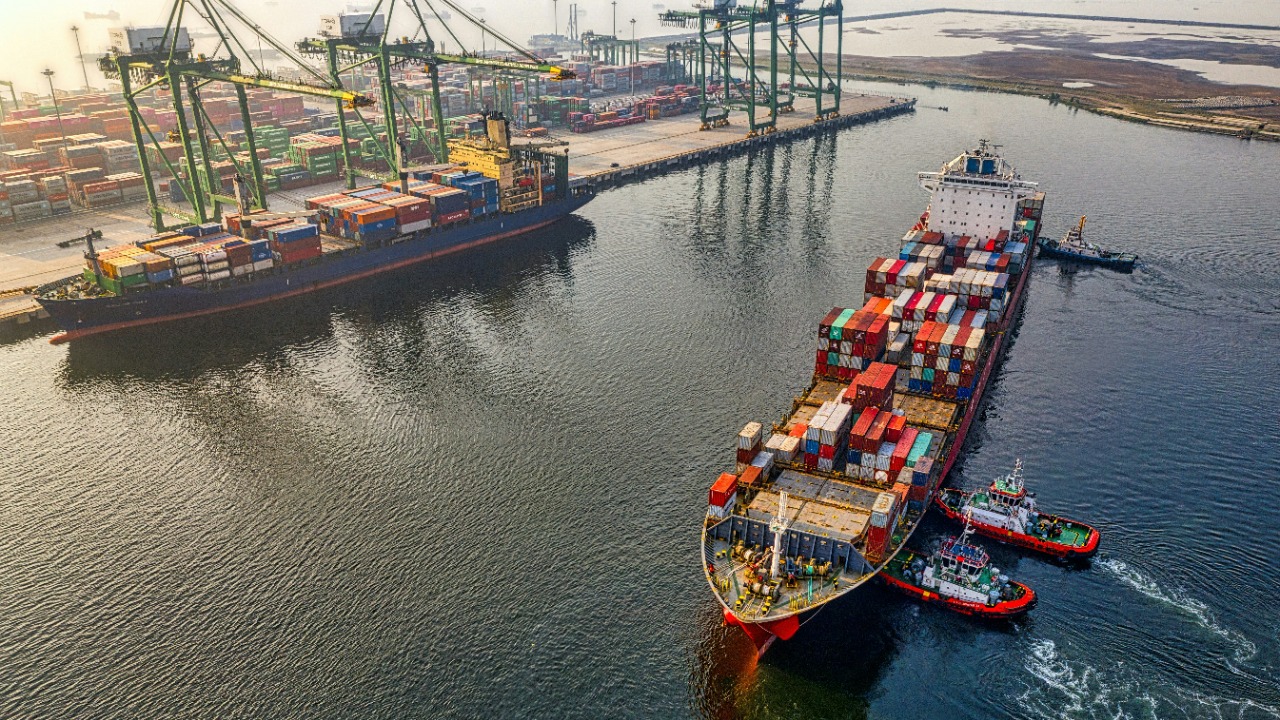
Federal customs duties are surging under President Donald Trump’s tariff agenda, giving Washington one of the biggest jumps in border-tax revenue in decades. Treasury data show customs duties in fiscal year 2026 are running at roughly four times last year’s pace through January, reflecting the combined effect of tariffs on goods from China and a broad range of other trading partners.
That revenue boom has become one of the administration’s clearest talking points, but it has also become one of its biggest legal risks. A high-stakes Supreme Court case now threatens the legal foundation for many of those tariffs, raising the chance that a major source of recent federal revenue could be narrowed or eventually refunded if the justices rule against the White House.
How customs revenue climbed so quickly
The scale of the increase is visible in the federal government’s own books. According to the Treasury Department’s Monthly Treasury Statement data, customs duties in fiscal year 2026 through January were far above the same point a year earlier. In the Treasury’s January budget summary, customs duties were listed at $124 billion for the fiscal year to date, compared with $31 billion over the same stretch in fiscal year 2025. January alone showed $30 billion in customs duties, versus $8 billion a year earlier.
Those are striking numbers for a revenue line item that normally sits far below the federal government’s main tax streams. Customs duties still do not rival payroll or income tax receipts, but they have suddenly become large enough to matter in monthly deficit math and large enough to influence how the administration talks about trade policy, the budget, and economic leverage.
The administration has not been shy about claiming credit. In a June 2025 Department of Homeland Security announcement, officials said Customs and Border Protection had collected $106.1 billion since Trump took office. By December, DHS was touting even larger figures, saying CBP had assessed more than $190.7 billion in tariff revenue and $266.7 billion in total customs revenue during the administration’s first eleven months, underscoring how central tariffs had become to both trade policy and federal collections.
That headline number, however, does not mean foreign governments are directly writing checks to the U.S. Treasury. Tariffs are paid at the border by importers of record, and those costs often move through the supply chain in the form of higher prices, lower margins, supplier shifts, or some mix of all three. For large retailers and manufacturers, that can mean renegotiating contracts or reworking sourcing maps. For smaller importers, it can mean absorbing a sudden tax-like expense with little room to maneuver.
Some companies responded by moving production, diversifying away from China, or stockpiling inventory before new tariff rounds took effect. Others simply passed costs forward where they could. Either way, the revenue surge did not arrive in a vacuum. It was built on a broad increase in the cost of bringing goods into the U.S. market.
The legal challenge now hanging over the tariffs
The central legal threat comes from Learning Resources, Inc. v. Trump and a related case testing whether the administration could use the International Emergency Economic Powers Act, or IEEPA, to impose sweeping tariffs without new action from Congress. The Supreme Court agreed in September to hear the dispute and later set oral argument for Nov. 5, 2025, putting one of Trump’s signature economic policies directly before the justices.
When the case was argued, the questioning suggested real danger for the administration’s position. During the Supreme Court’s oral argument, several justices pressed government lawyers on whether a law aimed at emergency economic powers really gave the president open-ended authority to impose broad tariffs. Reporting from The Associated Press and Reuters described a bench that appeared skeptical of the White House theory, including concern from conservative justices about whether tariff power belongs fundamentally to Congress.
That matters because the administration’s use of IEEPA was unusually expansive. The law has long been used to regulate transactions during national emergencies, especially in sanctions cases, but not as a broad peacetime tariff machine on goods from around the world. Lower courts had already ruled that Trump exceeded his authority, though the tariffs remained in place while the appeals process moved forward.
If the Supreme Court ultimately agrees, the decision would do more than block one set of duties. It would signal that presidents cannot rely on emergency declarations alone to remake tariff policy on a global scale. That would be a meaningful limit on executive trade power, and it would push any future administration back toward older trade statutes or Congress itself.
Why businesses are worried even before a ruling
For importers, the problem is not only the tariffs already being paid. It is the uncertainty around what survives, what gets replaced, and what happens to money already collected. As Reuters reported after argument, trade lawyers and business groups were already warning that any refund process could be slow, fragmented, and expensive. Some companies might receive relief only after filing protests or separate claims, while others could be left waiting for lower courts or customs officials to sort out the mechanics.
That uncertainty complicates everything from pricing to inventory planning. Import-heavy businesses do not just need to know what a tariff is today. They need to know whether it will still be there in six months, whether it might be replaced under another law, and whether goods already imported could become part of a long-running refund fight. A border tax that changes faster than contracts can be rewritten creates a different kind of cost, one that does not always show up cleanly in a federal revenue table.
There is also the fiscal angle. Customs duties flow into the general fund, so a large rollback would hit the same budget picture the administration has been pointing to as evidence of success. Revenue that looks solid in a monthly statement can become a lot less useful politically if courts later question the legal basis for collecting it.
What comes next
Even a loss for the White House would not necessarily end Trump’s reliance on tariffs. Trade lawyers and economists have long said the administration could pivot to other statutes, including Section 232 national security tariffs or temporary duties under Section 122 of the Trade Act. But those alternatives come with their own procedural limits, legal risks, and timing problems, which means a Supreme Court setback could still throw trade policy into another period of churn.
That is why the current moment matters. The administration can point to a customs revenue surge that is real, measurable, and politically useful. But the closer look is less tidy. The same tariffs that helped drive a 300% jump in fiscal year customs duties are now tied to a Supreme Court case that could sharply narrow the president’s emergency trade powers and create a fresh round of uncertainty for importers, consumers, and the federal budget. For now, the numbers and the legal threat are moving in opposite directions. Revenue is still pouring in. The case that could upend the rationale behind it is nearing its end.