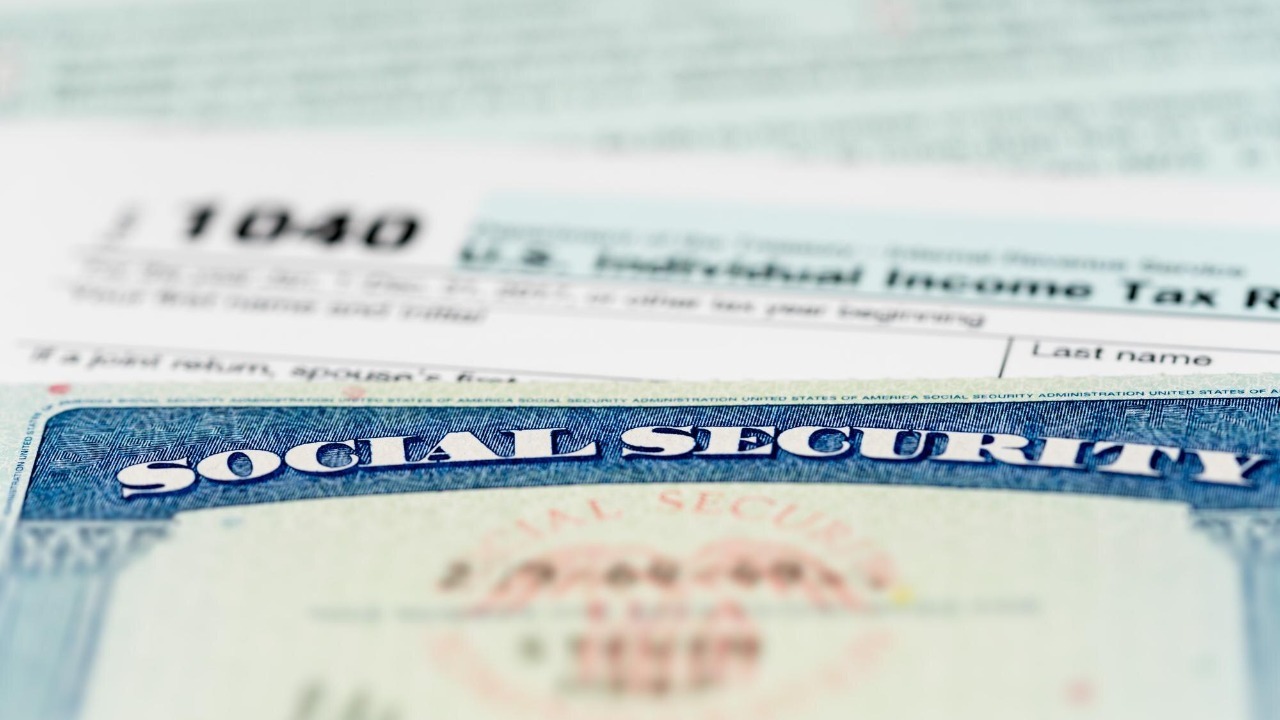
The taxation of Social Security began as a rule aimed at higher-income retirees, and on paper it still is. In practice, a decision Congress made in the 1980s to leave the income thresholds unadjusted has pulled a steadily rising share of ordinary beneficiaries into the tax. Once a household’s income crosses fixed dollar lines, as much as 85% of its Social Security benefit becomes subject to federal income tax.
How much of a benefit the tax can reach
Social Security uses a measure it calls combined income to decide how much of a benefit is taxable: adjusted gross income, plus any nontaxable interest, plus half of the annual Social Security benefit. According to the Social Security Administration’s rules on income taxes and benefits, a single filer with combined income between $25,000 and $34,000 may owe tax on up to 50% of benefits, and above $34,000 the taxable share rises to as much as 85%. For married couples filing jointly, the same tiers apply at $32,000 to $44,000 and above $44,000.
The percentages describe how much of the benefit can be taxed, not the tax rate itself. The taxable portion is folded into a filer’s other income and taxed at ordinary rates. A retiree below the first threshold owes no federal tax on Social Security at all.
Free retirement updates: A quiet rule change can shrink your Social Security or Medicare check, and no one warns you. The free Retirement Shield newsletter catches these early and tells you what to do. Get it free.
Thresholds that have not moved in decades
The reason more retirees keep hitting the tax is that the dollar lines never change. The $25,000 and $32,000 thresholds date to the Social Security Amendments of 1983, and the higher 85% tier was added by the 1993 budget law, as documented in SSA’s history of benefit taxation. Neither set of figures is indexed to inflation or wage growth. A $25,000 threshold in the mid-1980s captured a small slice of relatively affluent beneficiaries; the same $25,000 today catches retirees living on far more modest real incomes.
The effect compounds year after year. As benefits rise with cost-of-living adjustments and other retirement income grows in nominal terms, households drift across static lines they may have cleared comfortably a decade earlier. What was designed as a tax on the well-off increasingly reaches the middle.
Which income counts toward the threshold
Because the calculation hinges on combined income, the sources of a retiree’s money matter. Withdrawals from traditional IRAs and 401(k) accounts, pension payments, wages, and taxable interest and dividends all feed adjusted gross income and can push a household past a threshold. The IRS, in its reminder on taxable benefits, notes that even tax-exempt interest is added back into the combined-income figure.
Distributions from Roth accounts, by contrast, are generally not included in that calculation because qualified Roth withdrawals are tax-free. That distinction is why some retirees manage the timing of traditional-account withdrawals, or convert to a Roth earlier in retirement, specifically to hold combined income below a threshold and keep more of a Social Security benefit out of the tax.
Planning around a fixed line
The fixed nature of the thresholds turns benefit taxation into a planning target rather than a fate. A retiree who can control the size and timing of taxable withdrawals has some influence over which tier applies in a given year. Bunching income into some years and holding it down in others, or drawing from taxable and tax-free accounts in a deliberate order, can keep a household under a threshold in years when it matters.
None of this changes the underlying design. Absent action from Congress to raise or index the thresholds, the share of beneficiaries owing tax on their benefits is set to keep climbing, a slow expansion built into the arithmetic of numbers that have not moved since the 1980s and 1990s.
A worked example, and how to manage the resulting tax
The calculation is easier to see with numbers. Consider a single retiree who receives $24,000 a year in Social Security and withdraws $30,000 from a traditional IRA. Half of the benefit, $12,000, is added to the $30,000 of other income, producing a combined income of $42,000. Because that figure sits above the $34,000 line, up to 85% of the benefit falls into the taxable calculation. A retiree with the same benefit but only $10,000 of other income would land near the lower tier, exposing a far smaller share of benefits to tax. The composition of income, not just its size, drives the result.
Retirees have a few tools for handling the bill rather than being caught by it at filing time. Social Security allows voluntary federal tax withholding directly from benefits, at set percentages, so a retiree who expects to owe can have tax taken out through the year instead of scrambling for a lump sum in April. Others make quarterly estimated payments. Beyond timing, the same levers that keep combined income down, drawing from Roth accounts, spacing out large traditional-account withdrawals, and being mindful of one-time income events, reduce how much of a benefit crosses into the taxable range in the first place. None of these moves change the fixed thresholds, but they influence which side of them a household lands on in any given year.
This article was produced with the assistance of artificial intelligence and reviewed by The Financial Wire editorial team.
More Financial Reading
- How many CDs can you park at 1 bank? FDIC rules you must know
- What really happens to your joint savings account when you die?