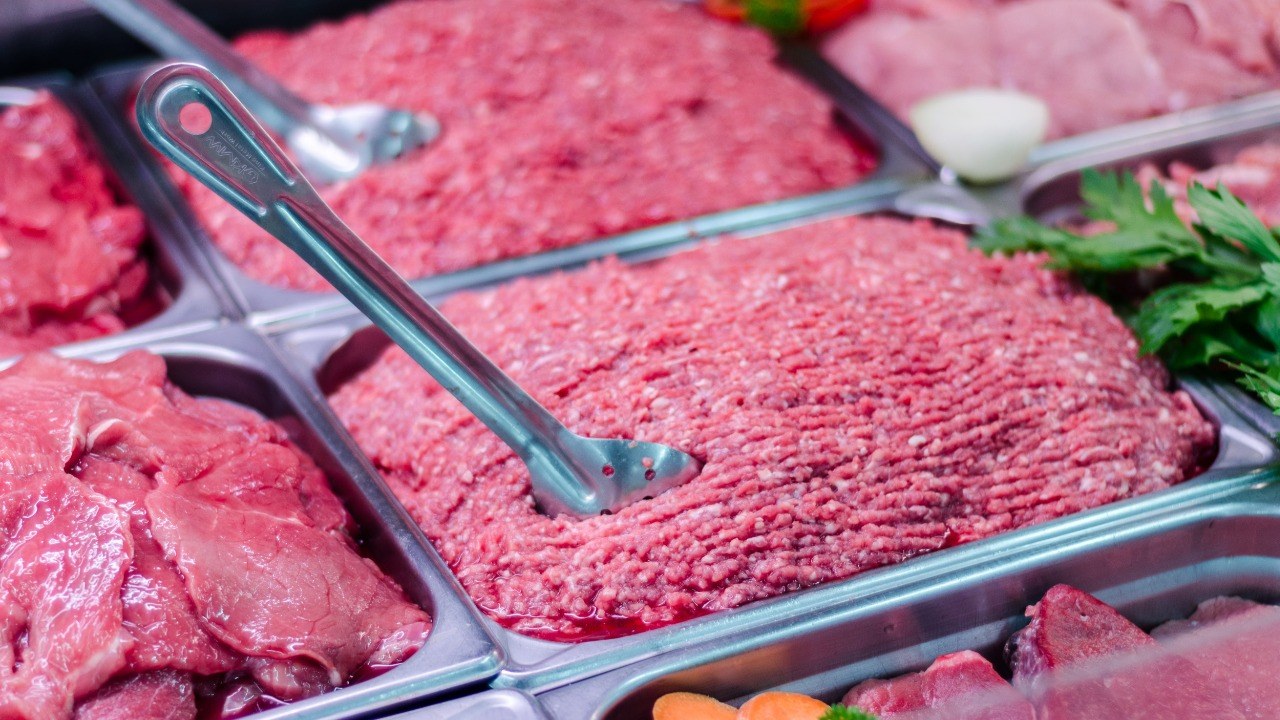
Grocery shoppers watching the meat case and the egg carton are living out two opposite forecasts at once. The Department of Agriculture’s Economic Research Service now projects beef and veal prices climbing 9.8% this year, even as it expects egg prices to fall 30.8% from where they stood in 2025’s outbreak-driven spike. Both numbers come from the same USDA outlook and describe the same 2026 calendar year, but they point grocery budgets in opposite directions depending on what’s in the cart.
Beef Prices: Up 9.8% For The Year
USDA’s Economic Research Service forecasts beef and veal prices will rise 9.8% in 2026, an increase the agency attributes to tight cattle supplies, according to its Food Price Outlook Summary Findings. That figure sits well above the agency’s forecast for food overall, meaning beef is doing more than its share of pushing grocery inflation higher this year. The tight-supply dynamic behind the beef forecast is the same herd-rebuilding story now drawing a separate federal enforcement order aimed at the packers that process most of that cattle, but the ERS price forecast itself is a straightforward supply-and-demand projection, not a comment on packer conduct.
Where the offset has to come from: A 9.8% jump in beef prices doesn’t show up as a line a household can dispute, which is why property-tax freezes and exemptions that ARE disputable, and worksheets for tracking which ones apply, are worth having ready before the rest of the grocery bill moves too. See the property-tax relief worksheets in The Senior Property Tax & Home-Cost Relief Kit.
Egg Prices: Down 30.8%, A Sharp Reversal
Egg prices are forecast to fall 30.8% in 2026, according to the same ERS Summary Findings page. The decline follows a period in which egg prices had spiked well above normal, driven largely by avian-influenza outbreaks that thinned the laying-hen flock in prior years; as that supply has rebuilt, ERS’s forecast has egg prices unwinding a large share of that spike within 2026 alone. A 30.8% drop is large enough that it will show up on a receipt over the course of the year even for a household that buys eggs only occasionally, in a way the 9.8% beef increase works in the opposite direction.
The Rest Of The Cart: Sugar Up, Overall Food Still Rising
Not every category is moving as sharply as beef or eggs. ERS forecasts sugar and sweets prices up 7.1% in 2026, and puts the overall increase for food-at-home purchases, the groceries bought for eating at home rather than restaurant meals, at 2.5%, with a range of 1.7% to 3.3%, per the Food Price Outlook. Across all food, including meals eaten out, ERS’s central forecast is a 3.0% increase for 2026, within a range of 2.4% to 3.5%. Those broader figures are the reason a grocery bill can feel like it’s climbing even in a year when one major category, eggs, is getting notably cheaper: beef, sugar and the overall food index are all still moving up at the same time. A shopper who buys mostly beef, sugar and packaged staples will feel the increases more than the relief, while a household that buys eggs regularly gets more of the benefit, since the two forecasts move through different grocery carts at different speeds.
The August Forecast, And What Comes Next
The Summary Findings page carrying these figures was last updated Aug. 31, 2026, according to ERS’s own Update and Revision History page, which was checked tonight and showed no September revision posted yet. ERS states on that same page that it publishes food price forecasts on a monthly basis, though it does not publish a fixed calendar of exact release dates, so the August figures used here remain the agency’s most current published forecast as of this writing. ERS also projects food prices rising a further 2.4% in 2027, within a wide range of -3.0% to 8.1%, a spread the agency’s own page attributes to how much uncertainty remains that far out.
The Grocery Line Nobody Sends A Bill For
USDA’s own forecast has beef climbing 9.8% and eggs falling 30.8% in the same year, and neither number is something a household can negotiate at checkout. What the forecast doesn’t address is the other side of a fixed budget, the property tax bill, the heating bill and the utility bill that a household can still apply to reduce even while grocery prices move on their own.
The Senior Property Tax & Home-Cost Relief Kit lays out the 5 kinds of property-tax relief and the costliest mistakes households make when claiming them, the two sections most relevant once a grocery budget is already stretched.
Read about the costliest mistakes to avoid in The Senior Property Tax & Home-Cost Relief Kit.
This article was produced with AI assistance and checked against the primary sources linked above.