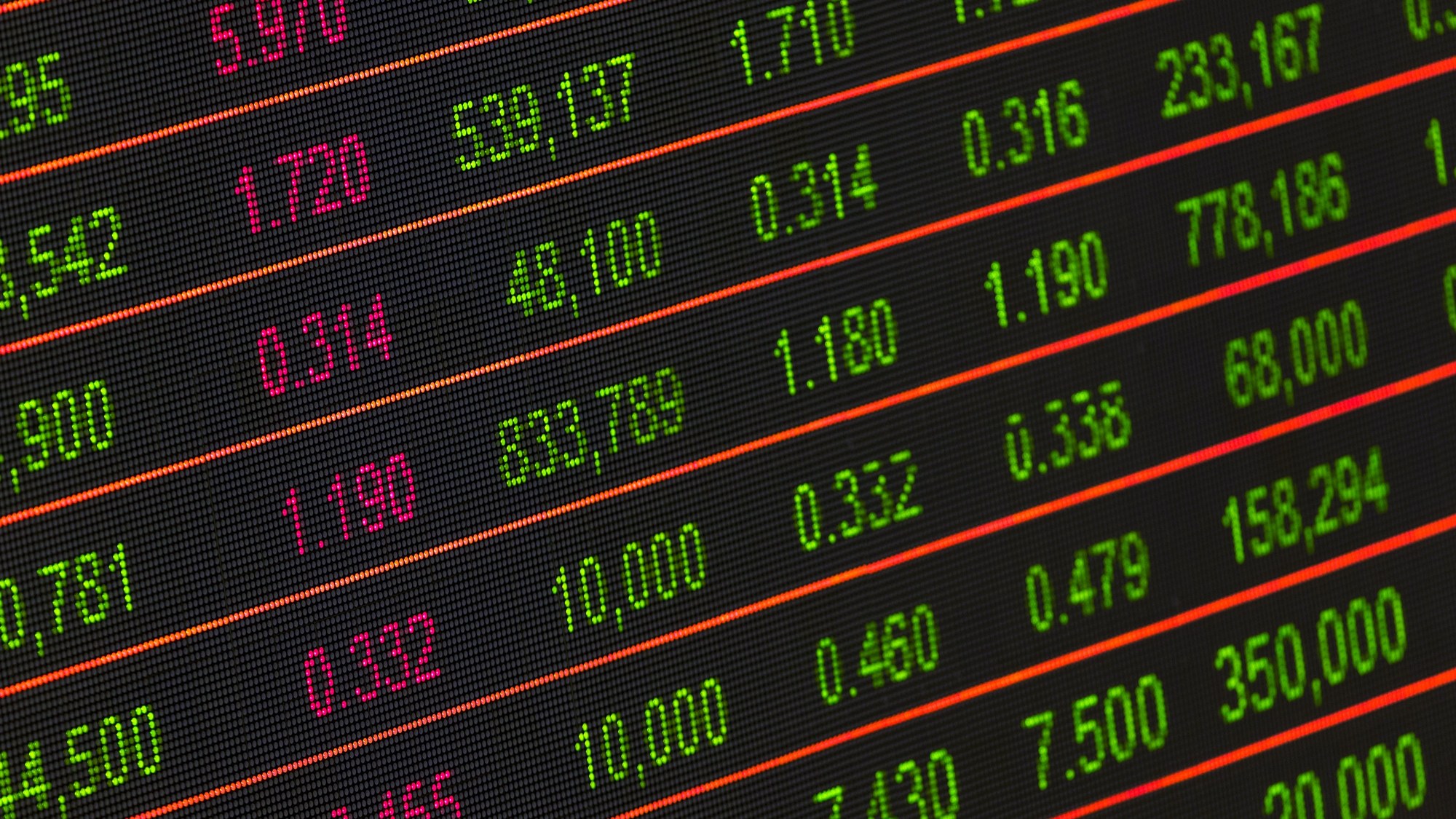
Wall Street’s best-known fear gauge, the Cboe Volatility Index, known as the VIX, ended Thursday, Nov. 5, at 28.18, up 11.57 points, or 69.66%, on the day, according to Yahoo Finance’s market quote page. The PHLX Semiconductor Index, the benchmark for U.S. chip makers, closed down 12.25% at 9,011.14 the same day.
A VIX reading near 28 is far from the mid-teens level it held a day earlier, and it tells investors how much movement the options market is pricing in for the S&P 500. For savers with money in stock funds, the practical question is how large a swing they could live through before they needed to sell, and the answer is easier to find before a number like 28.18 appears than after.
Stay ahead of government payment news: Miss an enrollment or claim deadline and the money can be gone. Join the Retirement Money Brief and we’ll send you our 2026 Government Check Reality Tracker as a welcome gift.
Get the Brief + the check tracker →
We may earn a commission from links on this page.
What does a 69.66% jump in the VIX look like?
Yahoo Finance’s quote page showed the VIX gaining 11.57 points in a single session, which puts Wednesday’s close near 16.61. A reading that moves that far that fast is rare enough that Shay Boloor, chief market strategist at Futurum Equities, called it the “biggest one-day jump for Wall Street’s ‘fear gauge’ in over two years,” in a note carried in the live blog.
The index spiked intraday as well. Yahoo’s live coverage said at 4:17 p.m. UTC, about 11:17 a.m. Eastern, that the VIX had “just surged over 65% to as much as 27.45,” so the later close above 28 shows the fear did not fade as the afternoon went on.
How bad was the chip rout behind it?
The PHLX Semiconductor Index, which tracks the biggest U.S.-listed chip companies, lost 1,257.52 points, or 12.25%, according to Yahoo Finance. Fox Business separately reported that the Philadelphia Semiconductor Index fell more than 12%, and that Nvidia closed at $181.60, down 9.26%.
The Associated Press, in its market close story, had Advanced Micro Devices down 17.3% and Nvidia down 9.3%. The Nasdaq-100 lost 6.3%, Yahoo Finance said, as the AP report put the S&P 500’s drop at 4.4% and the Nasdaq composite’s at 5.5%.
Other chip names fell with them. CoinMarketCap’s market report said Qualcomm dropped after a weak profit forecast, and Cryptonews put Nvidia, Broadcom and Qualcomm each down about 9% on the day. Fox Business listed IREN, Applied Digital and Nebius Group, each down more than 14%.
The selling pushed the Nasdaq composite 11.9% below the record it set last month, AP reported, which is past the 10% line that Wall Street calls a correction. Nvidia, the heaviest drag on the S&P 500, is still down only 2.6% for the year.
Who was selling, and who thinks it is over?
Yahoo’s live blog quoted Viraj Patel, a global macro strategist at Vanda Research, saying, “This is what we would call a total capitulation by retail investors.” Patel’s firm was cited for retail investors being on track for their biggest single-day net selling spree since March 17, 2020.
Not everyone saw the end of the move. Jed Ellerbroek, a portfolio manager at Argent Capital Management, told Fox Business, “This feels like the capitulation phase for the data center capex beneficiary stocks, especially the semiconductors.” Kevin Mahn, chief investment officer at Hennion & Walsh, told Yahoo Finance that “there’s going to be more choppiness ahead.”
What triggered the scramble for protection?
Fox Business pointed to Democrats’ sweeping midterm victories and the questions they raise about AI regulation and data center development, along with rising electricity prices that have turned data center construction into a political fight. Jakub Rochlitz, an analyst at eToro, said the “market’s interpretation is that the AI infrastructure buildout will become slower and more expensive.”
Fox also reported that analysts expected further selling, likely starting in Asian markets on Friday, and Yahoo Finance noted that a key jobs report was due that day. Those were Thursday-evening forecasts for a session that had not yet opened.
What else was shaking markets besides chips?
Rates and oil added to the nerves. The Bank of England raised its key rate to 4% on Thursday, its first increase since 2023, Yahoo Finance said. The 10-year Treasury yield eased to 4.84% from 4.90% late Wednesday, after standing at 4.95% on election night and above 5.30% last month, AP reported.
Brent crude rose 3.9% to $98.29 a barrel, AP said, recovering part of a drop of nearly 9% the day before. A crypto-market report from Decrypt said traders were also weighing an expected Federal Reserve rate increase in December, with Friday’s jobs report able to shift those bets.
The VIX moved with all of it. By the close the S&P 500 had fallen 4.4% to 7,353.73, and AP called it the index’s worst day since Trump’s tariff announcements in April 2025. The Dow shed 1,833 points, or 3.4%, to 51,523.06, and the Nasdaq composite slid 5.5% to 24,315.00.
Friday’s session would show whether the VIX held above 28 or gave back part of the jump. The 28.18 reading belongs to Thursday, Nov. 5, and any later figure will describe a different day for the gauge and for the chip stocks that drove it.
After a VIX day like Nov. 5, where is next year’s cushion kept?
A fear gauge at 28.18 is a signal that stock prices can swing hard from one session to the next. The cash a retiree plans to spend this year is the part of a budget that should not depend on that gauge.
Make Your Savings Pay You is an 11-page guide to insured places for that money, and it lays out high-yield savings for the cushion you might need this year alongside CDs, Treasury bills and I bonds. Its worksheet, Your cash map, shows where each dollar sits, and a ladder you can copy sets when money comes due.
Get the high-yield savings guide for keeping cash steady when the VIX spikes →
This article was produced with AI assistance and edited for accuracy against the sources linked above.