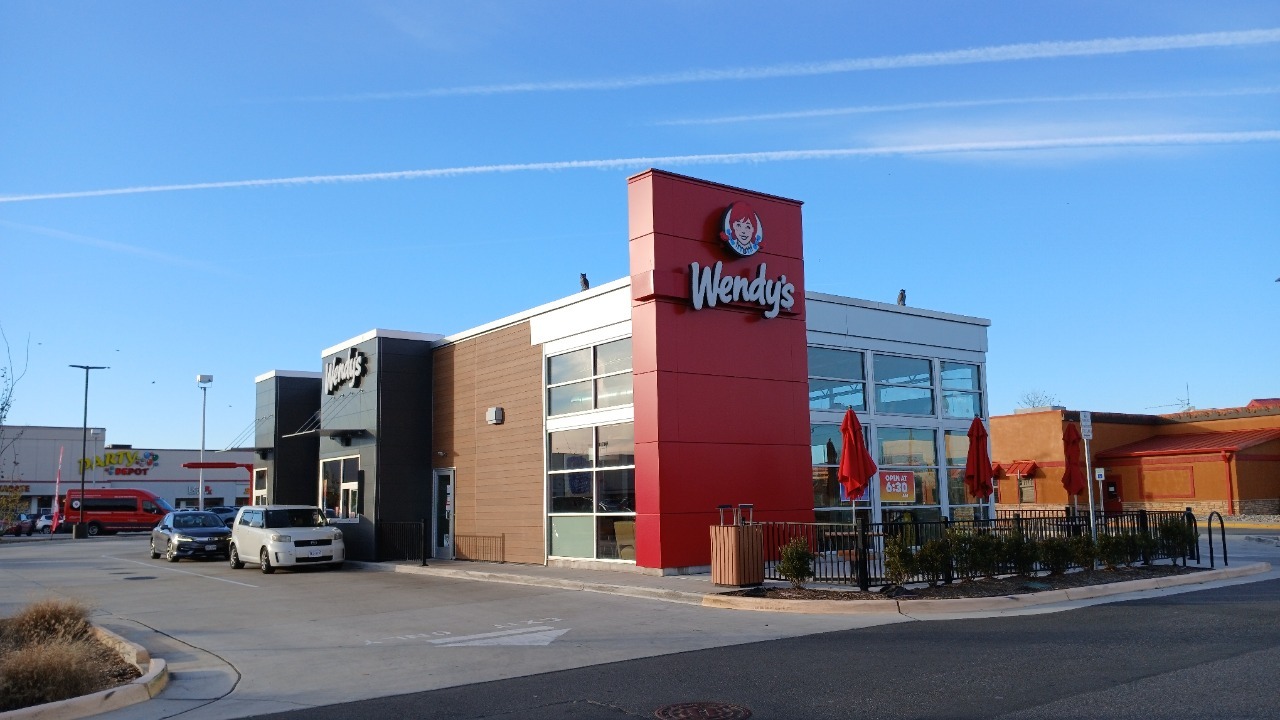
Wendy’s plans to shut down between 298 and 358 U.S. restaurants in the first half of 2026, a cut of roughly 5% to 6% of its domestic system, after same-store sales fell across the chain. The company already closed 28 locations in the fourth quarter of 2025, leaving 5,969 U.S. units at year-end. The wave of closures arrives as the fast-food chain tries to stabilize weakening customer traffic and refocus its remaining stores on value-driven menus.
Why 300 restaurant closures hit Wendy’s system now
The closures are not a routine pruning. Wendy’s reported same-store sales declines both globally and in the United States, a sign that fewer customers are walking through the door or spending less per visit. When a chain with nearly 6,000 domestic locations announces it will eliminate up to 358 of them within months, the math signals that a meaningful share of the portfolio is dragging down systemwide performance. Removing those underperformers could, in theory, lift average unit volume for the restaurants that remain open. But that lift depends on whether the traffic weakness is confined to specific locations or spread across the entire brand.
The company’s annual report for the fiscal year ended December 28, 2025, filed with the SEC, details the traffic trends that drove this decision. Management’s discussion of U.S. performance in that 10-K frames system optimization as a key risk factor and describes the sales softness that led to the planned closures. If same-store traffic does not stabilize above the levels disclosed in that filing, the per-store gains from shrinking the footprint will be offset by continued declines at surviving locations. In that scenario, Wendy’s would be running a smaller system without meaningfully stronger individual restaurants by the end of 2027.
Closure numbers and the traffic decline behind them
Wendy’s expects to close 5% to 6% of its U.S. restaurants in the first half of 2026, according to reporting from The Associated Press. Applied to the 5,969 domestic units the chain counted at the close of 2025, that range translates to between 298 and 358 locations. The 28 closures completed in the fourth quarter of 2025 were the first phase of the contraction.
Same-store sales, the standard measure of how existing restaurants perform year over year, declined both in the U.S. and globally. Wendy’s has pointed to value offerings as the tool it will use to bring diners back. The strategy carries a familiar tension: discounting can drive traffic but compress margins, especially at locations already operating below breakeven. Executives have framed the closures as a way to concentrate resources on stores with stronger economics, though the company has not publicly detailed the criteria used to select which restaurants will shut down.
Franchisees operate the vast majority of Wendy’s U.S. locations. For those operators, losing a unit from their portfolio means forfeiting revenue, but it can also reduce the drag of a money-losing store on their overall business. No public statements from individual franchisees have addressed how the planned closures will be distributed across operators or regions, but the impact is likely to vary widely. A franchisee that surrenders one chronically unprofitable restaurant may see an immediate improvement in cash flow, while an operator forced to close several marginal stores in the same market could face higher overhead per remaining unit and reduced local brand visibility.
The company has presented the cuts as part of a broader “system optimization” effort rather than an emergency retrenchment. That language suggests Wendy’s is trying to reshape where and how it competes, not simply shrink to match lower demand. Closing weaker locations can free capital and management attention for remodeling, digital upgrades, and marketing in stronger trade areas. However, if closures cluster in lower-income neighborhoods or older suburban corridors, the brand risks ceding ground to rivals that maintain a presence in those communities.
Value focus and competitive pressure
Wendy’s response to sliding traffic leans heavily on value-focused menu options, including bundled meals and limited-time discounts aimed at price-sensitive customers. In a crowded fast-food market, that approach is almost mandatory: consumers can easily trade down to cheaper competitors or shift to grocery if restaurant prices feel too high. Yet relying on discounts to rebuild guest counts can backfire if it trains customers to wait for deals or erodes the premium that Wendy’s has tried to place on its burgers and chicken offerings.
The company’s filings emphasize that labor, commodity costs, and occupancy expenses have all pressured margins. Under those conditions, marginal locations with weaker sales are especially vulnerable. A restaurant that might have been modestly profitable a few years ago can slip into the red when wage rates rise, beef prices climb, or rent escalates. Closing such units can be a rational financial decision, but it also means surrendering whatever long-term strategic value those corners or trade areas once offered.
What a smaller Wendy’s could look like
By the end of 2026, Wendy’s U.S. footprint will likely be more concentrated in markets where the brand already performs relatively well and where remodels, digital ordering, and drive-thru investments can generate the highest returns. The company has signaled that it will continue to emphasize drive-thru and mobile ordering, reflecting customer habits that solidified during the pandemic and have persisted even as dining rooms reopened. Remaining restaurants may see more capital investment per unit, with upgrades intended to improve throughput and encourage repeat visits.
For employees and communities, the near-term story is more disruptive. Restaurant closures typically mean job losses, although some workers may transfer to nearby units if franchisees operate multiple locations. Local tax bases lose a business tenant, and nearby retailers can see a drop in incidental traffic. Over time, though, a healthier core system could support more stable employment and investment than a stretched network of marginal stores.
Whether this round of closures achieves its goals will depend on forces beyond Wendy’s direct control, including consumer spending trends and competitive moves from other fast-food chains. If the value strategy succeeds in restoring traffic and the remaining restaurants can grow sales, the company may emerge with a leaner but stronger U.S. system. If traffic continues to erode despite the cuts, Wendy’s will have traded scale for breathing room without resolving the underlying demand problem.