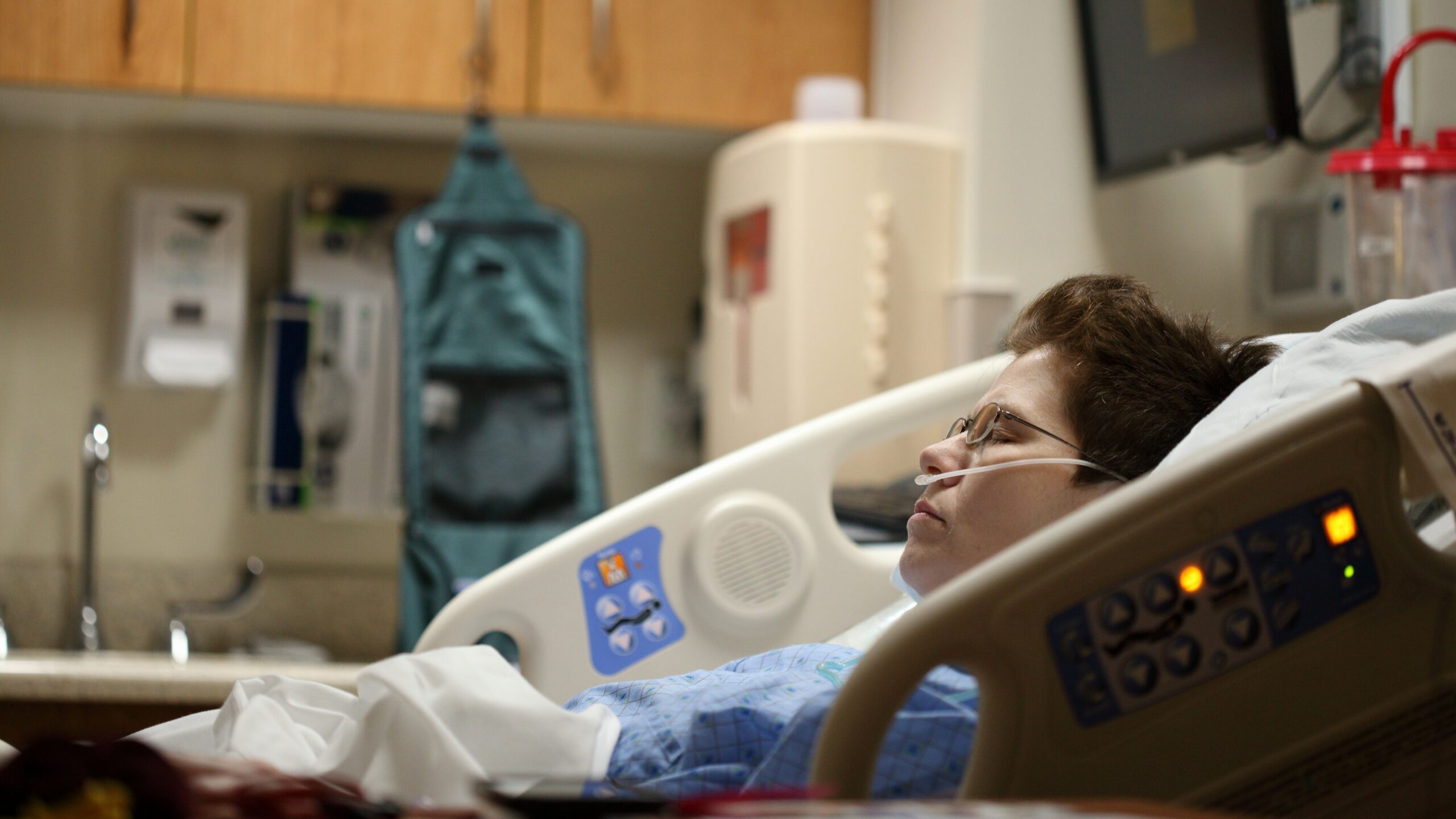
A nursing-home stay that runs several thousand dollars a month can burn through a couple’s lifetime savings faster than almost any other expense in retirement. Left unchecked, that math would leave the husband or wife still living at home with next to nothing. Federal Medicaid rules exist to prevent exactly that outcome, shielding a portion of a couple’s combined savings and income for the spouse who remains in the community when the other moves into long-term care.
The problem Congress set out to solve
Before the current protections existed, families faced a grim choice. When one spouse needed nursing-home care and the couple turned to Medicaid to pay for it, nearly all of their shared resources could be counted as available for that care. The spouse who stayed home could be left impoverished, sometimes unable to cover ordinary household bills, simply because the couple had saved together over a lifetime.
In 1988, Congress created the spousal-impoverishment provisions to close that gap. The rules recognize that a marriage pools money, and that draining every last dollar to pay for one spouse’s institutional care would punish the other for staying healthy. The framework separates what belongs to the couple into a share that must go toward care and a share that is protected for the spouse at home, referred to in the rules as the community spouse.
Free retirement updates: A quiet rule change can shrink a Social Security or Medicare check, and no one warns retirees. The free Retirement Shield newsletter catches these early. Get it free.
How much savings the at-home spouse can keep
Under the spousal-impoverishment rules, a set portion of the couple’s combined countable resources is protected for the community spouse through what is known as the community spouse resource allowance. The government’s overview of the spousal-impoverishment provisions describes how that allowance is carved out before the institutionalized spouse is judged eligible. Rather than treating the entire nest egg as available for care, the state sets aside the community spouse’s share so it stays with the household.
The protected amounts are not fixed forever. Several of the standards, including the minimum and maximum resource allowances, are adjusted every January to keep pace with rising costs, with the updated figures published each year. That annual refresh means the exact dollars a community spouse may keep this year differ from a few years ago, so families checking the current limits should look to the latest figures rather than an old chart.
Income protection, not just savings
The rules reach beyond a pile of assets to the monthly income a community spouse needs to live on. If the spouse who remains at home has relatively little income of their own, a portion of the institutionalized spouse’s income can be redirected to the community spouse instead of going entirely toward the nursing-home bill. This is designed so the at-home spouse can still cover rent or a mortgage, utilities, food, and other essentials.
Both the resource protection and the income protection sit within Medicaid’s broader eligibility policy, which governs how states count what a household owns and earns. Because Medicaid is run by the states within federal limits, some of the specifics, and the way a state applies the minimum and maximum allowances, can differ from one place to another, even though the underlying federal protection is nationwide.
What couples should confirm before applying
For a married couple staring down long-term care, the spousal-impoverishment rules change the calculus dramatically, but only if they are used correctly. The protections apply specifically when one spouse enters institutional care or, in many states, receives certain home and community-based services, and the community spouse remains outside that care. A snapshot of the couple’s combined resources is typically taken at the start of that care to determine the protected share, which makes the timing of an application and the accuracy of financial records important.
Details decide outcomes here. How a state calculates the resource allowance, whether a couple’s assets are documented cleanly, and how income is allocated all affect how much the at-home spouse ultimately keeps. Because the standards shift annually and the mechanics vary by state, many couples work through the numbers with a Medicaid caseworker or an elder-law attorney before filing. The federal guidance is clear on the core promise, though: when one spouse needs a nursing home, the other is not meant to be left with nothing, and the rules are built to keep a real share of the couple’s savings and income at home.
This article was produced with AI assistance and reviewed by The Financial Wire editorial team.
More Financial Reading
- How many CDs can you park at 1 bank? FDIC rules you must know
- Bank statements: how long to keep them and when to toss them