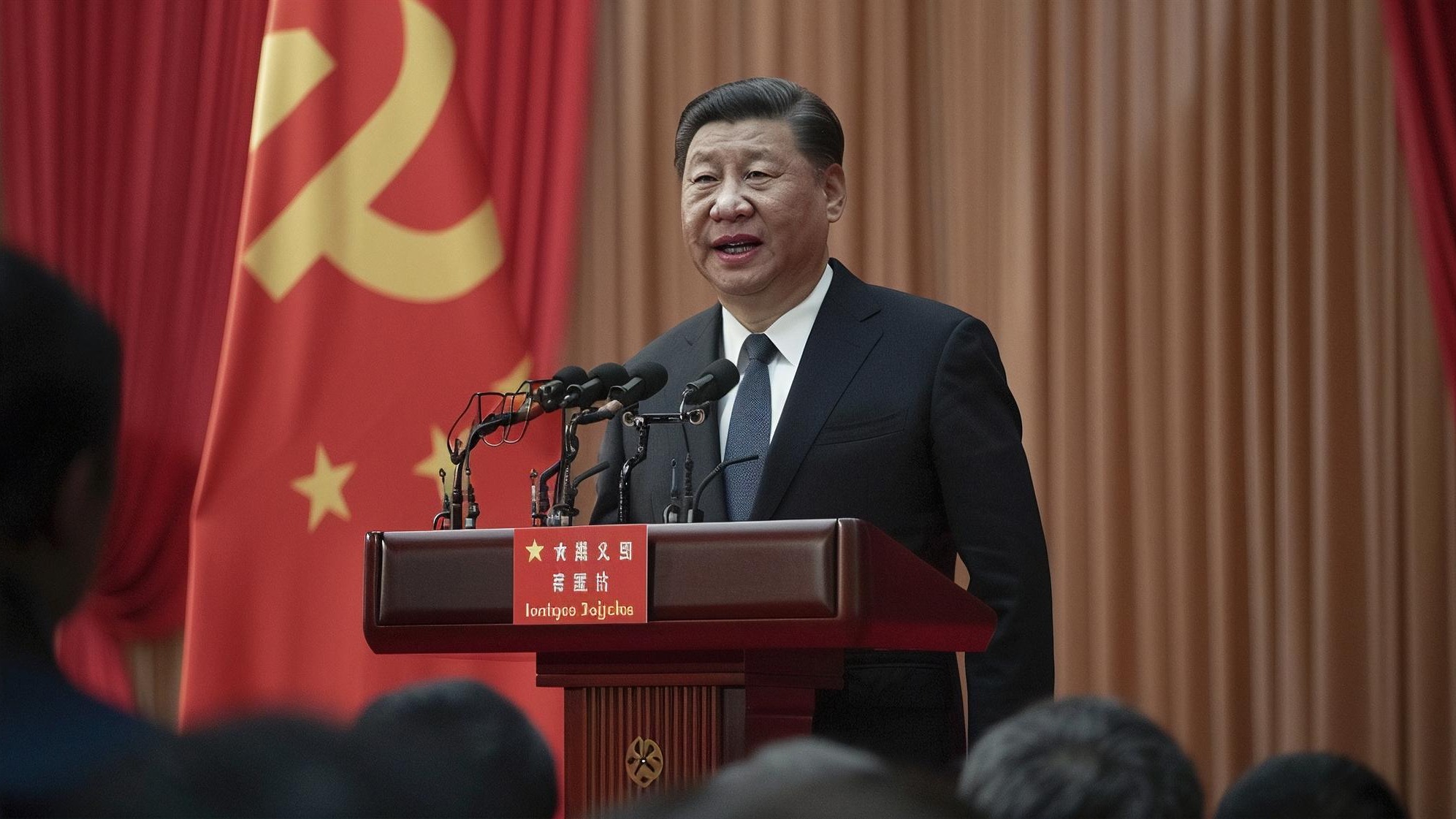
Chinese President Xi Jinping warned President Donald Trump during their May 2026 meeting in Beijing that Taiwan is “the most important issue” in U.S.-China relations and that mishandling it will produce “clashes and even conflicts.” That language appeared in official Chinese government summaries published within hours of the sit-down. The White House released its own account of the same conversation the same day. The word “Taiwan” did not appear in it.
Two governments described the same meeting, in the same room, on the same afternoon, and produced documents so different they could have been written about separate summits. The gap is not a clerical oversight. It is a window into how Washington and Beijing are each trying to control the narrative around the most dangerous flashpoint in the Pacific.
What Xi said, according to Beijing
China’s Ministry of Foreign Affairs readout quotes Xi telling Trump directly that Taiwan is “the most important issue” in the bilateral relationship and that if it is mishandled, the two countries will face “clashes and even conflicts.” Xi aimed his language at what Beijing calls “Taiwan independence” forces and what it characterizes as external interference in cross-Strait affairs.
A second version, distributed through China’s State Council, repeated the same warning and added that Xi described “safeguarding peace and stability across the Taiwan Strait” as the “biggest common denominator” between the two nations. The near-identical phrasing across both Chinese government documents suggests Xi chose these words carefully, knowing they would be published verbatim for a global audience.
The intent was unmistakable: Beijing wanted the world to know that Xi made Taiwan the centerpiece of his message to Trump and attached the most serious possible consequences to any perceived misstep.
What Washington chose to highlight instead
The White House released a summary of the meeting through its statements and releases page. That summary steered in a completely different direction, focusing on trade negotiations and Iran policy, areas where the Trump administration has sought to project momentum. Taiwan was absent from the document entirely. Because the specific URL for the individual readout has not been independently confirmed, the link provided here points to the broader White House statements and releases index; readers should locate the May 2026 Beijing summit readout on that page to verify the claim directly.
Diplomatic readouts are not casual recaps. They are carefully constructed texts, reviewed by senior staff, and drafted with full awareness that allied governments, adversaries, and journalists will parse every line. When a readout omits a topic that the other side treats as the defining issue of a summit, the silence carries its own message.
A pattern with a new edge
Divergent readouts between Washington and Beijing are not new, but the scale of this gap is. After the November 2023 summit in Woodside, California, both sides released accounts that differed in emphasis on Taiwan. Beijing’s version stressed that President Biden had reiterated the U.S. does not support Taiwan independence, while the U.S. readout framed the conversation more broadly around maintaining peace in the Taiwan Strait. The November 2022 meeting between Xi and Biden on the sidelines of the G20 in Bali produced a similar split.
What sets the May 2026 divergence apart is the total absence of Taiwan from the American account. In prior summits, Washington at least acknowledged the topic, even when it characterized the discussion differently than Beijing did. This time, the White House treated Taiwan as though it was never raised. Beijing treated it as the single most important thing Xi said.
The voice that is missing: Taipei
Neither readout acknowledged Taiwan’s own perspective. The island of roughly 23 million people governs itself, maintains its own military, and conducts its own foreign policy, yet it is discussed by Washington and Beijing as a problem to be managed between them. Taiwan’s government has repeatedly pushed back against this framing. Its Mainland Affairs Council and Ministry of Foreign Affairs have insisted, across multiple administrations, that Taiwan’s future should not be negotiated over its head.
Xi’s “clashes and even conflicts” language is exactly the kind of statement that has historically prompted a public response from Taipei, though as of late May 2026, no formal reply had been widely reported in English-language media.
What neither side has confirmed
No verbatim transcript of the Xi-Trump conversation has been released by either government. What the public has are curated documents, each shaped by the political priorities of the side that produced it.
Whether Trump responded to Xi’s Taiwan warning, acknowledged it, or pushed back is unknown. The Chinese readout attributes specific language to Xi but does not describe Trump’s reply on the subject. The U.S. summary offers no indication that Taiwan came up at all.
The silences are revealing in their own right. Beijing did not claim that Trump endorsed any particular Chinese position on Taiwan, something it would almost certainly have highlighted if it had happened. Washington did not publicly register any objection to Xi’s framing, which it might have done if the administration wanted to signal distance from Beijing’s characterization.
How the readout gap reshapes allied calculations in the Indo-Pacific
This is not just a diplomatic curiosity. Governments across the Indo-Pacific are reading both documents and trying to figure out which version more closely reflects what actually happened in the room. Japan, Australia, the Philippines, and South Korea all have security interests tied to the Taiwan Strait. So does Taiwan itself.
If Beijing’s account is accurate, Xi issued a direct warning that Taiwan could trigger armed conflict between the world’s two largest military powers. If Washington’s account is the more complete picture, the summit was primarily about trade and Iran, with Taiwan as a secondary or entirely private matter. The difference between those two readings carries real consequences for defense planning, diplomatic positioning, and market confidence across the region.
Two governments sat in the same room, had the same conversation, and told the world two very different stories about what mattered most. That, by itself, tells you how far apart Washington and Beijing remain on the question they both know could define the coming decades.


