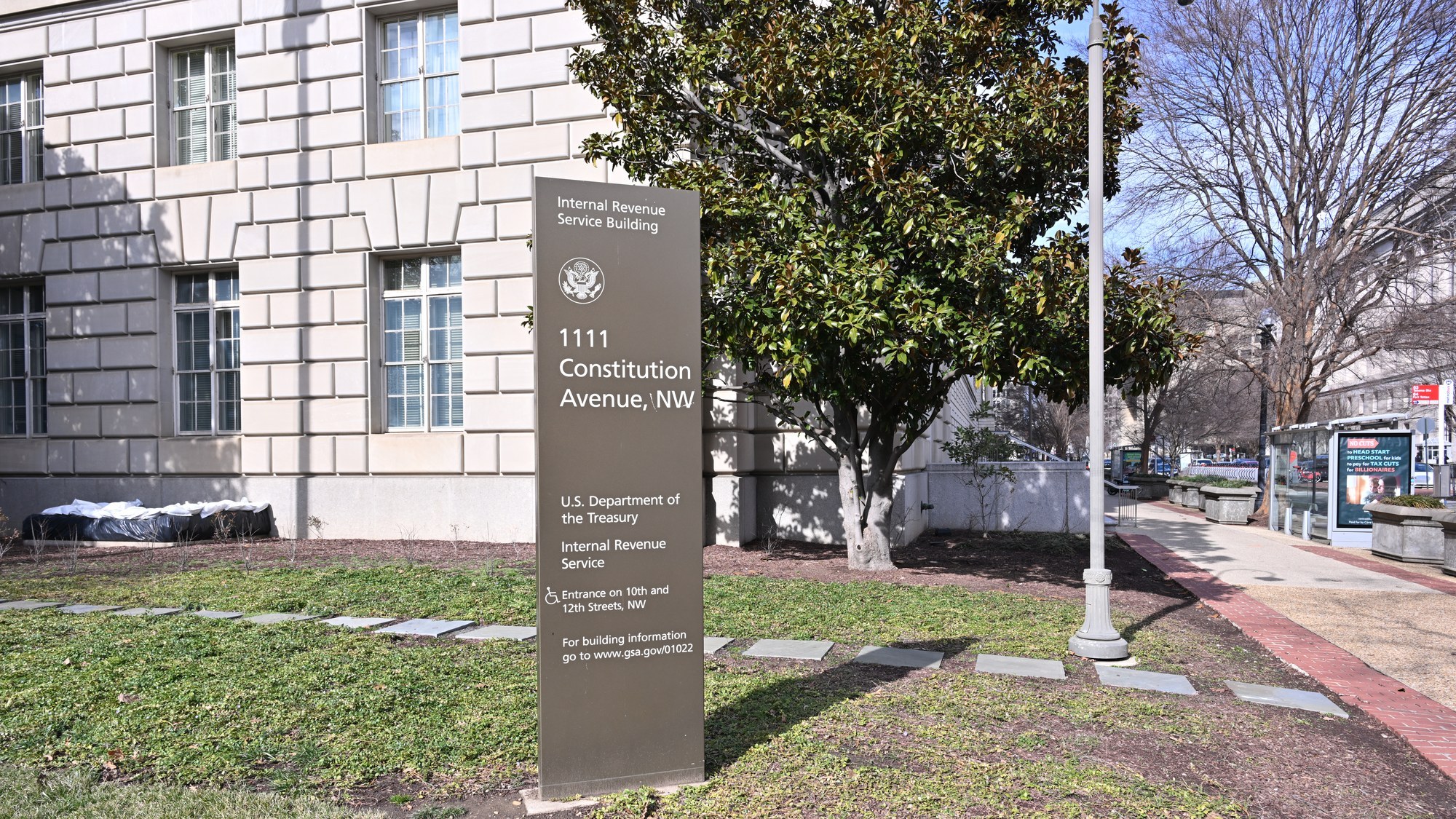
The IRS has confirmed that the annual gift-tax exclusion for 2026 holds steady at $19,000 per recipient, the same figure that applied in 2025. That means any individual can transfer up to $19,000 to as many separate people as they choose during the calendar year without reducing the lifetime estate and gift tax exemption or triggering a federal gift-tax return. For families with sizable estates, this per-recipient structure creates a straightforward channel to move wealth while the lifetime exemption itself faces ongoing legislative uncertainty.
A Flat $19,000 Ceiling Meets an Uncertain Lifetime Exemption
The annual exclusion works on a per-donee basis. A parent with three adult children can give each one $19,000, transferring $57,000 in a single year without filing Form 709, the federal gift-tax return. A married couple can each use the exclusion independently, doubling the tax-free amount per recipient. The IRS spells this out in its gift-tax guidance, which uses the 2026 figure in a worked example showing exactly how the per-person math operates.
What makes this static number significant right now is the backdrop against which it sits. The lifetime estate and gift tax exemption, which ballooned after the 2017 tax law, has been the subject of repeated legislative debate. The IRS published its 2026 inflation adjustments, including provisions tied to the One, Big, Beautiful Bill, and the annual exclusion for gifts remained at $19,000. A separate, higher limit applies to gifts made to a non-citizen spouse for 2026, according to that same IRS inflation-adjustment release. With the annual figure locked in and the lifetime exemption subject to future congressional action, donors whose estates sit near the exemption threshold have a clear incentive to spread gifts across as many recipients as possible each year.
The hypothesis that a fixed annual exclusion paired with lifetime-exemption uncertainty will push more donors toward multi-recipient gifting is logical but not yet provable. The IRS does not publish projected Form 709 filing volumes or average gift sizes for 2026, and no demographic breakdown shows which income bands use the annual exclusion most heavily. What the available data does confirm is the mechanical advantage: every additional recipient multiplies the amount a donor can move outside the taxable estate without paperwork or exemption erosion.
How the $19,000 Exclusion Interacts with Tuition and Medical Payments
The $19,000 figure is not the only route for tax-free transfers. Federal law carves out a separate, unlimited exclusion for direct payments of tuition to educational institutions and medical expenses paid to providers. This provision, codified in 26 U.S. Code Section 2503(e) and its implementing regulation at 26 CFR 25.2503-6, operates independently of the annual exclusion. A grandparent who writes a $50,000 tuition check directly to a university on behalf of a grandchild does not consume any portion of the $19,000 annual exclusion for that grandchild and does not reduce the lifetime exemption either.
This distinction matters for families planning large educational or healthcare expenditures. The tuition and medical exclusion is unlimited in dollar terms, but it requires payment directly to the institution or provider. Money routed through the student or patient first does not qualify. When combined with the $19,000 per-person annual exclusion, these two mechanisms allow substantial wealth movement in a single year without any gift-tax consequences.
One technical constraint that donors sometimes overlook is the present-interest requirement. The annual exclusion applies only to gifts of a present interest in property, meaning the recipient must have an immediate right to use or benefit from the gift. Transfers into certain trusts or arrangements where the beneficiary cannot access the funds right away may not qualify. The IRS regulation at 26 CFR 25.2503-3 draws this line, and gifts that fail the present-interest test count against the lifetime exemption regardless of their size.
Open Questions About Filing Triggers and Future Adjustments
When a donor gives more than $19,000 to any single person in a calendar year, the IRS requires the donor to file Form 709. The IRS gifts FAQ makes clear that this filing obligation kicks in when gifts to at least one person exceed the annual exclusion and do not qualify for another exclusion such as the tuition or medical payment carve-out. Filing the return does not necessarily mean the donor owes tax; it simply records the excess gift against the lifetime exemption.
Several questions remain unanswered in the public record. No IRS data projects how many Form 709 returns will be filed for the 2026 tax year or how many donors will consciously use the $19,000 exclusion as part of a multi-year estate reduction strategy. Likewise, there is no official forecast of how the eventual fate of the expanded exemption will affect gifting behavior in the years immediately surrounding any change.
Congressional researchers have noted that estate and gift tax rules have shifted repeatedly over the past several decades. A report from the Congressional Research Service traces how exemption levels, tax rates, and related provisions have been revised as lawmakers alternated between tightening and loosening transfer-tax policy. That historical pattern underscores why many planners view the current exemption level as provisional rather than permanent, even though the $19,000 annual exclusion for 2026 is fixed by regulation unless Congress intervenes.
The interplay between a stable annual exclusion and a potentially changing lifetime exemption leaves donors with a narrow set of certainties. For the 2026 tax year, they know exactly how much they can give per recipient without filing a return, and they know that direct tuition and medical payments remain outside both the annual and lifetime limits. Beyond that, they are operating in a policy environment where future Congresses may either extend current law, allow provisions to sunset, or enact a different regime altogether.
In practice, this means that families with estates close to the projected exemption threshold often focus on what they can control. They may choose to make systematic annual gifts up to $19,000 per person, combine those transfers with direct payments of tuition and medical bills, and ensure that any trust structures are drafted to satisfy the present-interest requirement where possible. Others may decide to wait for clearer legislative signals before making large, irrevocable transfers that would consume a significant portion of the lifetime exemption.
For now, the 2026 rules present a familiar but strategically important framework. The unchanged $19,000 annual exclusion offers a predictable tool for incremental wealth transfers, while the broader estate and gift tax landscape remains subject to political and economic forces that are still playing out. Donors who understand how these pieces fit together can at least make informed decisions within the boundaries the IRS has already drawn, even as they watch for the next round of changes that could reshape the long-term tax cost of passing wealth to the next generation.