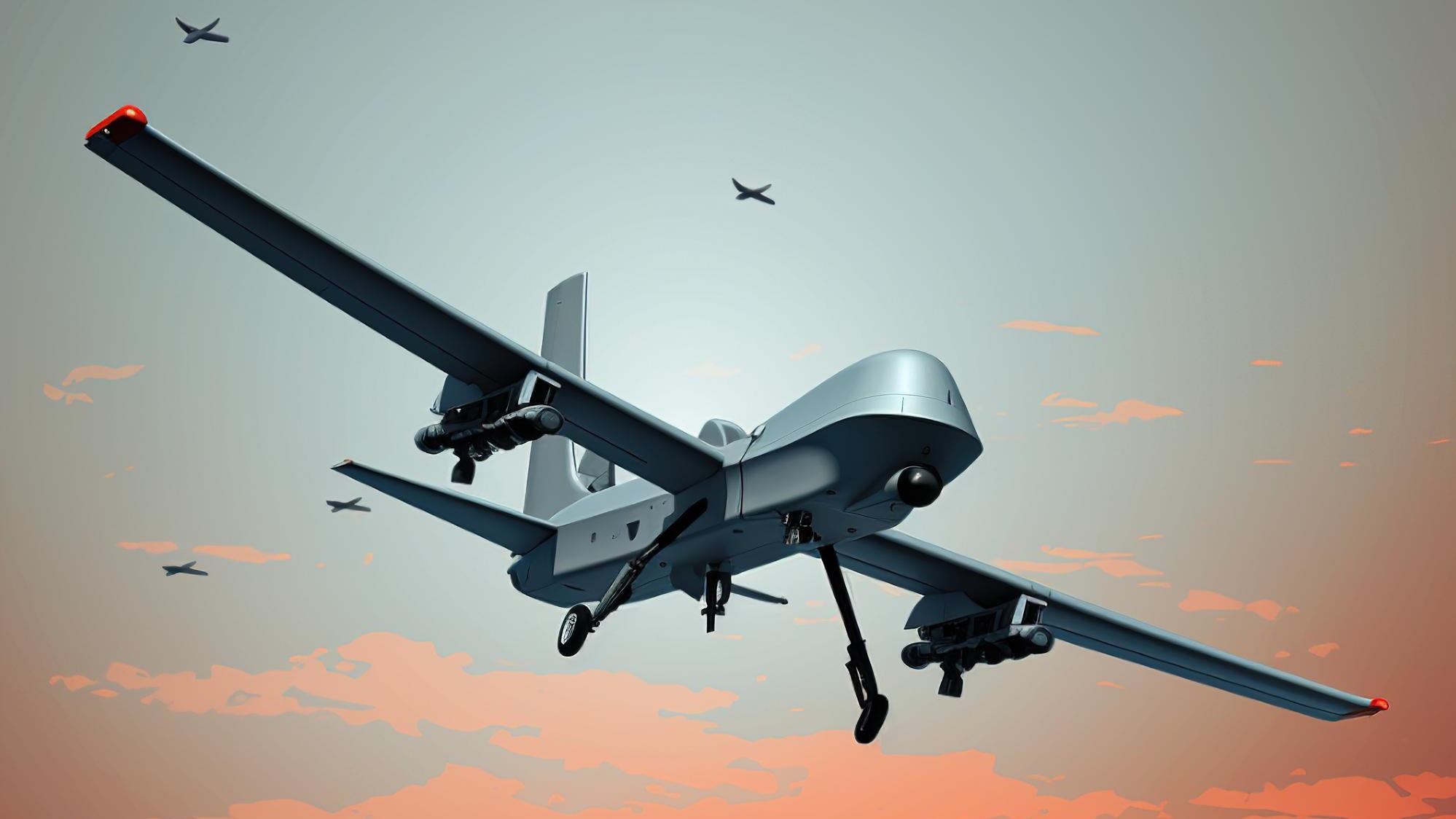
The British government is sending mine-hunting drones, counter-drone defenses, fast jets, and a warship to the Strait of Hormuz, backed by £115 million in new funding that makes it the largest European military commitment to Gulf security since the confrontation with Iran turned into open conflict earlier this year.
The Ministry of Defence confirmed the package in late May 2026, describing it as a move to strengthen Britain’s ability to “respond quickly to interference” in the strait. The language was carefully chosen: not a declaration of offensive operations, but a signal that the equipment heading to the Gulf is meant to be used, not paraded.
That distinction matters because the Strait of Hormuz is not an abstraction. The 21-mile gap between Iran and Oman carries roughly a fifth of the world’s traded oil, according to the U.S. Energy Information Administration. When tankers get seized or struck, insurance premiums spike, shipping companies reroute around the Cape of Good Hope, and fuel costs climb across Europe. The British deployment is as much about keeping energy markets stable as it is about projecting military force.
What the £115 million buys
The funding covers four capability areas. Autonomous mine-hunting drones will scan the seabed for explosive devices, replacing the dangerous work traditionally done by clearance divers and specialized minesweepers. Counter-drone systems will detect and neutralize the small unmanned aerial vehicles that Iran-aligned forces have repeatedly used to harass commercial shipping. Royal Air Force jets will fly air cover over the shipping lanes, and a Royal Navy warship will serve as a command hub and logistics platform.
The layered design, pairing persistent unmanned surveillance with manned air power and a surface combatant, mirrors the force structure the U.S. Navy maintains in the Gulf through its Bahrain-based Fifth Fleet, which has integrated unmanned surface and aerial platforms into routine patrols since 2022, according to U.S. Central Command public statements. Britain already keeps at least one warship in the region year-round under Operation Kipion, a continuous naval presence east of Suez dating to the early 1980s. But the new money goes well beyond routine rotation costs. It procures additional autonomous platforms and dedicated counter-drone hardware that the Royal Navy had been trialing without committing them to a specific theater at this scale.
Why the timing matters
The announcement tracks directly to the escalation that has unfolded since late 2025. A series of Iranian Revolutionary Guard Corps fast-boat confrontations with commercial tankers, followed by drone and missile strikes on shipping in the wider Gulf, pushed Washington to expand its carrier presence and press European allies to contribute more than token patrol vessels.
France has deployed a frigate and the Netherlands a mine countermeasures ship, according to European defense officials cited in reporting by Reuters and the Financial Times. Neither commitment approaches the British package in scope or cost. London’s £115 million is the first time a European government has attached a substantial, public price tag to a military package built specifically for this confrontation.
Domestic politics played a role, too. The UK government has faced sustained criticism that years of fleet reductions left the Royal Navy too stretched to meet its commitments worldwide. Tying £115 million to a high-profile, operationally urgent mission lets ministers show both spending and purpose at a moment when the Gulf dominates headlines. However, no formal parliamentary debate on the deployment had been scheduled as of early June 2026, and neither the official opposition nor minor parties had issued detailed public responses to the announcement.
The economic stakes
For the shipping industry, the value of a visible military presence in the strait is partly psychological. War-risk insurance premiums for Gulf transits have climbed sharply since the IRGC began targeting commercial vessels, according to Lloyd’s Market Association joint war committee bulletins. Some operators have absorbed the cost; others have rerouted cargoes around Africa, adding weeks and millions in fuel expenses.
British patrols, combined with the prospect of rapid air response and autonomous mine clearance, can influence how insurers price risk and how charterers plan routes. If the deployment persuades underwriters that the strait is more defensible, premiums could ease and more tankers could resume direct transits. That outcome would benefit European consumers far more visibly than any diplomatic communique.
What remains unanswered
The MoD has not published a line-item breakdown of the £115 million. Without one, it is impossible to tell how much is buying new platforms versus covering the operational costs of deploying equipment the military already owns. That distinction matters for judging whether this is a genuine capability expansion or a repackaging of existing resources.
Rules of engagement for the autonomous systems have not been disclosed. Mine-hunting drones operating in congested shipping lanes, where IRGC naval vessels and commercial traffic share the same water, raise pointed legal and safety questions. Whether British operators can neutralize a suspected mine on their own judgment or must wait for centralized command approval could determine how useful the systems are when minutes count.
Coordination with allies is another open question. The United States runs maritime security operations through the Bahrain-based Fifth Fleet and the International Maritime Security Construct. Gulf states including Saudi Arabia, the UAE, and Bahrain operate their own patrols. How British drone sensor feeds will plug into American and regional partner networks has not been spelled out. Past coalition operations in the Gulf have been plagued by interoperability problems that led to duplicated effort and, at times, dangerous gaps in coverage.
There is also no firm timeline for when the full package will be operational. The MoD has confirmed intent and described capabilities but has not provided deployment dates, rotation schedules, or a planned duration. For shipping companies and insurers trying to price risk beyond the current quarter, that silence is a real constraint.
What the £115 million commitment changes for Hormuz security
Britain’s package does not, on its own, neutralize the threat Iran poses to traffic through the strait. The IRGC Navy fields large numbers of fast attack craft, shore-based anti-ship missiles, and its own drone fleet from bases just miles from the shipping lanes, according to assessments by the International Institute for Strategic Studies. No single European deployment can match that concentration of force.
But crossing the threshold from symbolic patrols to a funded, multi-domain commitment changes the political calculus. It raises the cost of withdrawal for London and creates pressure on other European NATO members to follow with their own contributions. The emphasis on unmanned systems also marks a shift in how European navies think about Gulf operations: autonomous drones can survey mined waters faster and without the personnel risk that makes casualties politically toxic for governments whose publics remain skeptical of the conflict.
As of early June 2026, the picture is this: Britain is moving real military capability into the world’s most important oil chokepoint, built around the unmanned and counter-drone technologies that match the threats Iran has actually used. The unanswered questions about funding specifics, rules of engagement, and allied integration will determine how effective that capability proves in practice. But the political commitment is no longer hypothetical. It has a price tag, and it is heading to the Gulf.