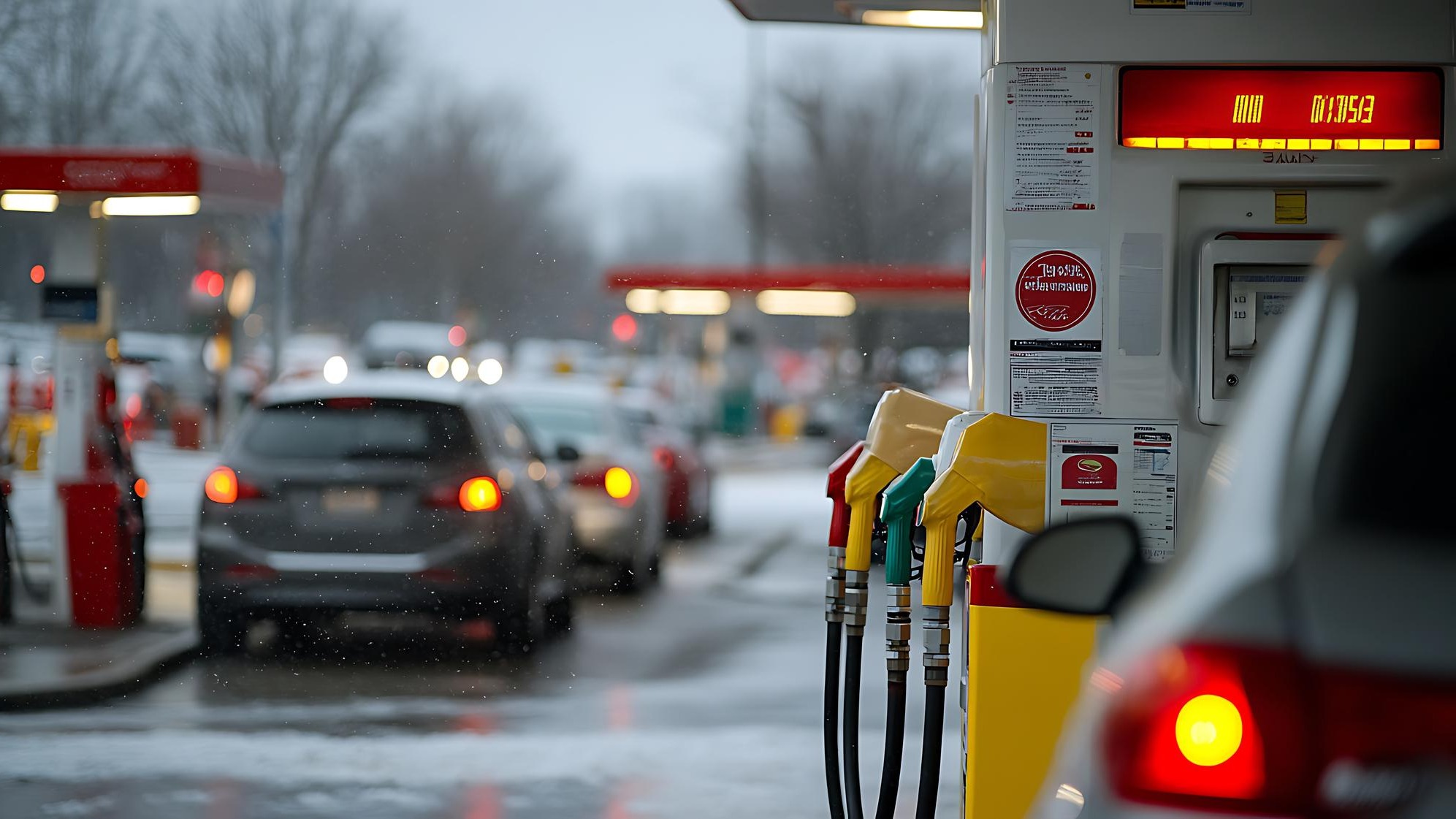
Millions of American drivers are set to hit the road for the July 4 holiday weekend as gasoline prices slip below a symbolic threshold. AAA reported a national average of $3.999 per gallon for regular gasoline on June 18, 2026, the first time the price has dipped under $4 since March. That relief at the pump, though, comes with a catch: prices still sit roughly 25 percent above where they were a year ago, squeezing household budgets even as cheaper fuel encourages longer trips.
Sub-$4 gas meets a 25 percent year-over-year gap
The drop below $4 carries real weight for families planning summer travel. After months of elevated spring prices, the national average crossing back under that round number acts as a psychological green light for discretionary driving. Yet the year-over-year increase of 25 percent means a fill-up that cost $50 last July now runs closer to $62 or $63, depending on tank size. That tension between short-term relief and lingering sticker shock is likely to shape how far and how often people drive over the holiday.
The EIA weekly retail series provides the official government benchmark for tracking these shifts. Its data, published each week with regional breakdowns by Petroleum Administration for Defense District, confirms the national downward trend that brought the average to the edge of $4. Drivers in some regions, particularly the Gulf Coast and Midwest, have already seen averages well below that mark, while West Coast motorists continue to pay significantly more.
Those regional differences reflect not just taxes and local competition, but also the structure of the fuel supply chain. Refinery access, pipeline capacity and seasonal maintenance cycles can all widen or narrow gaps between markets. In the run-up to a major holiday, even small disruptions can briefly push local prices higher than the national trend would suggest, especially in areas with limited storage or refining capacity.
What the $3.999 reading actually tells us
AAA’s $3.999 figure, independently verified by Associated Press reporting, represents a single-day national average. It does not guarantee that prices will stay below $4 through the holiday itself. Refinery output, crude oil market swings and geopolitical developments can reverse a trend in days. The reading does, however, establish a baseline that travel forecasters and consumers use to gauge affordability.
Government analysts track those short-term dynamics in products like the weekly gasoline update, which summarizes changes in prices, inventories and demand indicators. While the latest readings point to easing pressure at the pump, they also show that gasoline stocks are not dramatically above normal, leaving limited cushion if demand spikes or if unplanned refinery outages occur during the peak travel window.
Underlying fuel costs are also influenced by related energy markets. Natural gas, for example, affects refinery operating expenses and petrochemical feedstock prices. The Energy Information Administration’s natural gas storage data offer one window into those broader conditions, signaling whether energy input costs are likely to add pressure or provide relief in coming months. For now, gasoline prices remain the more immediate driver of consumer decisions about holiday road trips.
A reasonable expectation is that the combination of sub-$4 prices and still-elevated year-over-year costs will produce a modest net increase in total vehicle miles traveled over the holiday. The clearest way to test that hypothesis will be post-July 4 traffic counter data from state departments of transportation and the Federal Highway Administration, not pre-holiday survey projections. Survey-based forecasts tend to capture intent rather than behavior, and the gap between the two widens when prices sit near a round-number boundary that consumers interpret differently depending on their local market.
Gaps in the holiday travel forecast
No official government projection for July 4 vehicle travel volume appears in the current public record. The Department of Transportation and the Federal Highway Administration typically release holiday travel estimates closer to the event or after the fact, and pre-holiday numbers from private organizations rely on consumer polling rather than observed traffic flows. That means the “record” framing circulating in advance of the holiday rests on extrapolation from fuel prices and recent travel trends rather than confirmed counts.
The 25 percent year-over-year price increase also introduces uncertainty about which income groups will adjust their travel plans the most. Higher-income households are more likely to absorb the additional $10 or $15 per tank without cancelling trips, while lower- and middle-income drivers may shorten itineraries, combine errands or opt for closer destinations. That kind of selective cutback can leave overall traffic volumes looking strong, even as some families quietly scale back.
Another open question is how drivers respond if prices edge back above $4 just before the holiday. Behavioral research suggests that crossing a round-number threshold can trigger outsized reactions, even when the underlying change is only a few cents per gallon. If late-June market volatility nudges the national average higher again, some discretionary travel could be postponed to later in the summer, when families hope prices will stabilize.
For now, the best guide is the data already in hand: a national average just under $4, a sizeable gap compared with last year and a travel season that remains highly sensitive to even modest shifts in fuel costs. As agencies compile post-holiday traffic counts and fuel consumption figures, those numbers will offer a clearer answer to whether sub-$4 gasoline was enough to overcome lingering sticker shock and keep Americans on the road for Independence Day.