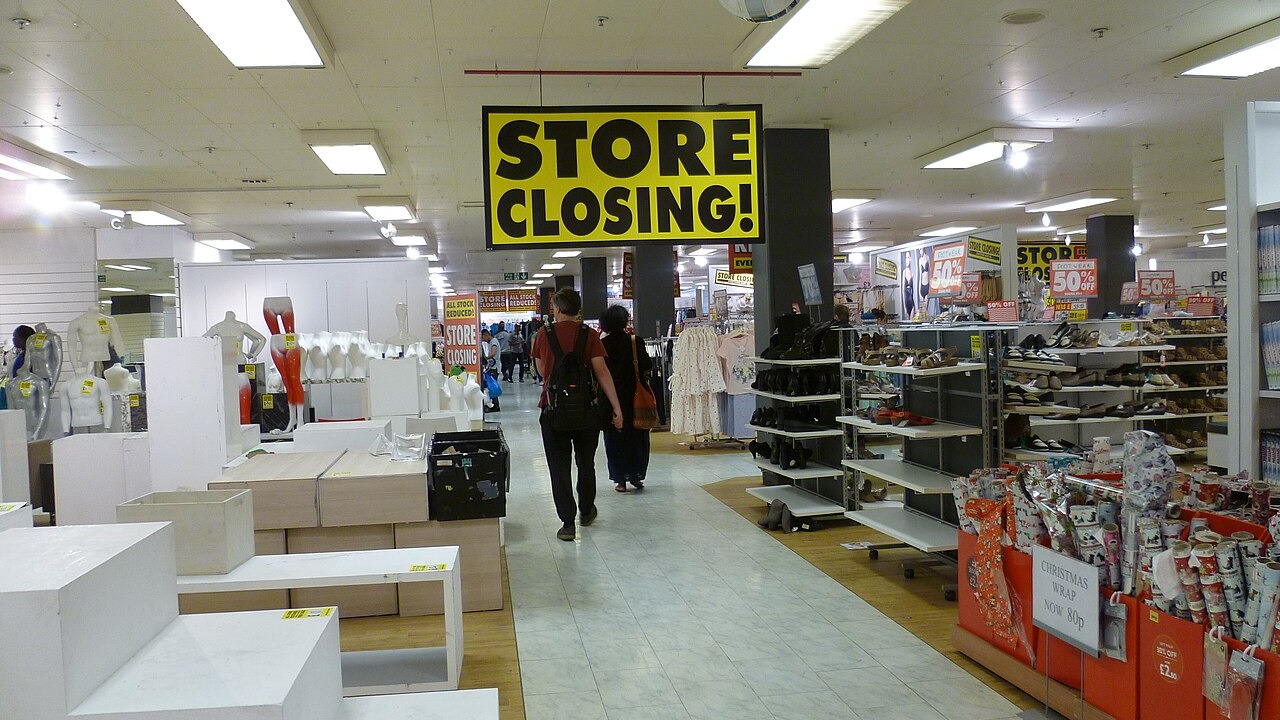
U.S. retailers are projected to shut about 7,900 stores this year, a fresh warning sign for shopping streets and malls that still have not fully recovered from the pandemic shock. The figure comes from Coresight Research, which tracks national store counts and has become a reference point for chains, landlords, and investors. The closures threaten to thin out shopping options in many communities and raise hard questions about what fills the empty space.
Why U.S. retailers are on track to shut matters now
The projected 7,900 store closures for 2025 land on top of 7,325 closures that Coresight counted in 2024, according to a recent Coresight Research report. That back‑to‑back wave signals that retailers are still cutting physical footprints even as consumers continue to shop.
Coresight attributes the 2024 shutdowns to three main forces: liquidations, Chapter 11 restructurings, and what it calls “legacy footprint reshaping,” meaning chains are closing older or poorly performing locations while trying to keep their brands alive. Those same pressures are shaping the 2025 outlook. Retailers that took on heavy leases before the pandemic are still working through those commitments in a world where more purchases happen online.
The human impact shows up locally. When a chain uses Chapter 11 to close dozens of branches at once, entire shopping centers can lose key tenants. The working hypothesis for 2025 is that this pattern will fall hardest on mid‑sized suburban malls whose anchors already went through bankruptcy in 2023 and 2024. If that holds, those malls are likely to see commercial vacancy rise faster than national averages, as smaller in‑line stores struggle without anchor traffic.
There is not yet public data that cleanly measures whether vacancy in those specific malls is on track to exceed national rates by 15 percent within 18 months. However, the concentration of closures in chains that are restructuring suggests that certain properties will experience a sharper hit than others. For nearby residents, that could mean longer drives for basic goods and fewer entry‑level retail jobs, even if overall consumer spending stays steady.
The evidence behind U.S. retailers are on track to shut
The projection of about 7,900 store closures for 2025 comes from Coresight’s national tracking of announced shutdowns and openings, described in the same Coresight Research release that documented 7,325 closures in 2024. Coresight’s analysts compile those figures from company announcements, bankruptcy filings, and other public disclosures.
National accountability coverage has adopted those counts as a benchmark for judging the health of brick‑and‑mortar retail. A recent article on store closings cited the 7,325 shutdowns in 2024 and described how Coresight and its analysts have become the early‑year source for closure announcements and projections. That coverage also pointed back to 2020 as the pandemic peak for store closures, using Coresight’s historical data to show how the current wave compares.
The pattern that Coresight highlights is a shift from emergency pandemic closures to strategic retrenchment. In 2020, shutdowns were driven heavily by lockdowns and sudden collapses in foot traffic, according to the same national reporting that referenced Coresight’s figures. By contrast, the 7,325 closures in 2024 and the projected 7,900 in 2025 are tied more directly to financial restructurings and long‑planned efforts to trim “legacy” store fleets.
That distinction matters because it shapes what comes next. Liquidations often erase a brand from entire regions, while Chapter 11 restructurings can keep a chain alive with fewer locations. Coresight’s breakdown of 2024 drivers into liquidations, Chapter 11 restructurings, and legacy footprint reshaping suggests that many 2025 closures will be part of managed downsizing rather than total collapse. Even so, the net effect for a town that loses its last big‑box store is the same: fewer places to shop and work.
What remains unresolved for U.S. retailers are on track to shut
Several key questions remain open despite the clear headline numbers. Coresight’s public release does not include a detailed methodology appendix that shows how each of the projected 7,900 closures for 2025 links back to specific retailer plans. Without that, outside analysts cannot easily test how much of the projection depends on a few large chains versus many smaller ones.
There is also limited visibility into how these closures map onto particular property types. The hypothesis that mid‑sized suburban malls will bear the brunt of the 2025 wave rests on the known role of Chapter 11 restructurings and legacy footprint reshaping, but Coresight’s figures do not break closures out by mall versus strip center or by urban versus suburban location. Public filings from landlords and real‑estate investment trusts that own those centers are not yet fully aligned with the projected counts.
Another uncertainty is how quickly landlords can refill space. The available sources do not provide government establishment data or detailed leasing statistics that would show whether vacancy in affected areas is already running 15 percent above national levels or is likely to get there within 18 months. Without that, the impact on local tax bases and employment remains hard to quantify beyond the store‑level closures that Coresight tracks.
For readers, the next signal to watch will be which chains appear most often in midyear closure lists and bankruptcy filings. If those lists are dominated by anchors in suburban malls, the hypothesis about concentrated vacancy will gain weight. If instead closures spread more evenly across formats, the damage may be more diffuse but still significant for workers and shoppers who rely on nearby stores.