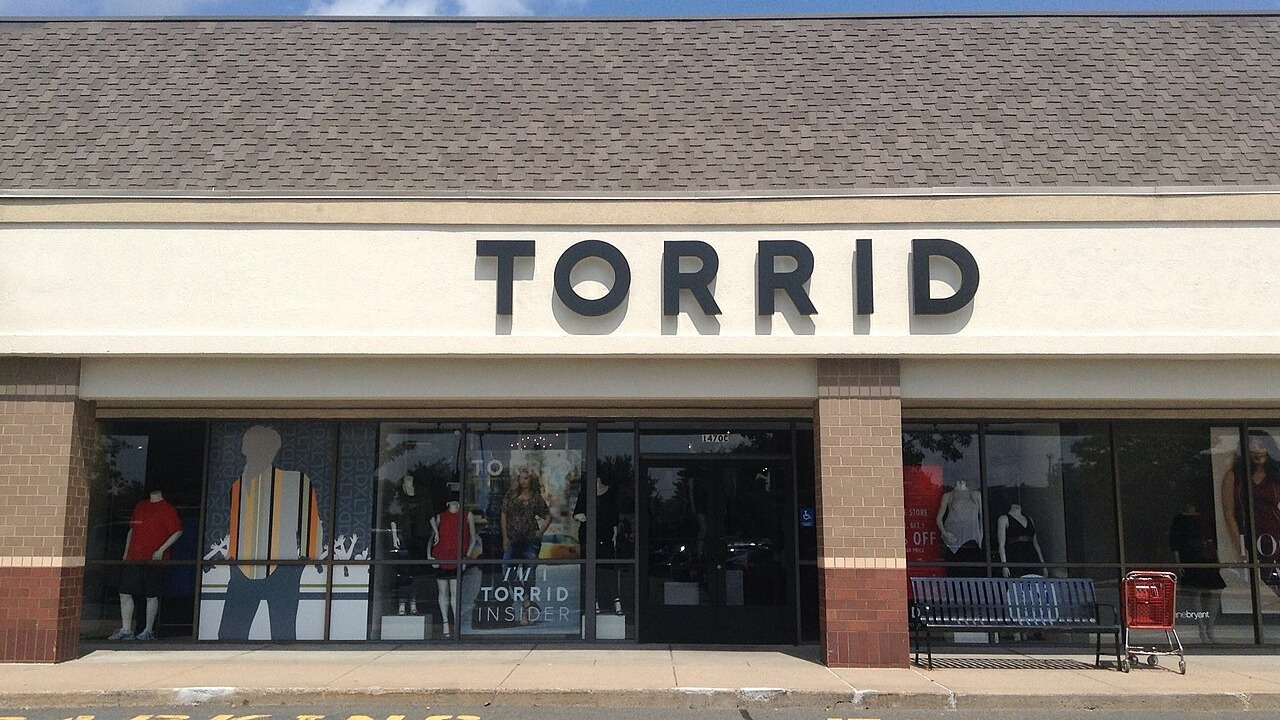
Another familiar mall tenant is shrinking its physical footprint, and this time the retreat is happening without a bankruptcy filing to force it. Torrid, the plus-size women’s apparel chain found in shopping centers across the country, is pulling back from brick-and-mortar retail in a big way as it shifts the business toward online sales.
The pullback is one of the larger store-count reductions announced by a specialty apparel chain this year. It reflects a broader shift in how clothing gets sold, and it lands squarely on the kind of enclosed and strip malls that older shoppers have relied on for decades.
The scope of the closures
Torrid plans to shutter as many as 180 underperforming locations, according to a store-closure roundup from Simplistically Living. That would represent a substantial share of a chain that operated several hundred stores at its peak, and it puts Torrid among the more aggressive apparel retreats of 2026.
Most of the cutting has already happened. The company closed 151 locations in 2025 and continued the pattern into the new year, with additional stores going dark in the opening months of 2026, as Newsweek reported. The remaining closures are scheduled to roll out through the first half of the year, bringing the running total toward that 180-store ceiling.
A turnaround, not a collapse
What separates Torrid from many of the retail names in the headlines this year is that it is not in bankruptcy. The closures are a deliberate strategic move rather than a court-ordered liquidation. Management has described the plan as a way to reduce fixed costs and redirect spending toward the parts of the business that are growing, as TheStreet noted.
The logic rests on where Torrid’s customers actually shop. Roughly seven in ten of the chain’s buyers already use its website, so the company is betting it can serve most of its base online while carrying far less expensive retail real estate. Leases, store staff and the overhead of a large physical fleet are heavy costs for an apparel chain, and trimming them is meant to protect profitability even if total store count falls sharply.
The pressure to act showed up in the numbers. Torrid reported a decline in sales in its most recent quarter compared with a year earlier, the kind of soft top line that pushes a specialty retailer to defend margins by closing weaker doors rather than waiting for foot traffic to recover.
Why the mall math keeps shifting
Torrid’s retreat fits a pattern that has reshaped American retail for a decade and accelerated in recent years. Specialty apparel chains that once anchored their growth to new store openings are now measuring success by digital sales and profitability per location, not by how many storefronts carry the logo. When a chain concludes that a store no longer earns its rent, closing it has become the default response.
For older shoppers, the change is more than a business-school abstraction. Plus-size clothing has historically been harder to find in person, and chains like Torrid filled a real gap for customers who preferred to try garments on before buying. As those stores thin out, the nearest location can move an hour away or vanish entirely, nudging even reluctant shoppers toward ordering online and dealing with returns by mail.
The financial angle matters too. The women’s plus-size apparel market has continued to expand overall, even as the sales move online, which is part of why Torrid frames the closures as a repositioning rather than a surrender. A growing category served through a leaner store base can still be a viable business. But the transition rarely runs smoothly, and specialty apparel is a notoriously fickle corner of retail where turnaround plans often need several attempts before they take hold.
What it signals for investors and shoppers
For anyone who holds retail stocks inside a retirement portfolio, Torrid is a useful case study in reading a closure announcement correctly. A wave of shuttered stores can mean a company is failing, or it can mean management is cutting costs to survive a shift in how people shop. The two look similar in a headline but point to very different outcomes. The presence or absence of a bankruptcy filing, the direction of online sales, and whether the underlying category is growing or shrinking are the details that separate a genuine collapse from a defensive restructuring.
For shoppers, the practical steps are simpler. Gift cards and loyalty rewards are worth using before a nearby store closes, since redeeming them can become more cumbersome once a location shuts. Anyone who prefers in-person shopping may want to confirm that a local Torrid is staying open before making a special trip. And customers who end up shifting to the website should factor in shipping and return policies, which can quietly add cost compared with buying in a store.
The broader message is that a shrinking store count is now a permanent feature of the retail landscape, not a temporary blip. Chains that survive the transition tend to be the ones that cut early and lean into the channels their customers already prefer. The retailers that wait too long, hoping foot traffic will drift back, are the ones that end up in bankruptcy court rather than in a managed retreat like this one. Torrid, at least for now, is choosing to shrink on its own terms while it still has the financial room to do so.
Whether that bet pays off will show up over the next several quarters, in its sales trend and its profitability, rather than in the raw number of stores it chooses to keep. For a shopper on a budget or an investor weighing a retail holding, the sales and margin figures are the real scoreboard. The store closures are simply the most visible part of a much quieter financial calculation, and watching how the numbers move after the cutting is done reveals far more than any single closure list ever could.
This article was produced with AI assistance and reviewed before publication.
Free tool for readers: Most people don’t find out they’re off track until it’s too late. You can see where your retirement stands with a free Retirement Safety Score in about five minutes — no sign-up required to see it.