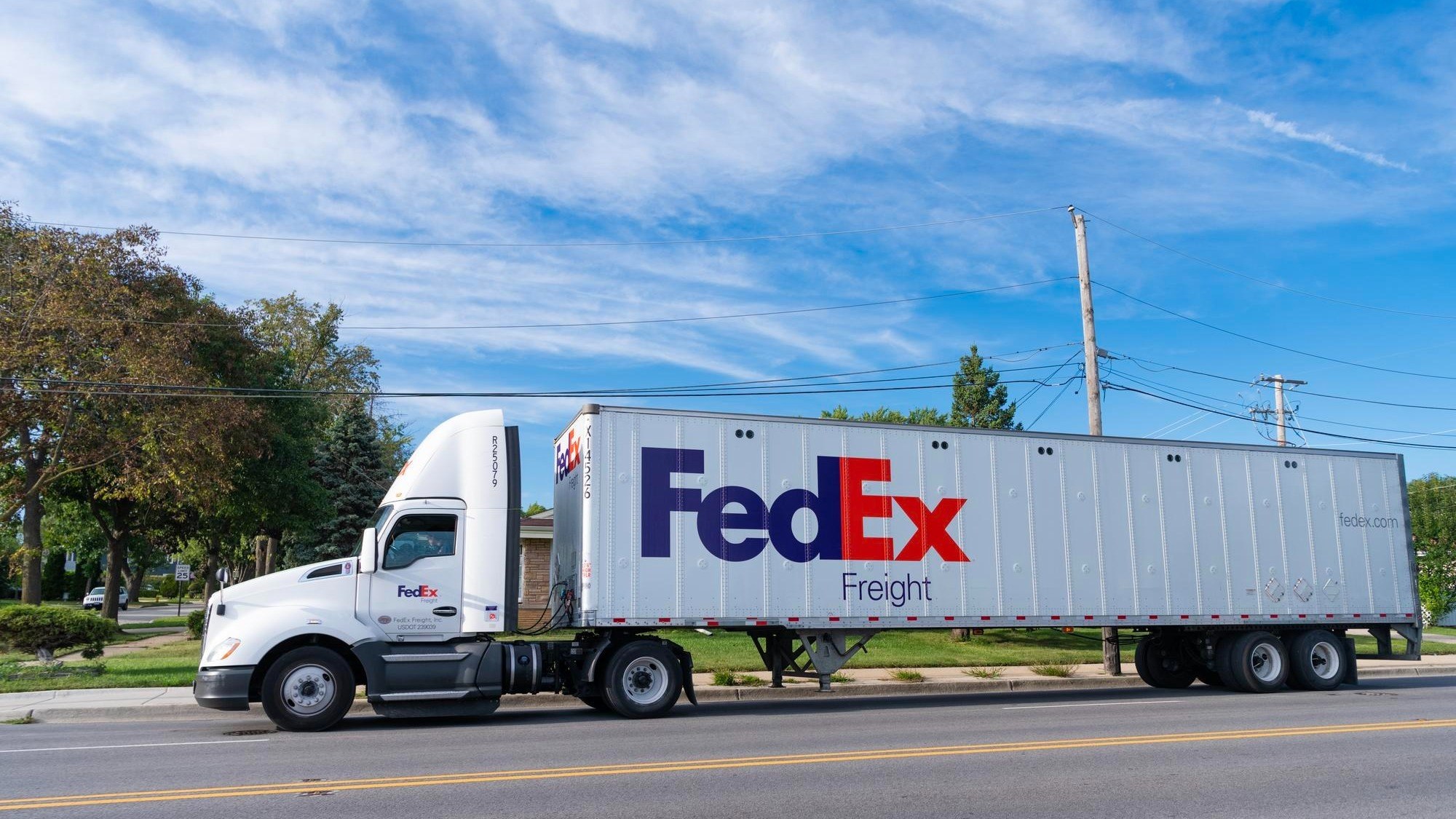
FedEx will start charging holiday demand surcharges on October 26, 2026, and the largest listed amount is $4.05 per package. That figure applies to one service, FedEx Ground Economy, and only during the later part of the season. The services most households and small sellers use carry smaller surcharges, topping out at 80 cents for Ground and Home Delivery packages sent to residences.
The charges are part of FedEx’s 2026 peak-season price schedule, which the company posted in July; its page for U.S. package demand surcharges is stamped as updated on July 22, 2026. The first piece took effect on September 28, and the demand surcharges follow four weeks later, on a schedule that runs into the new year.
FedEx’s demand surcharge table, service by service
FedEx’s own demand surcharges page sets out two price tiers for each service. The first runs from October 26 through November 22. The second starts November 23 and runs through December 27. Surcharges stay in place through January 17, 2027.
For overnight services (First, Priority and Standard Overnight) the surcharge is $1.30 per package in the first tier and $2.55 in the second. For 2Day and Express Saver it is $1.20, then $2.35. For Ground and Home Delivery packages going to residences it is $0.50, then $0.80. For Ground Economy it is $2.55, then $4.05.
That makes $4.05 the ceiling of the whole schedule, and a narrow one: Ground Economy packages shipped between November 23 and December 27. A Ground Economy package sent in the first four weeks of the window carries $2.55, and a residential Ground parcel never carries more than $0.80.
What starts on October 26 and what started on September 28
The October 26 date applies to the four demand surcharges above. A separate set of handling and size charges began earlier, on September 28. FedEx lists the Additional Handling surcharge at $8.80 per package from September 28 to November 22, rising to $11.85 from November 23 to December 27. The Oversize charge is $95.75, rising to $117.25, and the Ground Unauthorized Package charge is $535, rising to $595, on the same dates.
Those three apply to unusually large, heavy or non-conforming packages, which makes them mostly a business concern. The October 26 surcharges are the ones that touch ordinary parcels. FedEx’s rate changes page, last updated for the demand schedule on July 22, 2026, also notes a separate update, posted September 4, under which FedEx adjusts international demand surcharges effective September 21, 2026, including its demand charges for additional handling, oversize and unauthorized packages. The same page refers to a Ground Economy rate increase effective January 4, 2027, after the peak window closes.
What the amounts mean for a household or small shipper
The table is a price list per package, so the cost scales with volume. A seller sending 20 residential Ground parcels in the second tier would see $16.00 in demand surcharges across those shipments, against $10.00 for the same 20 in the first tier. Twenty overnight packages in the second tier would carry $51.00. The same 20 packages sent as Ground Economy in the second tier would carry $81.00 in surcharges alone. These figures are straight multiplication of FedEx’s per-package amounts, not FedEx estimates, and they exclude base shipping rates and any other surcharges.
The tables do not say who ultimately bears the cost. A household that mails a gift pays whatever its retailer or carrier charges, and FedEx’s pages do not describe how retailers will pass the surcharges to shoppers. What the pages do establish is the cost FedEx attaches to each package during the peak window.
The step-up on November 23 is steeper for some services than others. By The Financial Wire’s arithmetic on FedEx’s amounts, the second tier is 60 percent higher than the first for residential Ground ($0.50 to $0.80), about 59 percent higher for Ground Economy ($2.55 to $4.05), 96 percent higher for overnight services ($1.30 to $2.55) and 96 percent higher for 2Day and Express Saver ($1.20 to $2.35). A household sending five gift parcels by residential Ground in the second tier would pay $4.00 in surcharges, roughly what one Ground Economy package carries at the peak.
Timing, tiers and what “up to” covers
The “up to” in the headline is accurate in a specific way: it names the top of the schedule, and only one service reaches it. Each service’s lower figure is the first-tier price, which applies for the first four weeks. For a shipper, the practical dates are October 26, when the first tier starts, and November 23, when every tier steps up.
FedEx tells shippers on its page to check back for updates, which signals that the schedule can still change. As published on FedEx’s pages when this article was written on October 4, 2026, the demand surcharges start on October 26, 2026, and the highest per-package amount is $4.05 on Ground Economy from November 23 to December 27.
Eleven benefit programs and their income limits
This is for older adults who suspect there is help with everyday costs they are not using but have no single list of what exists. None of the eleven programs it covers starts on its own, and each has its own income limit and its own application.
The Benefits Checklist is a 69-page guide to 11 benefit programs, with the 2026 income limits and a 50-state phone directory, plus a printable tracker that comes with the download.
Look up the 50-state phone directory in The Benefits Checklist →
Written with AI assistance; the surcharge amounts and dates were checked against FedEx’s own demand surcharge page.