A federal program created to pay for COVID-19 tests given to people without insurance reimbursed some Texas clinics at office-visit rates for what the government says was a nasal swab in a parked car. On Oct. 7, two clinics in Plano, Texas, and their owner agreed to pay the United States $20 million to resolve those allegations. The Justice Department’s announcement names Heal 360 Urgent Care PLLC, Heal 360 Primary Care PLLC and Dr. Mohammed Amer Mohiuddin.
The money in dispute belonged to a taxpayer-funded program, the Health Resources and Services Administration’s COVID-19 Uninsured Program. The settlement is a $20 million payment to the United States. The release stresses that the claims resolved by the agreement “are allegations only and there has been no determination of liability.”
The government’s claims cover billing from Jan. 1, 2021 through March 23, 2022, a window that closed more than four years before the Oct. 7 settlement.
Get the deadline alerts before they pass →
What the clinics allegedly billed
The Uninsured Program is formally the HRSA COVID-19 Claims Reimbursement to Health Care Providers and Facilities for Testing, Treatment, and Vaccine Administration for the Uninsured Program. Between about May 2020 and April 2022 it reimbursed eligible providers for COVID-19 tests, testing-related items and services, treatment and vaccines given to uninsured people.
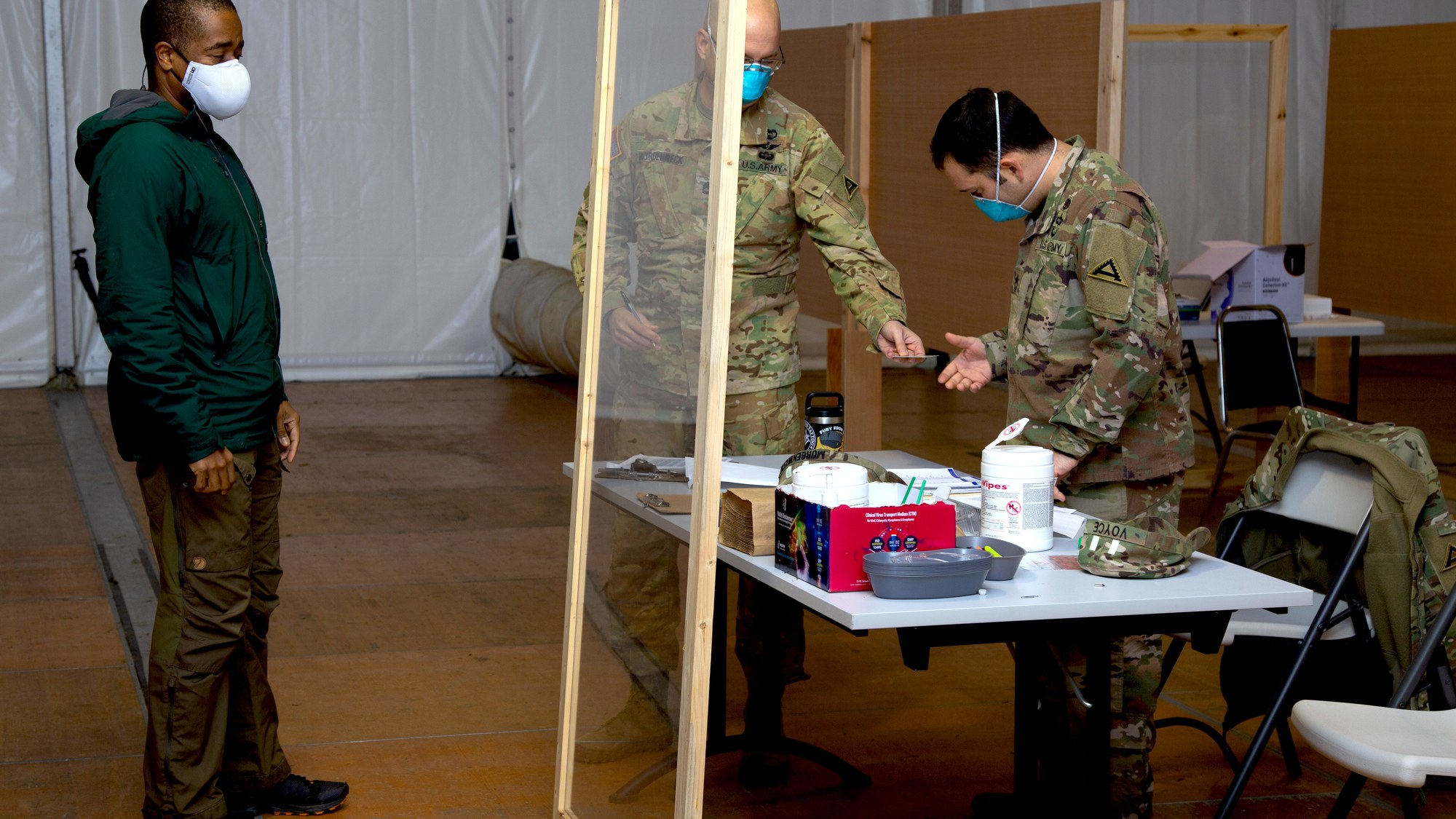
The government’s claims cover Jan. 1, 2021 through March 23, 2022. In that period, the government says, the Heal 360 entities operated dozens of testing sites around Texas, mostly walk-up or drive-through. Patients stayed in their vehicles while staff collected nasal swab specimens, and no other treatment was given. The Justice Department alleges that Heal 360 and Mohiuddin knew the correct billing codes were specimen-collection codes, but billed what are called Higher Level E/M Services instead, which paid substantially more.
E/M stands for evaluation and management, and the term covers office visits billed under CPT codes of varying complexity. Levels 3 and 4 are CPT 99203 and 99204 for new patients and 99213 and 99214 for established patients. During the public health emergency, the release says, the Centers for Medicare & Medicaid Services required CPT 99211 for COVID-19 specimen collection, and the higher-level codes could not be used for mere specimen collection. The release says the clinics submitted hundreds of thousands of claims for the higher-level services.
Template charts and a physician who was not there
To support those claims, the government alleges, the clinics created “fictitious, template-generated medical records” matching the dates of testing, with sections such as past medical history and examination. Remote scribes overseas allegedly generated the charts from information collected at the testing sites. Mohiuddin did not visit or treat patients at the sites, the release says, but was listed as the rendering physician on most of the claims.
Brett A. Shumate, the Justice Department’s Assistant Attorney General for the Civil Division, was among the officials quoted in the announcement, along with U.S. Attorneys Jay R. Combs of the Eastern District of Texas and Ryan Raybould of the Northern District of Texas. Miranda L. Bennett, acting deputy inspector general for investigations at the Department of Health and Human Services’ inspector general, was also quoted. The HHS inspector general’s enforcement listing carries the same Oct. 7 date, and the U.S. Attorney’s Office for the Northern District of Texas posted its own version.
The $20 million and the whistleblowers
The settlement is $20 million paid to the United States. It also resolves a related asset forfeiture proceeding over real properties that Mohiuddin purchased, and proceeds from selling those properties will be credited toward the civil settlement, the release says. It does not mention restitution.
The cases began with whistleblowers. Under the False Claims Act, private individuals can sue on the government’s behalf, and when the case resolves they receive a share. The relators here will receive $3,400,000 of the proceeds. Two such lawsuits were involved: U.S. ex rel. Hooper et al. v. Heal 360 Primary Care, PLLC et al., Case No. 4:21-cv-00569 in the Eastern District of Texas, and U.S. ex rel. Hasan v. Heal 360 Urgent Care, PLLC et al., Case No. 3:22-cv-1333-E in the Northern District. The forfeiture matter was United States v. Real Property Known as 3300 State Highway 78, Garland, TX et al., No. 3:23-cv-2784-X.
The Civil Division’s Commercial Litigation Branch, Fraud Section, and the U.S. Attorney’s Offices for the Eastern and Northern Districts of Texas handled the matter, with substantial help from HHS-OIG. Trial Attorney Elizabeth J. Kappakas, Assistant U.S. Attorneys James Gillingham, Kevin McClendon, Brian Stoltz and Najib Gazi, and John Penn on the forfeiture case are the named attorneys.
Reporting suspected billing fraud in federal health programs
The Justice Department’s announcement is the controlling document for the terms: the $20 million payment, the $3.4 million relator share, the Jan. 1, 2021 to March 23, 2022 billing period and the no-liability statement. Anyone who wants the case numbers and the attorneys’ names can find them there, and the settlement agreement itself resolves only the allegations the release describes.
The HHS Office of Inspector General, which helped investigate, lists this case among its fraud enforcement actions. Patients who received a COVID-19 test at a drive-through site during 2021 and early 2022 and later saw a visit-level charge or explanation of benefits they did not expect can ask their own insurer or the testing provider what was billed, though the uninsured program paid providers directly and the release does not describe any patient being billed.
The release closes the point the same way it opened it: the claims resolved by the settlement are allegations only, and no determination of liability has been made.
More Financial Reading
- 24 Ways to Stretch a $2,087 Social Security Check
- 17 Places to Find Your Share of the $4.25 Billion States Give Back
- 20 Medicare Money Moves Now That Part D Caps at $2,400
This article was produced with AI assistance and reviewed by The Financial Wire’s editorial team.