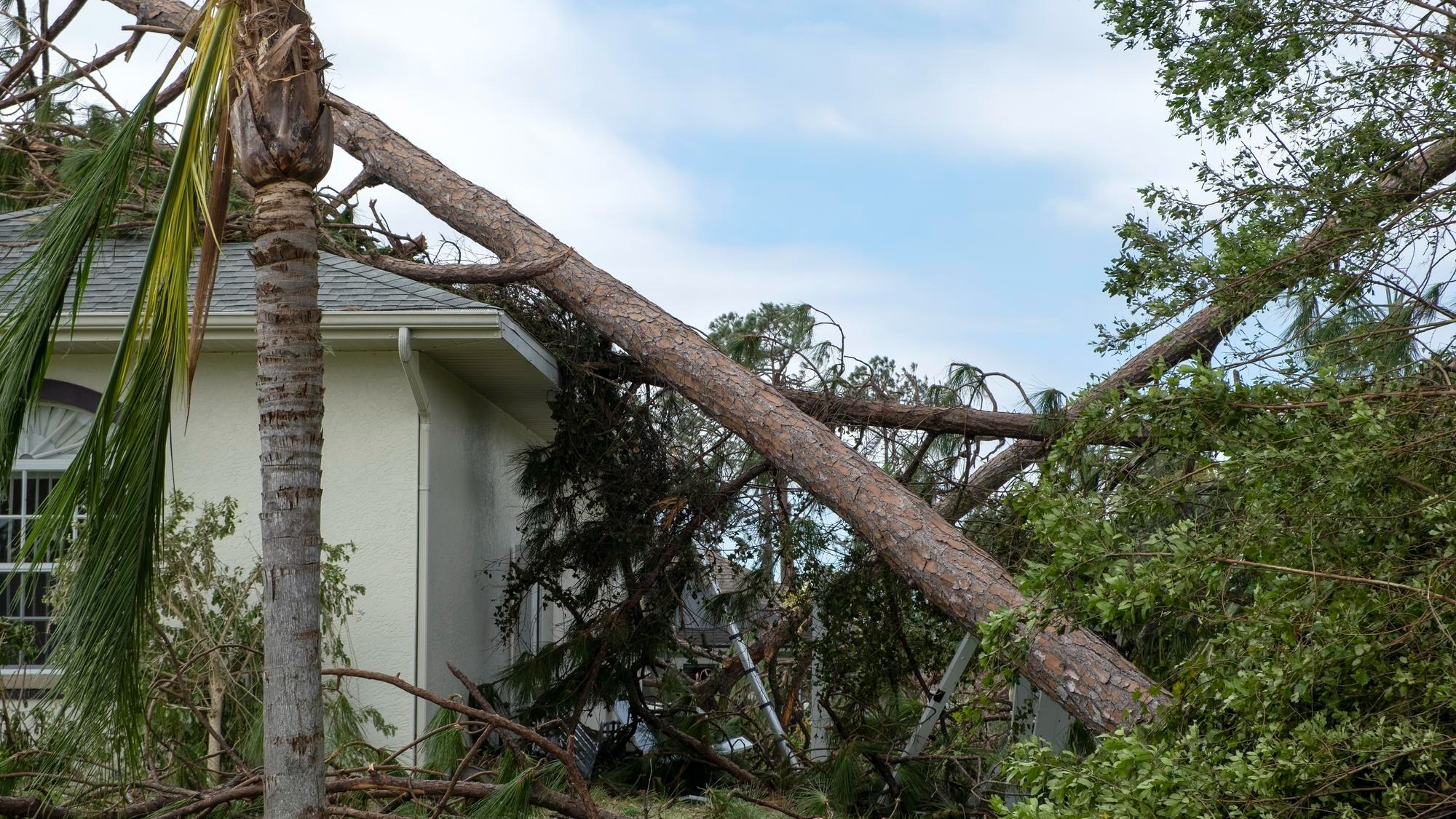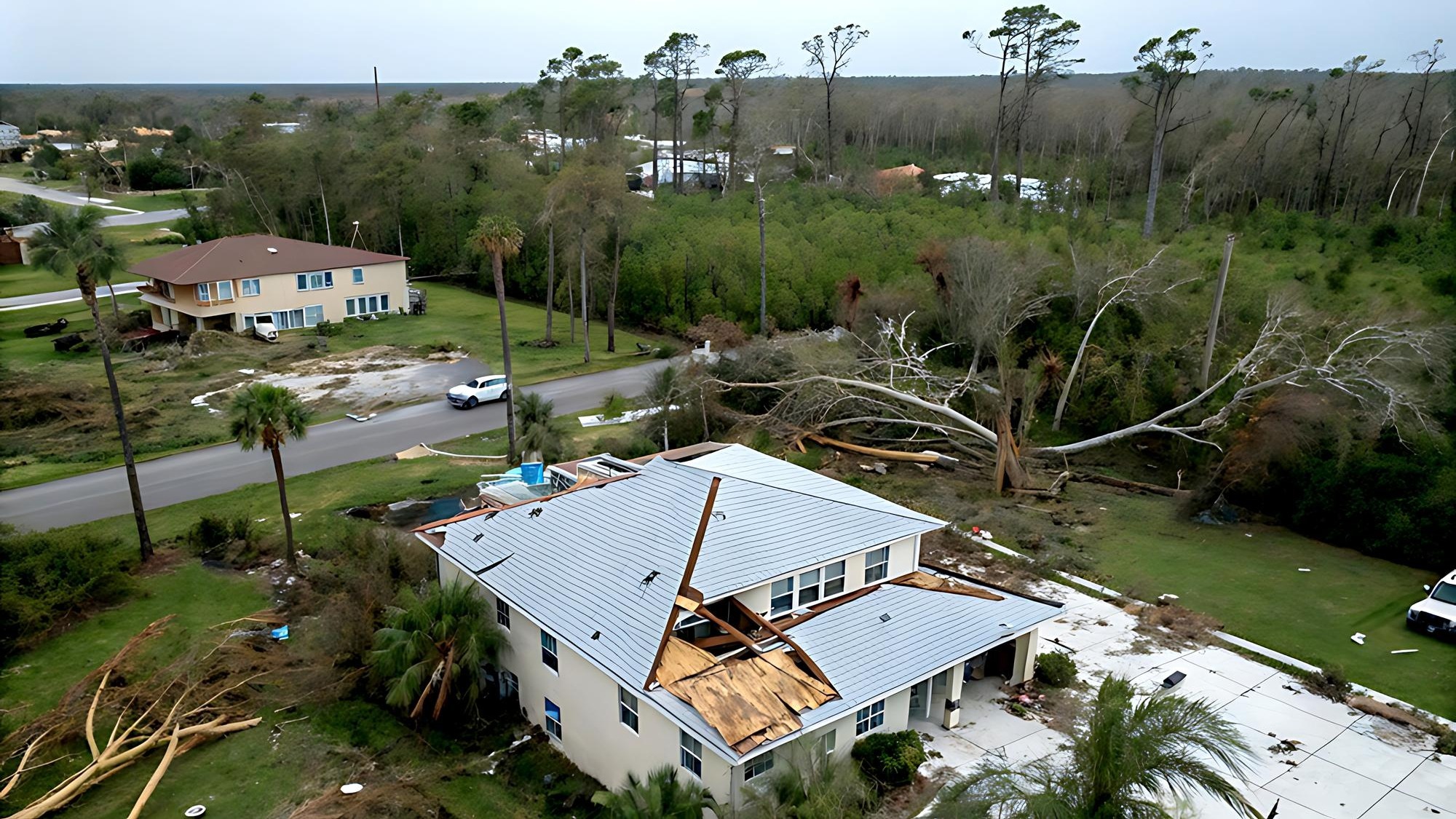
Santa Rosa County has filed 26,297 Hurricane Isaias insurance claims, nearly half of the 54,797 statewide and 9,607 more than any other county. Its closing rate is the slowest of the three biggest counties: 17.2 percent of its claims have closed, while about 80 percent are open with no payment recorded.
Santa Rosa, then Escambia, then a long gap
The Florida Office of Insurance Regulation ranks Santa Rosa first as of October 20, with Escambia second at 16,690 claims and Okaloosa third at 5,168. Walton follows with 2,067 and Bay with 1,974. Those five counties hold 52,196 of the 54,797 claims, about 95 percent. Duval, the next on the list, reported 271.
Santa Rosa alone is 48 percent of the state’s total. Santa Rosa and Escambia together account for 42,987 claims, or about 78 percent, which means most of Florida’s Isaias insurance workload sits in two Panhandle counties.
The count is still climbing. Insurance Journal reported 22,894 claims in Santa Rosa County on October 19, drawn from an earlier regulator update. The October 20 figure is 3,403 higher, a gain of about 15 percent.
Where Santa Rosa claims stand
Of Santa Rosa’s 26,297 claims, 20,964 are open with no payment recorded and 821 are open with a payment. Another 1,467 have closed with a payment, and 3,045 have closed without one. That is 4,512 closed in all, the 17.2 percent OIR reports.
For a Santa Rosa County policyholder, the numbers describe a crowded queue. A household with an open claim and no payment is one of roughly 21,000 in the same county waiting on an adjuster or a decision. Anyone whose claim has stalled can report the delay through the state’s Need Our Help form, and the Department of Financial Services says insurers and agents have 14 days to respond once a concern is filed.
What changed this year: Social Security and Medicare change every year, and nobody sends you a memo. The Retirement Money Brief breaks down what changed and what to do.
Get the Retirement Money Brief →
We may earn a commission from links on this page.
The department asks for the insurer’s exact name, the adjuster involved, the policy and claim numbers, the loss date and a copy of the declarations page. It also says to contact the insurer first and keep detailed records of every call and letter, since most issues can be resolved within 30 days.
Closures without payment are the other half of the picture. Santa Rosa has 3,045 of them, about 11.6 percent of its claims, against 1,467 closed with a payment. For every claim closed with a check there, two have been closed without one.
Santa Rosa also dominates the statewide backlog. Its 20,964 open claims with no payment are just over half of the 41,375 such claims in Florida. Its 1,467 closed with a payment are about 41 percent of the state’s 3,555, so the county has both the longest line and a large share of the checks that have gone out.
Escambia and Okaloosa close faster
Escambia County, which includes Pensacola, has 16,690 claims with 25.4 percent closed. Its 1,502 closed with a payment and 2,741 closed without one, while 12,052 are open with no payment and 395 are open with a payment. Insurance Journal put Escambia at about 13,700 on October 19, so it has added roughly 3,000 since.
Okaloosa is where the storm’s eye came ashore, near Destin, according to Insurance Journal, yet it ranks third. The publication reported that the eastern eyewall did not bring the strongest winds and that Okaloosa and Walton together had fewer claims than expected. Okaloosa now has 5,168 claims and 33.7 percent closed, the highest closing rate among the three biggest counties.
Closing fast does not mean paying fast. Okaloosa has 1,520 claims closed without payment and only 221 closed with one, nearly seven to one. Walton has 2,067 claims with 20.2 percent closed, and Bay has 1,974 with 27.8 percent, against 21.8 percent statewide.
Raw closures tell a slightly different story. Santa Rosa has closed 4,512 claims and Escambia 4,243, so the two counties are closer on completed work than on percentages. Okaloosa has closed 1,741. The gap between Santa Rosa and Escambia is in the queue, where Santa Rosa has 8,912 more claims open with no payment.
What the county table leaves out
The county table counts claims, not dollars. OIR does not publish losses by county, so Santa Rosa’s share of the $581,980,952 statewide estimate cannot be read from the page. The same is true of how long a claim has been open and which type of policy it falls under.
Insurance Journal noted that Hurricane Sally hit nearly the same area in 2020 and produced 72,000 claims and $577 million in losses within six weeks. Isaias statewide stands at 54,797 claims and $581,980,952 in estimated insured losses after eleven days, so the claim count is lower but the dollar estimate is already higher.
The emergency order, Executive Order 26-202, covers 25 counties. Beyond the top five, OIR lists Leon with 193 claims, Holmes with 170, Jackson with 165 and Washington with 107, and groups the rest at 1,004 across all other counties.
Households in the emergency counties can apply for FEMA individual assistance at DisasterAssistance.gov or 1-800-621-3362, and the state assistance information line is 1-800-342-3557. For a dispute over the cause of damage or the amount offered, the state also runs a residential property mediation program for disputes of $500 or more after the deductible, with the insurer paying the $350 cost.
The October 20 data shows Santa Rosa with the most claims and the lowest closing rate among the big three. The open question for its 20,964 unpaid claims is how quickly adjusters reach them.
Filed in Santa Rosa County and still waiting?
In a county where 20,964 claims have no payment recorded, a household can wait in line for weeks while repair bills and ordinary costs keep arriving. A missed program application during that stretch is a cost that does not come back.
The Benefits Checklist is a different tool from an insurance appeal. It scans 11 benefit programs, including heating help, SNAP and property-tax breaks, with the 2026 income limits, a 50-state phone directory and a printable tracker that comes with the download, so a household can see which applications to start while the claim is pending.
Get the income limits for household-cost programs in the Benefits Checklist →
More Financial Reading
- 21 Ways to Stretch a $2,087 Social Security Check
- 15 Places to Find Your Share of the $4.25 Billion States Give Back
- 17 Medicare Money Moves Now That Part D Caps at $2,400
This article was produced with AI assistance and edited for accuracy against the sources linked above.