Truist ended September with 1,912 banking offices, 15 fewer than the 1,927 it reported in each of the previous four quarters. It is the first change in the five quarters shown in the bank’s third-quarter earnings release, issued October 16. The release does not say which offices are gone.
A flat branch count that finally moved
The count had not budged since the third quarter of 2025, so the drop stands out. Truist’s investor presentation, which lists the same figure as branches, shows 1,912 against 1,927 in the second quarter and in the year-earlier quarter. The 15-office decline is less than 1% of the network.
Anyone who banks with Truist and wants to know whether a nearby office closed will not find the answer in the earnings release. It reports totals only, with no addresses and no list of consolidations. The figure counts offices at the end of the quarter, so it also does not say how many closed and how many opened.
What changed this year: Social Security and Medicare change every year, and nobody sends you a memo. The Retirement Money Brief breaks down what changed and what to do. Bonus when you subscribe: our 2026 Government Check Reality Tracker.
Get the Brief and the check tracker →
We may earn a commission from links on this page.
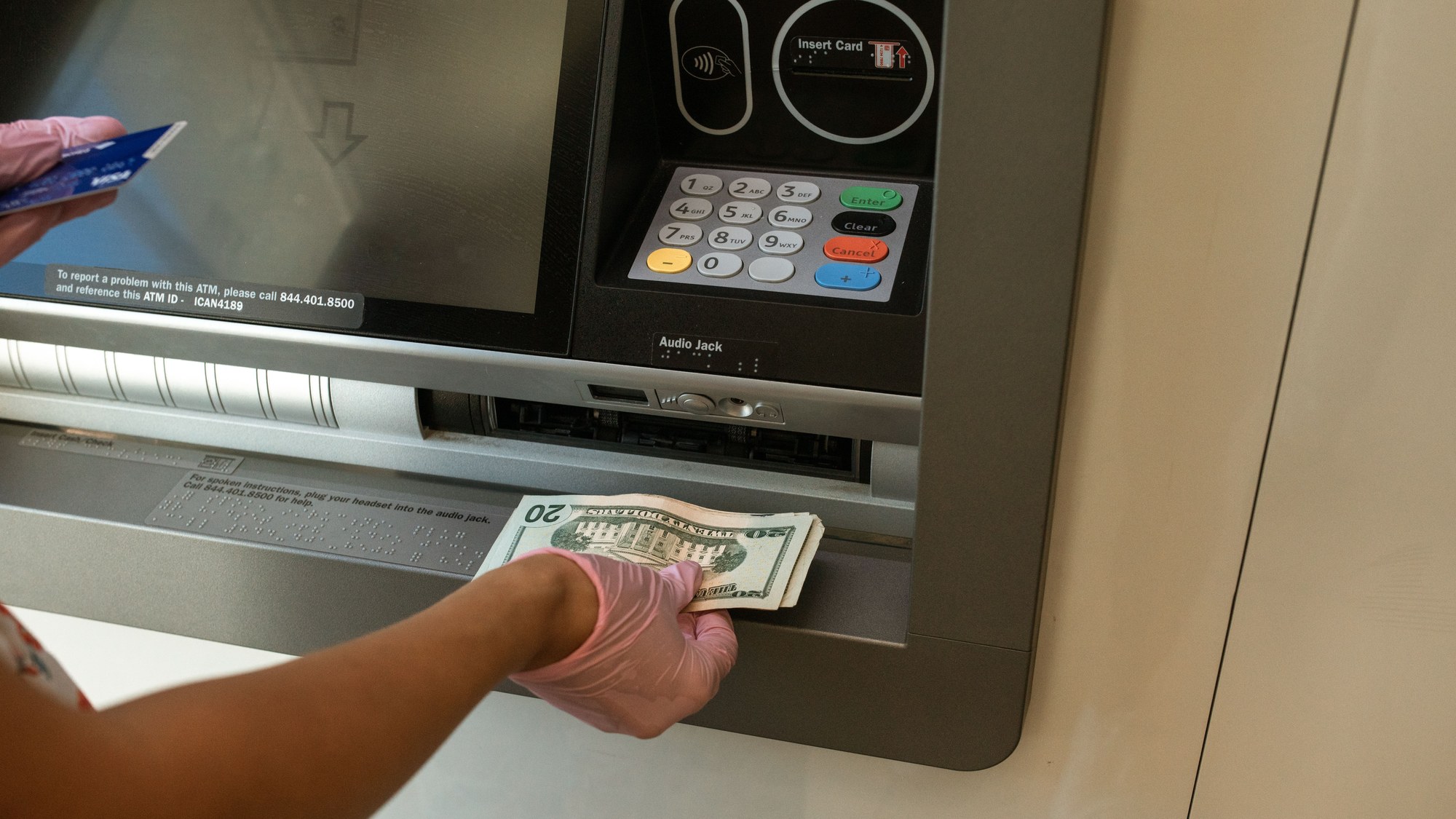
ATMs have been shrinking longer. Truist reported 2,837 a year ago, 2,829 in December, 2,826 in March, 2,820 in June and 2,790 in September. That is 47 fewer machines than a year earlier and 30 fewer than in the second quarter.
Staffing moved the same way. Average full-time equivalent employees, which Truist calls teammates, fell to 37,833 from 38,534 a year ago, a drop of 701. The figure was 37,849 in the second quarter, so most of the decline came before the latest quarter.
Lyons says the bank is simplifying
Chief Executive Mike Lyons said in the release that Truist is “simplifying the company” and focusing its resources, capital and expenses on chosen businesses. The investor presentation lists an “ongoing franchise review to reallocate capital and expenses to align to strategy” among its priorities, and a goal to “flatten the organization.”
On October 14, Truist signed an agreement to sell $7.7 billion of unsecured consumer loans, substantially all of its LightStream lending platform, to Carlyle Group. The presentation puts expected net proceeds at $7.2 billion, to be used to repay wholesale borrowings, with closing anticipated in the fourth quarter subject to customary conditions.
The bank also sold a $5.5 billion portfolio of RAC auto loans for $5.2 billion. Pre-tax costs from that sale came to $106 million, or $80 million after tax and 6 cents a share, according to the presentation. Loans held for investment ended September at $323.9 billion, down $5.9 billion from June, $5.5 billion of it from that sale.
More transactions happen outside the office
The presentation says digital transactions made up 71% of the total in the third quarter, up 0.6 percentage point from the second quarter and 2.9 points from a year earlier. The count includes transfers, Zelle, bill payments, mobile deposits, ACH and wire transfers.
Truist Assist chat volume reached 2.0 million, up 1.4% from June and 54% from a year earlier. Debit and credit card spending was $32 billion, up 4.5% from a year earlier but 0.8% lower than in the second quarter.
What Truist earned in the quarter
Net income available to common shareholders was $684 million, compared with $1.52 billion in the second quarter and $1.35 billion a year earlier. Diluted earnings were 56 cents a share. Adjusted for items the bank excludes, earnings were $1.16 a share, up 12% from the third quarter of 2025.
Revenue was $3.75 billion on a reported basis, against $5.27 billion in the second quarter. Adjusted revenue on a tax-equivalent basis was $5.30 billion. Net interest margin, the spread between what the bank earns on loans and pays on deposits, was 3.00%, up 2 basis points from June.
Deposits ended the quarter at $413.2 billion, up $3.9 billion, or 0.9%, from June. Truist declared a common dividend of 52 cents a share and repurchased $1.2 billion of stock. Total assets were $554 billion at September 30, according to the bank’s news release.
Average deposits were $410.7 billion, up 1.4% from June and 3.6% from a year earlier, while average loans and leases held for investment were $325.5 billion, down 1.1% from the second quarter. Deposits grew while lending shrank, with the RAC sale accounting for much of the drop in loans at quarter end.
Noninterest expense was $3.1 billion. Truist told investors to expect it to rise 2.5% in the fourth quarter, an outlook that leaves out the effect of potential strategic actions. The presentation does not describe what those actions might be.
Personnel expense rose to $1.85 billion from $1.79 billion in the second quarter, and professional fees and outside processing rose to $365 million from $335 million. Truist took $40 million of RAC sale costs inside personnel expense, which it excludes in its adjusted expense figure of $3.07 billion.
Truist has not said whether the 15-office drop is a one-quarter move or the start of a longer trim. The franchise review, the LightStream sale expected to close this quarter and the expense outlook all point to a bank still reshaping itself. For customers, the open question is simple: is the office they use one of the 1,912 still counted?
Is your Truist office one of the 15 that dropped off the count?
Truist’s release shows 15 fewer offices than in June, 47 fewer ATMs than a year ago and digital transactions at 71% of the total. A customer who counts on a nearby office for cash or in-person help may find the nearest one is farther away, and the bank has not published addresses.
The office count is a convenience question; the money question beside it is which opt-in help programs a household has not applied for. The Benefits Checklist scans 11 benefit programs, including Medicare Savings Programs, SNAP and heating help, with the 2026 income limits and a 50-state phone directory. It does not cover Truist accounts; it finishes the related job of finding help with household costs.
Get the 2026 income limits for 11 programs in the Benefits Checklist →
More Financial Reading
- 21 Ways to Stretch a $2,087 Social Security Check
- 15 Places to Find Your Share of the $4.25 Billion States Give Back
- 17 Medicare Money Moves Now That Part D Caps at $2,400
This article was produced with AI assistance and edited for accuracy against the sources linked above.