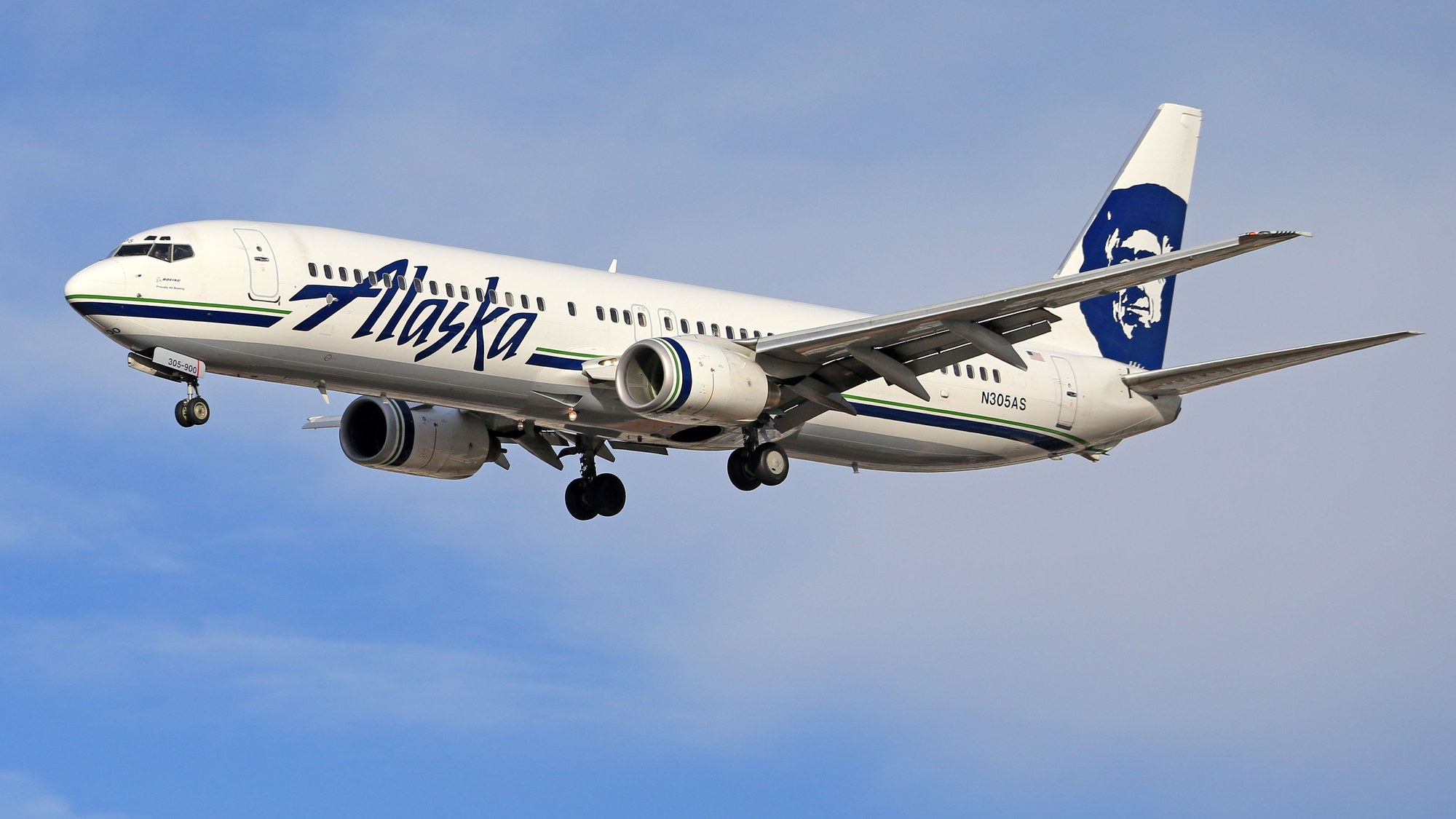
Alaska Air Group lost $147 million in the third quarter, or $1.32 a share, after jet fuel cost it $3.94 a gallon against $2.51 a year earlier. The airline made $73 million in the same quarter of 2025. Chief executive Ben Minicucci told investors the company is “not satisfied with this quarter’s result or the $1.8 billion fuel headwind this year.”
How fuel turned a profit into a $147 million loss
Alaska’s October 20 results show fuel was the swing factor. The $3.94 a gallon, up 57%, compared with the $3.75 the company had guided. Fuel expense reached $1.21 billion, up 60% from $761 million, on just 1.7% more gallons burned.
Revenue did its part. Sales rose 14% to $4.31 billion, from $3.77 billion, and Alaska’s yield, the average fare per mile flown, rose 13.4% to 18.73 cents. Operating income still fell 45% to $82 million from $148 million, because operating expenses rose 17% to $4.23 billion.
The adjusted numbers are less severe. Excluding special items, Alaska lost $35 million, or 31 cents a share, against adjusted net income of $123 million a year earlier. The airline also booked a $75 million tax catch-up on first-half benefits, which cut adjusted earnings by 67 cents a share.
What passengers are paying
Higher prices did the work that volume did not. Alaska carried 15.7 million passengers, down 1.1%, while capacity grew 2.4% and the load factor, the share of seats filled, slid 2.0 points to 82.8%. Revenue per available seat mile rose 11.7%, and the company says September yield was up about 17%.
Premium revenue climbed about 25% and now exceeds 36% of the total, according to the release, and managed corporate revenue was up 30%. Diversified revenue, which is anything other than a main-cabin seat, was 54% of the total. Loyalty program revenue was $263 million, up 32%. The airline is charging more, and a growing share of it comes from fees, upgrades and the points program.
Retirement deadlines, in your inbox: Miss an enrollment or claim deadline and the money can be gone. The Retirement Money Brief keeps you ahead of the ones that matter, every weekday.
Get the Retirement Money Brief →
We may earn a commission from links on this page.
The loyalty program is changing in ways that affect how points are earned. Starting in October, Atmos Rewards members can choose to earn points and status by distance flown, price paid or segments flown, for flights on or after January 1, 2027. An Atmos debit card is due in early 2027. Alaska’s newsroom is where the airline posts program details.
The fourth quarter is guided to be worse
Fuel was cheaper in the third quarter than the second. According to Airline Geeks’ report on the July results, Alaska paid $4.43 a gallon in the second quarter and lost $76 million. The Q3 loss was larger anyway. For the fourth quarter, Alaska now expects $4.65 to $4.85 a gallon, about $650 million above its initial plan.
The guidance for the fourth quarter is an adjusted loss of $2.00 to $2.50 a share. For all of 2026, Alaska expects an adjusted loss of $5.00 to $5.50 a share, including $1.8 billion of fuel expense above plan. Through nine months, the net loss is $416 million, or $3.70 a share, against profit of $79 million last year.
The nine-month view shows how long fuel has weighed. Revenue is $11.67 billion, up 10%, yet the airline has an operating loss of $365 million against income of $228 million last year. Fuel expense of $3.32 billion is up 55%, at an average of $3.81 a gallon versus $2.50, and unit costs excluding fuel are up 5.7%.
Capacity in the fourth quarter is guided to rise only 1% to 1.5%, concentrated in international flying, and unit revenue is expected to rise by a low double-digit percentage. Non-fuel unit costs are forecast to rise by a mid-single-digit percentage. Alaska says it expects about 112.5 million shares and a tax rate near 20%.
The balance sheet absorbing the hit
Alaska ended September with $835 million in cash and $1.40 billion in marketable securities. Available liquidity was $3.3 billion once undrawn credit lines are counted. Operating cash flow was $149 million for the quarter, while it spent $442 million on aircraft and equipment.
Debt is rising as equity falls. Long-term debt and finance leases, net of the current portion, were $5.27 billion, up from $4.83 billion at year-end, and shareholders’ equity fell to $3.53 billion from $4.12 billion. Adjusted net debt to EBITDAR, a leverage measure, was 5.5 times, against 2.9 times; the company changed how it calculates it in 2026.
Alaska is still spending to grow. It plans new Seattle service to Athens, Paris, Osaka and Papeete from spring 2027, taking Seattle to nine international routes, and it says a premium economy product called Premium Reserve will debut in 2028. Special integration items for Hawaiian came to $25 million in the quarter and $102 million for the year.
Will fares keep absorbing the fuel bill?
Alaska has told investors what it expects, not what it will charge. Yield rose 13.4% in the quarter and about 17% in September, and the fuel guidance for the fourth quarter is higher than anything in the third. A traveler booking for the holidays, or earning points under a new formula in January, is the one left to work out the cost.
Budgeting for a fare that tracks the price of fuel?
Alaska says its fuel will cost $4.65 to $4.85 a gallon in the fourth quarter, and its fares already rose 13.4% a mile last quarter. When transport and fuel costs climb together, the money left for everything else shrinks, and benefits that cover groceries, heating and taxes only start once an application is filed.
This story’s money question is a household one, which is the job The Benefits Checklist finishes. It scans 11 benefit programs retirees most often miss, including SNAP, heating help and property-tax breaks, with the 2026 income limits and a 50-state phone directory, so the applications can be tracked on one printable list.
Check 11 programs that ease rising household costs in the Benefits Checklist →
More Financial Reading
- 21 Ways to Stretch a $2,087 Social Security Check
- 15 Places to Find Your Share of the $4.25 Billion States Give Back
- 15 Ways Out of 22% Credit Card Interest
This article was produced with AI assistance and edited for accuracy against the sources linked above.