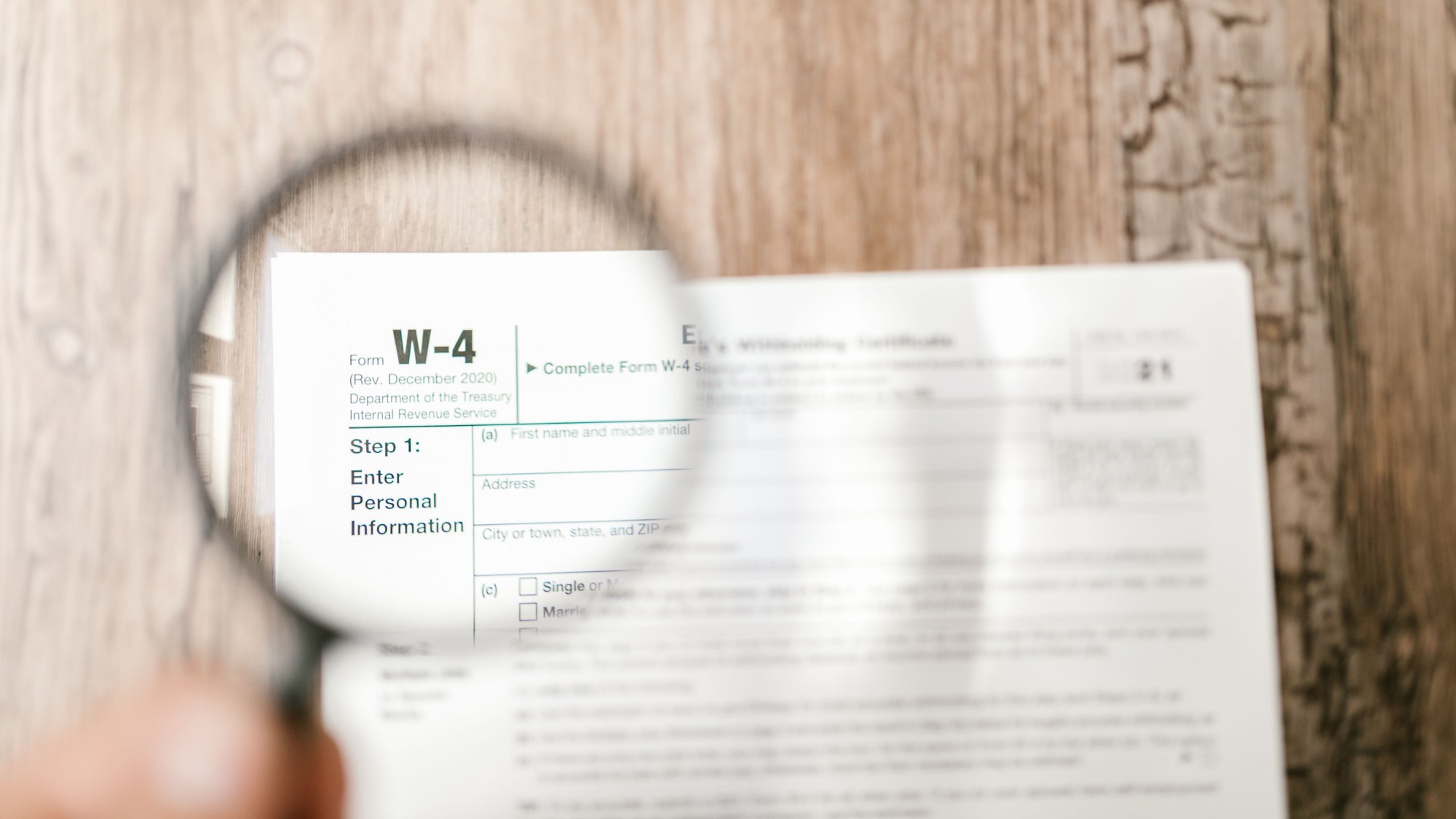
People whose student-loan interest and tuition tax forms were exposed through the website of Educational Computer Systems, known as ECSI, can file for an estimated $100 each from a $6.5 million settlement. Claims must be filed or postmarked by December 21, 2026. The Pennsylvania company, which handles student loan servicing and tax documents for colleges, denies any wrongdoing.
How the forms were pulled from ECSI’s site
Open Class Actions, a settlement tracker, says in its summary of the case that attackers allegedly used a guest tax-form lookup on ECSI’s website to pull Form 1098-E, which reports student-loan interest, and Form 1098-T, which reports tuition. The forms carry names, addresses and Social Security or taxpayer identification numbers.
The class covers people in the United States whose information was potentially accessed between October 29, 2023 and February 12, 2024. The complaint alleges ECSI did not notice the intrusion for about four months. ECSI denies the allegations and any liability, and no court has ruled for either side.
What changed this year: Social Security and Medicare change every year, and nobody sends you a memo. The Retirement Money Brief breaks down what changed and what to do.
Get the Retirement Money Brief →
We may earn a commission from links on this page.
The case is Hood, et al. v. Educational Computer Systems, Inc., No. 2:24-cv-00666-CCW, in the U.S. District Court for the Western District of Pennsylvania. Angeion Group is the administrator.
Two ways to be paid, and only one of them
The settlement site, DataSettlementECSI.com, offers a choice. One is reimbursement of documented, unreimbursed losses more likely than not caused by the incident, up to $5,000. The other is a cash payment estimated at about $100, with no documentation, adjusted up or down depending on how many claims are approved. The two cannot be combined.
Covered losses include fraud losses, bank fees, per-minute phone and data charges, postage, local gas, and credit reports, credit monitoring or identity theft protection bought between October 29, 2023 and December 21, 2026. The court-approved notice says self-prepared documents such as handwritten receipts are not enough by themselves.
The $100 is an estimate, not a promise. Because it is a pro rata share of what remains of the $6.5 million after costs, a flood of claims lowers it and a thin turnout raises it. Payments come only after the court gives final approval and any appeals end, and no payment date has been announced.
The choice mostly turns on whether any money was actually lost. A person who paid for credit monitoring after the incident, or lost money to fraud, can document it and claim up to $5,000. Someone with no losses has only the cash option, and the claim form requires a signature either way.
Anyone filing online needs the Notice ID and Confirmation Code printed on the notice. A printable paper form, available from the same site, asks for name, contact information, the chosen benefit, a payment method and a signature, and must be postmarked by December 21. Payment comes by PayPal, Venmo, Zelle or mailed check.
What comes out of the $6.5 million first
The court-authorized long notice says class counsel will ask for up to one-third of the fund, or $2,166,666.66, in fees, costs and expenses. The class representatives will each ask for a $2,500 service award, and administration costs also come from the fund.
Class counsel are Nicholas Colella of Lynch Carpenter in Pittsburgh and Nickolas Hagman of Cafferty Clobes Meriwether & Sprengel in Chicago. ECSI’s lawyers at King & Spalding in Atlanta receive objections alongside the court. The fee application is due by November 5.
Taking out the maximum fee leaves about $4.33 million, before the service awards and administration costs, to cover whatever claims come in. Whether $100 holds depends on those figures and on how many people file.
Four dates between now and January
The fee application is due November 5. The deadline to opt out or object is November 20, postmarked, and people who opt out receive no payment and cannot object. The claim deadline is December 21, and the same day is the deadline for the motion seeking final approval.
The final approval hearing is set for January 11, 2027, at 9:30 a.m. Eastern, by telephone. The notice says the court may reschedule it without further notice and still has to decide whether to approve the settlement. The administrator’s phone number is 1-877-726-4268.
An opt-out request goes by first-class mail to ECSI Security Incident Settlement Administrator, ATTN: Exclusion Requests, P.O. Box 58220, Philadelphia, PA 19102, postmarked by November 20. It must include the case name and number, full name, postal and email addresses, a signature and a clear statement asking to be excluded. Objections are due the same day, filed with the court or mailed to the court, class counsel and ECSI’s counsel.
Eligibility turns on whether certain personal identifying information was affected, the settlement site says, and it points anyone with questions to its Contact page. The settlement does not provide credit monitoring itself, according to the tracker. Monitoring appears only as a reimbursable loss if a person bought it between October 29, 2023 and December 21, 2026.
Was a student-loan interest form among those ECSI exposed?
The ECSI notice carries an opt-out date, an objection date, a claim date and a hearing date within weeks of one another, and claims are due December 21. A borrower who sets the notice aside is the one who misses the $100.
The Settlement & Refund Recovery System teaches the four-date rule for reading a settlement notice and walks through a filing step by step. It also includes a 5-tab Excel tracker pre-filled with all 51 state unclaimed-property offices and a claim log. It does not file the claim or decide who is eligible.
Read a settlement notice and file on time with the Settlement & Refund Recovery System walkthrough →
More Financial Reading
- 21 Ways to Stretch a $2,087 Social Security Check
- 15 Places to Find Your Share of the $4.25 Billion States Give Back
- 15 Ways Retirees Are Tapping a Record $14.9 Trillion in Home Equity
This article was produced with AI assistance and edited for accuracy against the sources linked above.