Louisiana voters approved Amendment 7 on Tuesday, according to unofficial results, which lets local governments spend public money to replace drinking water service lines even when the pipe sits on private property. Ballotpedia’s tally shows 924,321 votes in favor, or 65%, and 492,210 against, or 35%. The amendment gives permission to spend; it does not set a dollar amount or order any town to dig.
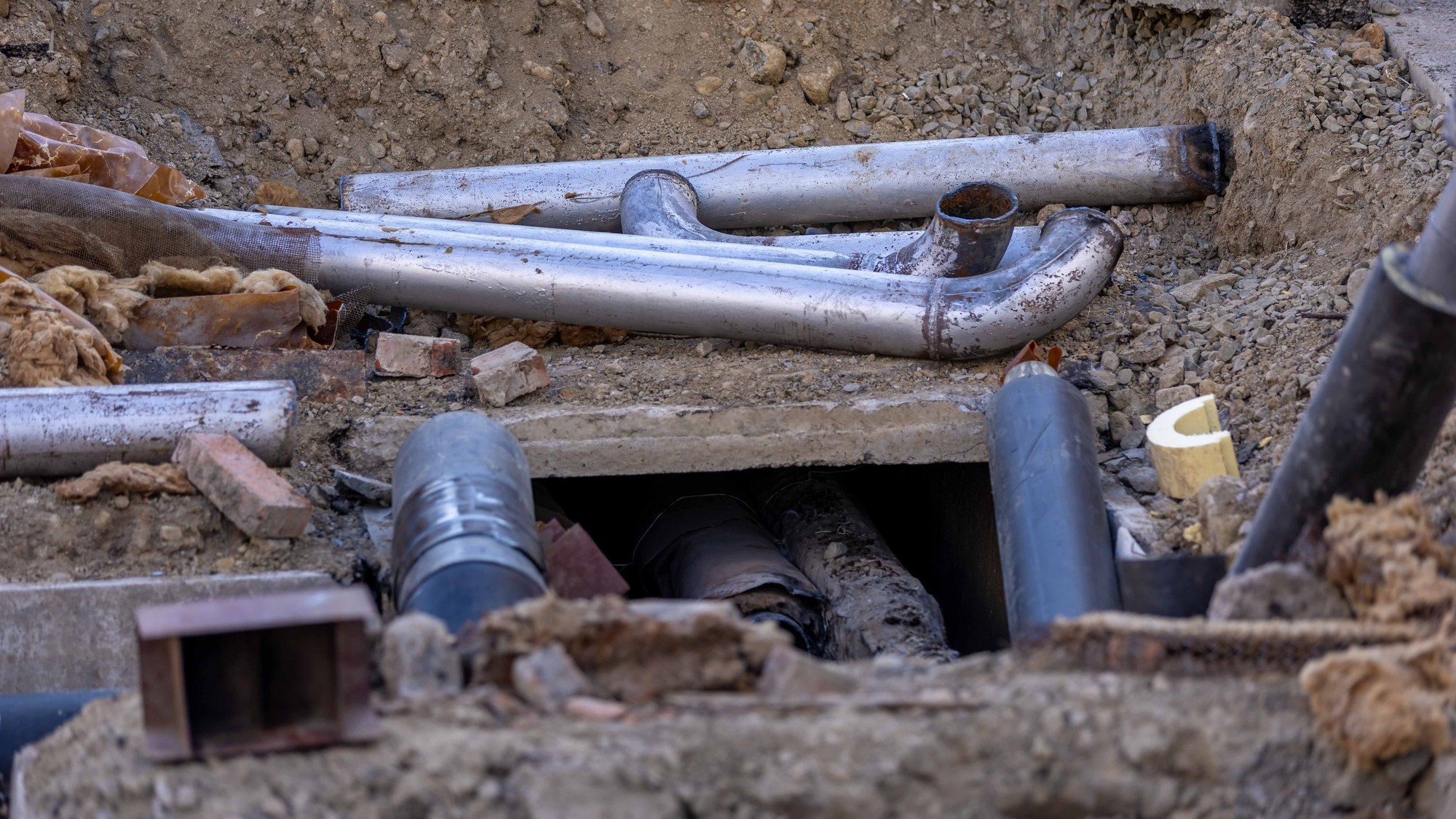
A service line is the small pipe that carries water from the main under the street to a house. Until now the Constitution kept public money away from lines on property owned by utility customers. Amendment 7 carves out an exception for those lines, so a parish, city or water district can pay for work on them.
For a homeowner in an older Louisiana neighborhood, the practical question is whether the house has a lead line and whether the local water system is going to dig it up. The measure adds an exception to Article VII, Section 14(B), which, per the Senate’s summary of the bill, lets a political subdivision use public funds to identify, inventory, remove or replace these service lines on property owned by utility customers. Whether a given town does so is a local budget decision.
Retirement deadlines, in your inbox: Miss an enrollment or claim deadline and the money can be gone. Join the Retirement Money Brief and we’ll send you our Property Tax & Utility Relief Finder as a welcome gift.
Get the Brief + the relief finder →
We may earn a commission from links on this page.
Which pipes does the amendment cover?
The bill that became the amendment started with a broad list of materials, including lead, copper and galvanized steel or iron. The Senate summary says the House removed that language and tied the covered lines to the materials specified in the EPA’s Lead and Copper Rule Improvements, promulgated Oct. 30, 2024, or any later version of the rule. Lead lines are the core of that rule.
The EPA’s rule requires water systems to identify and replace lead pipes within 10 years. Louisiana’s amendment points the state’s spending authority at the same job, and it reaches the customer’s side of the connection that the old constitutional limit kept out of bounds.
Why New Orleans is watching
The city’s Sewerage and Water Board is the clearest example of what the amendment could pay for. Executive Director Randy Hayman estimates that more than half the city’s drinking water lines are lead, Fox 8 reported, and the board has secured $86 million in state funds for its lead line program while working to close a $66 million funding gap. EPA rules require the board to replace all of its lead lines by 2037.
Sen. Royce Duplessis, a New Orleans Democrat, wrote Senate Bill 228 and called voter approval “critical,” saying, “We have to address this issue now.” A companion bill, Senate Bill 268, would let local governments adopt ordinances allowing utilities to replace lines on private property, and the City Council would still have to approve it. Council member Jason Hughes, who chairs the Public Works Committee, said city staff would study it.
What will it cost local governments?
Statewide, nobody has put a number on it. The Legislative Fiscal Office’s note on Senate Bill 228, prepared by analyst Richie Anderson, said the measure “may increase local fund expenditures for political subdivisions” to the extent they use public money for the replacements. It found no direct material effect on government revenues and gave no estimate of what any local government might spend.
The amendment is an open door whose price depends on how many lines each system chooses to replace and how fast. That is why the spending will be decided parish by parish and utility by utility. The legislature’s path was not smooth either: LegiScan’s record shows the Senate failed to pass the bill on March 31, 24-11, then passed it May 6, 28-9. The House approved it 79-13 on May 29, and the Senate concurred 32-4 on May 31.
What can a homeowner do before any program exists?
The amendment does not create a program, so there is nothing to apply for yet. At 65% yes, it passed by a wide margin, a little narrower than the 74% for the veterans’ homestead measure on the same ballot, according to MultiState’s results page. The Webster Parish Journal’s guide listed homeowners, renters, water utilities and local governments as the groups affected, and said the change could speed up replacement of lead and other hazardous pipes.
In New Orleans, the Sewerage and Water Board asks owners who plan to replace a private line to notify it, so the public line can be replaced at the same time. The board also offers an interactive map of known lines and says it will provide a lead test kit or a filter pitcher on request through 52-WATER. It recommends using only cold water for drinking, cooking and baby formula, and says there is no detectable lead in the water that leaves its treatment plants. The results are unofficial until the state certifies them.
Does your home have a lead service line?
A town paying for the pipe does not pay for the rest of a house’s costs, and a homeowner on a fixed income still carries the insurance bill, the property card and the repairs that come with an older house. A lead line is one of several costs that tend to hide in a house built decades ago.
Cut Your House Costs lays out ten moves to spend less on the house and protect its value, including a lower home insurance bill by shopping and asking for every discount. It also includes a home-cost audit worksheet, which walks through the house’s costs one line at a time, for owners who want a full picture before a water line or anything else becomes a bill.
Get the guide with the home-cost audit worksheet and ways to lower the insurance bill →
This article was produced with AI assistance and edited for accuracy against the sources linked above.