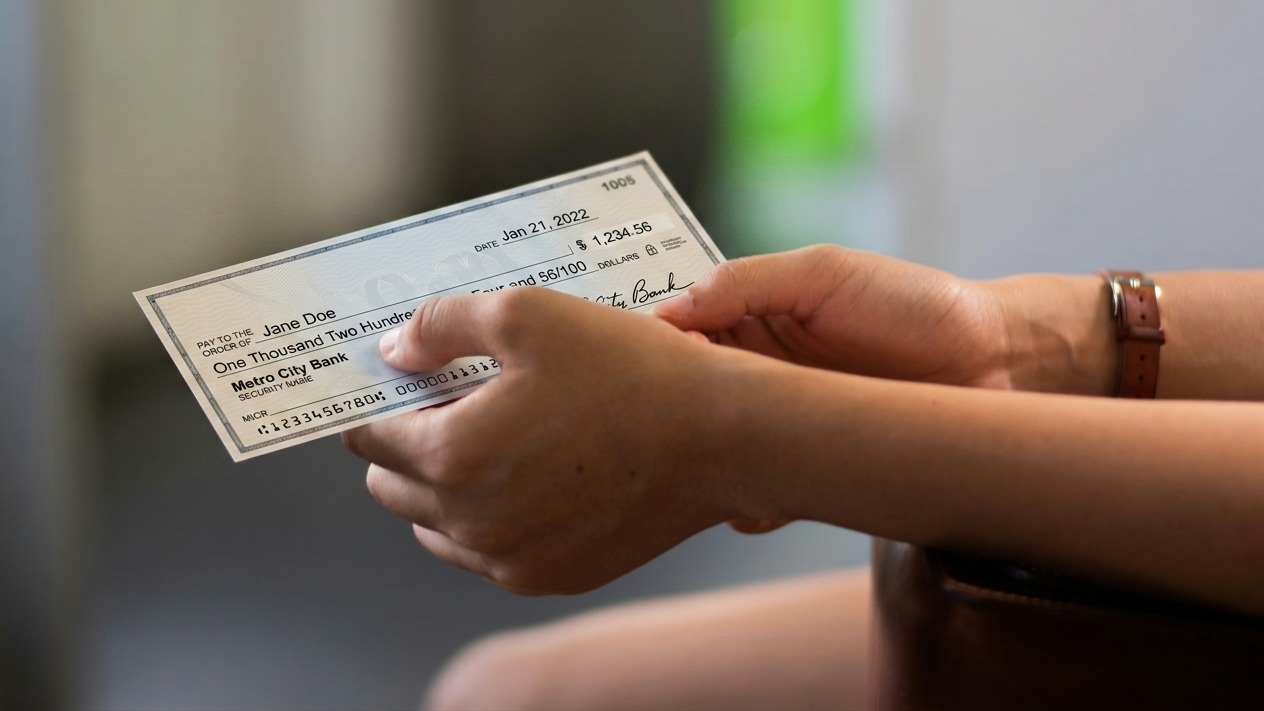
A check can appear in a bank balance before the bank knows whether it is genuine. Scammers exploit that delay by persuading the recipient to send part of the money away, leaving the recipient responsible when the deposit is later reversed. The balance shown as “available” is therefore not the same as a final determination that the check cleared. Any unexpected overpayment, prize, refund, or job payment followed by instructions to return money should be treated as a fraud attempt.
Free retirement updates: Scam calls targeting retirees change every week. Our free Retirement Shield newsletter flags the ones going around and the one tell that stops each. Sign up free.
Available funds are not cleared funds
Bank rules often require deposited funds to become available on a schedule, but counterfeit detection may take longer. The Federal Trade Commission warns that a fake check can appear to clear and then be discovered weeks later. When that happens, the bank removes the deposit and expects the account holder to repay money already spent or forwarded. The scammer creates urgency during the gap. A victim may be told that a check was accidentally written for too much, that taxes or shipping must be paid, or that supplies must be purchased from a designated vendor. The payment sent onward is real; the check funding it is not.
The stories used to sell a fake check
One version begins with a supposed buyer who sends more than the sale price and asks the seller to refund the difference. Another offers a work-from-home job and mails a check for equipment, directing the new hire to a fake supplier. Mystery-shopping schemes send money and require gift-card purchases. Prize scams call the extra payment a tax or processing cost. Recovery scammers use the same mechanism. They claim to return prior losses, send a check larger than the supposed refund, and ask for the excess. The FTC’s fake-check guidance explains that the account holder is responsible for checks deposited into the account, even when the forgery looked convincing.
The common mechanism is not merely a bad check; it is a request to convert a reversible deposit into an irreversible payment. The recipient sends a wire, gift-card code, cryptocurrency transfer, money order, or person-to-person payment that leaves before the bank returns the check. Removing the onward transfer defeats the scheme. An overpayer who is legitimate can stop the original item and issue a replacement for the correct amount without using the recipient as a payment intermediary.
Who absorbs the loss after reversal
Anyone selling goods online, seeking remote work, responding to a sweepstakes, or expecting a refund can be targeted. Older adults may encounter a variation involving a grandchild, caregiver, or government benefit. Small businesses and community groups can also be fooled by checks that use the name of a real company or bank.
Cashier’s checks and business checks are not immune. Logos, routing numbers, signatures, watermarks, and contact information can be copied. Calling a number printed on the check may reach the scammer, so verification must use a bank number found independently. The caller should supply the check number, issuer, purchaser, amount, and date, while recognizing that a phone verification still does not justify sending part of the deposit elsewhere.
Checking a check before depositing it
The recipient should ask why a stranger is paying by check and why any portion must be sent elsewhere. A legitimate payer can cancel an incorrect check and issue a new one for the exact amount. Refusal to do that is a strong warning. No payment should be made on the strength of a provisional bank balance. The issuing bank can be contacted using its official website, but even a bank employee may not be able to guarantee authenticity immediately. The safer approach is to reject the unusual transaction, especially when it combines an overpayment with urgency, secrecy, or an irreversible payment method.
The account holder should tell the bank’s fraud department immediately and avoid moving the funds. If money was sent, the payment company should be contacted at once to request a reversal. Gift-card issuers may be able to freeze unused value, and wire or payment-app providers may still have intervention steps. Messages, envelopes, check images, tracking information, phone numbers, and payment receipts should be preserved. Reports can be filed at the FTC’s ReportFraud portal and, when mail was used, through the U.S. Postal Inspection Service’s mail-fraud reporting channel. The bank should explain any negative balance and repayment process in writing.
Why the bank can take the money back
A deposit is not a promise that the bank will absorb a forgery. The account agreement allows reversal when the item is returned unpaid or identified as counterfeit. If the victim sent the displayed funds to someone else, the account can fall below zero and trigger fees or collection activity.
That result can feel unfair because the bank made the money available. The distinction is that availability rules are designed to prevent unnecessary holds on legitimate checks; they do not authenticate every item in real time. Scammers turn a consumer convenience into a false sense of certainty.
Household controls that stop the transfer
A stranger’s check should never be used as the source for a refund, fee, purchase, or transfer. Exact-amount payment through a verifiable channel removes the scammer’s leverage. When any portion must be sent onward, the recipient is being asked to risk real money against a deposit that may disappear weeks later.
Deposit notifications should be paired with low-balance and outgoing-transfer alerts. If a counterfeit item is reversed after money has moved, an early warning can prevent additional checks or bills from overdrawing the account. A separate account for online sales can also limit the number of household payments disrupted by a disputed deposit.
Trusted family members should know that “available” does not mean authenticated. A shared rule against returning overpayments can stop the most common version before emotion enters the decision. Businesses can require electronic invoices and verified payment methods instead of accepting a check from an unknown customer.
The incident may also expose identity information printed on the deposit or supplied during the conversation. Passwords, credit reports, and account contact details should be reviewed after any fake-check attempt, even when no money was forwarded. The depositor should ask whether the account number, mobile-deposit credentials, or endorsed check image was exposed and whether a replacement account is warranted. Upcoming automatic payments and deposits then need a controlled move so the fraud response does not create missed bills. Preventing the next loss is part of resolving the first one.
This article was researched and drafted with AI assistance and reviewed against the linked primary sources.
More Financial Reading
- What really happens to your joint savings account when you die?
- How many CDs can you park at 1 bank? FDIC rules you must know