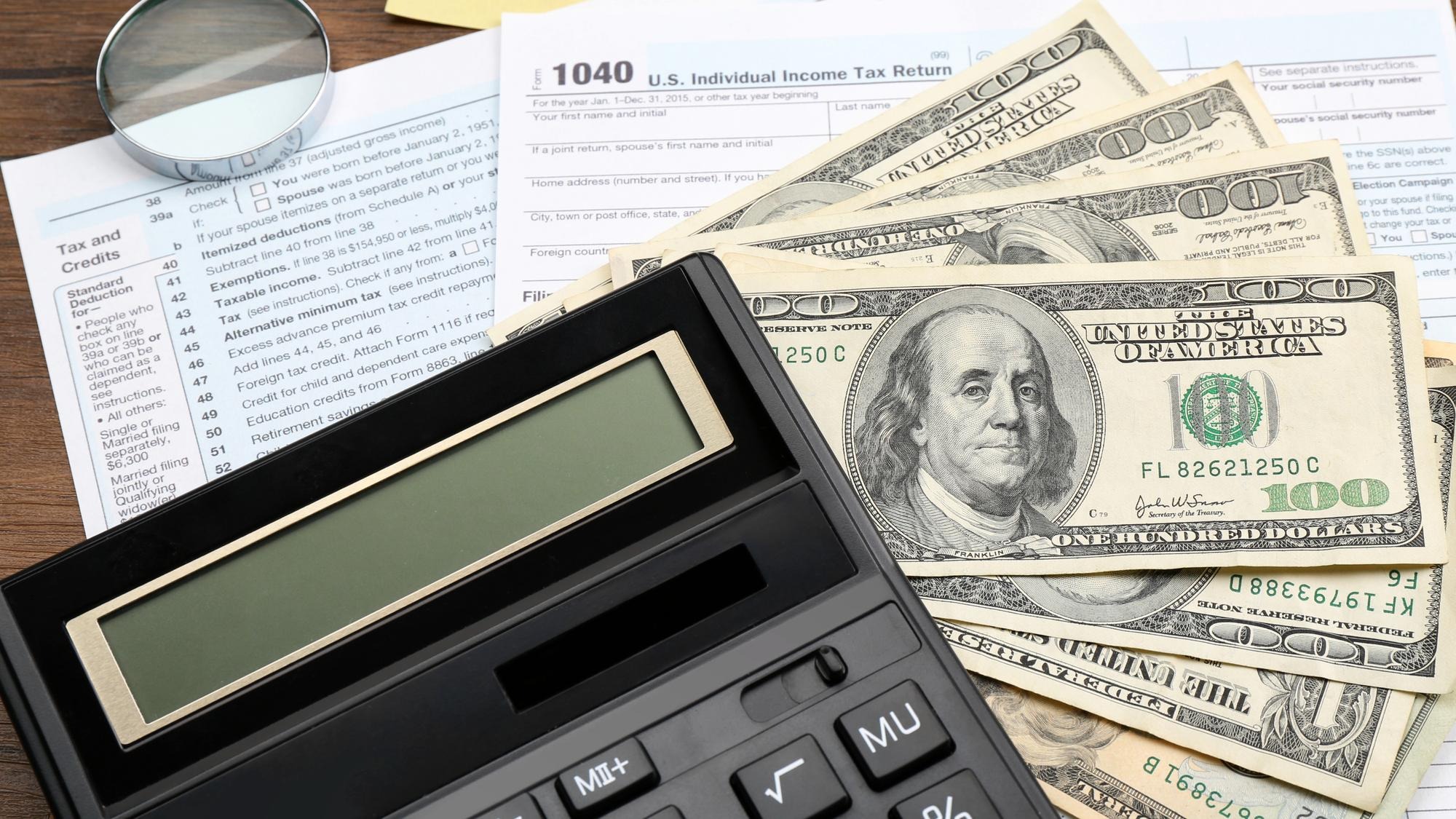
Every single filer in the United States will be able to earn $16,100 in 2026 before owing a dollar of federal income tax, a figure the IRS locked in after factoring inflation adjustments and statutory changes from the One, Big, Beautiful Bill. The number applies to returns filed in 2027 and also covers married individuals filing separately. For workers and payroll departments alike, the new threshold means withholding tables and estimated-payment calculations need updating well before January.
How the $16,100 threshold reshapes filing decisions
The IRS set the 2026 standard deduction at $16,100 for single taxpayers through news release IR-2025-103. That same release confirms the identical figure for married individuals filing separately. The procedural backbone sits in Rev. Proc. 2025-32, published on page 695 of Internal Revenue Bulletin 2025-45.
A higher standard deduction directly reduces the number of filers for whom itemizing makes financial sense. Single filers whose total deductible expenses, such as mortgage interest, state and local taxes, and charitable contributions, fall below $16,100 gain nothing from itemizing. For workers earning between roughly $14,000 and $20,000, the gap between their gross income and the standard deduction is so narrow that the practical incentive to track receipts and fill out Schedule A shrinks further. The combined effect of the inflation adjustment and the legislative changes embedded in the One, Big, Beautiful Bill should push more of these filers toward the standard deduction on their 2027 returns.
That shift carries a real cost for tax-preparation complexity. Fewer itemizers means fewer audit triggers tied to Schedule A, but it also means charitable organizations lose one of the behavioral nudges that encourages documented giving. Workers in this income band who previously itemized state income taxes or unreimbursed expenses will find those deductions eclipsed by the flat $16,100 amount. Tax professionals are already modeling how these changes might alter demand for paid preparation, particularly among younger workers who may now find do-it-yourself software sufficient.
IRS guidance and the One, Big, Beautiful Bill connection
IR-2025-103 does not exist in isolation. The IRS published a separate explainer covering key provisions for individuals, placing the $16,100 figure alongside other rule changes that affect take-home pay, credits, and phase-outs. The statutory text behind these adjustments appears in House Bill 1 of the 119th Congress, which amended multiple sections of the Internal Revenue Code. Together, the law and the implementing guidance frame the new threshold as part of a broader attempt to simplify filing for low- and moderate-income households.
The distinction between “tax-free income” and “income excluded from taxable income” matters here. The standard deduction does not make the first $16,100 of earnings invisible to the government. Employers still report full wages on W‑2 forms, and the IRS still receives that data. What the deduction does is subtract $16,100 from adjusted gross income before the tax rate schedule applies. A single filer earning exactly $16,100 would owe zero federal income tax, but that person’s income still counts for other purposes, including eligibility calculations for certain benefits and credits.
Payroll departments will need to incorporate the new standard deduction into 2026 withholding calculations. If employers fail to update their systems, workers at or near the threshold could see excess federal income tax withheld from their paychecks, only to be refunded when they file in 2027. The IRS typically releases updated withholding tables and Form W‑4 instructions well ahead of the new year, and the agency’s outreach materials urge employers to adopt those tables promptly.
Planning around the new zero-tax line
For households straddling the $16,100 line, the new threshold invites careful planning. A worker expecting to earn slightly more than that amount might increase pre-tax retirement contributions or adjust flexible spending account elections to reduce taxable income below the cutoff. Conversely, someone expecting to fall short of $16,100 could consider accelerating income-such as year-end bonuses or freelance payments-into 2026 without triggering federal income tax liability, assuming no other significant income sources.
The higher standard deduction also interacts with refundable credits. While the deduction itself cannot create a refund beyond taxes paid in, it can reduce or eliminate income tax, leaving credits like the earned income tax credit to flow through as refunds. The One, Big, Beautiful Bill’s changes to credit phase-outs, detailed in the IRS explainer, mean that some workers will see a larger net benefit from combining the new deduction with existing credits.
Taxpayers seeking personalized guidance can use the IRS’s online account tools, accessible through the agency’s secure login portal, to review prior-year data, monitor estimated payments, and confirm how the standard deduction applied in earlier years. While those records do not yet show 2026 calculations, they provide a baseline for comparing how the new threshold might change future liabilities.
Ultimately, the $16,100 standard deduction for single filers and married individuals filing separately marks a meaningful shift in where the federal income tax system begins to bite. It simplifies choices for many low-income workers, reduces the administrative burden tied to itemizing, and subtly reshapes incentives around charitable giving and pre-tax savings. As the 2026 tax year approaches, the real test will be whether employers, software providers, and taxpayers themselves adjust quickly enough to make full use of the higher zero-tax line.