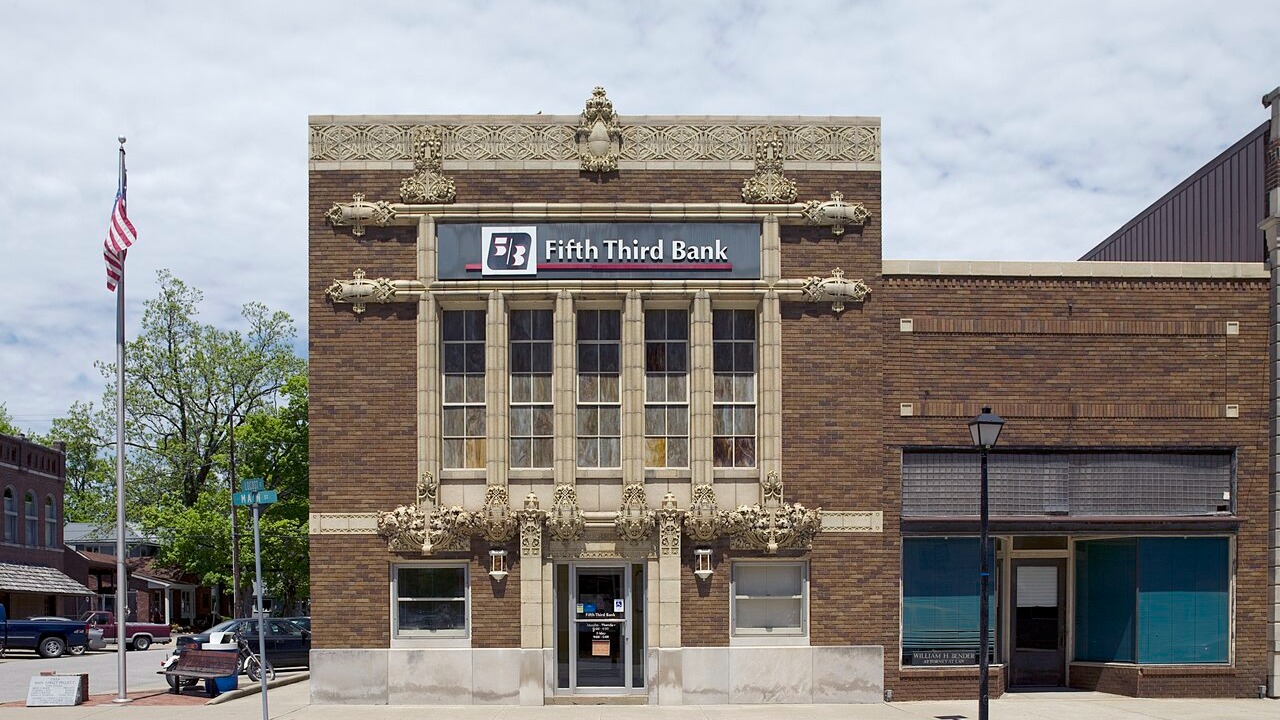
Three U.S. banks have now failed in 2026, and depositors who held balances above the $250,000 federal insurance cap at one of them are facing a painful wait for partial repayment. The January closure of Metropolitan Capital Bank and Trust in Chicago, the May seizure of Community Bank and Trust in LaGrange, Georgia, and the receivership of Kentland Federal Savings and Loan Association in Kentland, Indiana, mark the highest single-year failure count since 2023. For uninsured depositors at the Georgia institution, the resolution structure signals that full recovery is unlikely, with historical dividend data from similar receiverships suggesting returns near fifty cents on the dollar.
Three closures in six months and what separates them
The failures unfolded on different timelines and under different terms. The Illinois Department of Financial and Professional Regulation closed Metropolitan Capital Bank and Trust on January 30, 2026, and the FDIC was appointed receiver. According to the FDIC’s failed-bank notice, the institution reported roughly $450 million in assets and $380 million in deposits at year-end 2025. In that case, First Independence Bank of Detroit assumed all deposits, meaning both insured and uninsured customers were made whole through the acquiring institution. The FDIC estimated the cost to the Deposit Insurance Fund at about $19.7 million, as detailed in its resolution announcement.
The second failure played out differently. The Georgia Department of Banking and Finance seized Community Bank and Trust on May 1, 2026, acting under O.C.G.A. Section 7-1-150(a). Anchor Bank assumed only the insured deposits of the failed institution, a structure the FDIC outlined in its receivership summary. That distinction is critical: uninsured depositors were left with claims against the receivership rather than guaranteed access to their full balances. Customers with more than $250,000 in any ownership category now hold receivership certificates instead of cash for the excess amounts.
The third closure came when the Office of the Comptroller of the Currency appointed the FDIC as receiver for Kentland Federal Savings and Loan Association, a tiny thrift with approximately $3.7 million in assets. The OCC cited unsafe and unsound practices, substantial dissipation of assets and earnings, critical undercapitalization, and no reasonable prospect of becoming adequately capitalized. Given its small balance sheet and limited footprint, regulators expect the Indiana failure to have minimal impact on local credit availability and no losses for the Deposit Insurance Fund beyond routine resolution expenses.
Why uninsured depositors at the Georgia bank face steep losses
When an assuming bank takes on all deposits, uninsured customers avoid the receivership process entirely. That happened in Chicago, where the acquiring bank effectively stepped into the shoes of the failed institution and honored every balance. By contrast, when only insured deposits transfer, as in the Georgia resolution, uninsured depositors become general creditors of the FDIC receivership. Federal law establishes a strict payment hierarchy under 12 U.S.C. Section 1821: administrative expenses and insured deposit obligations are satisfied first, and uninsured depositors receive dividends only as the receiver liquidates the failed bank’s remaining assets.
In practice, that means uninsured depositors at Community Bank and Trust will see their recovery depend on how much value the FDIC can realize from loans, securities, and other assets after paying higher-priority claims. Historically, receiverships for small community banks with concentrated loan books and elevated credit problems have produced limited recoveries for general creditors, often in the range of 40 to 60 percent of their original claims over several years. The timing is uncertain as well: initial “advance dividends” may arrive within months, but final distributions typically follow years of collections, litigation, and asset sales.
Several structural features of the Georgia bank increase the odds of losses. Community Bank and Trust operated in a relatively narrow regional market, leaving its loan portfolio heavily exposed to local economic conditions. Examiners had flagged asset quality deterioration and capital weakness prior to closure, according to people familiar with the supervisory process, suggesting that a meaningful share of the loan book may already be nonperforming or impaired. Any shortfall between the net realizable value of assets and total liabilities will be borne first by equity holders and then by uninsured depositors and other general creditors.
Uninsured customers also lack the negotiating leverage that large institutional creditors sometimes bring to complex resolutions. Unlike holders of senior debt at a big bank, they cannot organize to influence the structure of asset sales or press for alternative transaction terms. Their position is largely passive: they must file proof-of-claim documentation, track FDIC notices, and wait for periodic dividend announcements. For many small businesses that used Community Bank and Trust as their primary operating bank, the resulting liquidity squeeze may be more damaging than the eventual loss itself.
What the 2026 failures signal about systemic risk
The trio of 2026 failures does not, by itself, point to a new systemic crisis. All three institutions were small, and regulators emphasized that broader capital and liquidity indicators for the banking sector remain well above pre-2008 levels. Still, the pattern underscores how quickly uninsured depositors can find themselves exposed when a resolution stops short of a full-deposit assumption. It also highlights the uneven experience of customers across different failures: a Chicago depositor with a seven-figure balance walked away whole, while a Georgia business owner with a similar balance now faces years of uncertainty.
For policymakers, the contrast may reignite debate over whether the current $250,000 insurance limit and receivership framework adequately protect small businesses and municipalities that rely on community banks. For depositors, the lesson is more immediate: understanding how much of a balance is insured, how ownership categories work, and how quickly funds could be accessed in a failure can matter as much as the interest rate on the account. In a year when three banks have already failed, the fine print of deposit insurance is no longer an abstract concern.
Free tool for readers: Not sure whether your own retirement is on track? You can check your free Retirement Safety Score — a 0–100 number plus a few personalized steps — in about five minutes, with no sign-up required to see your score.