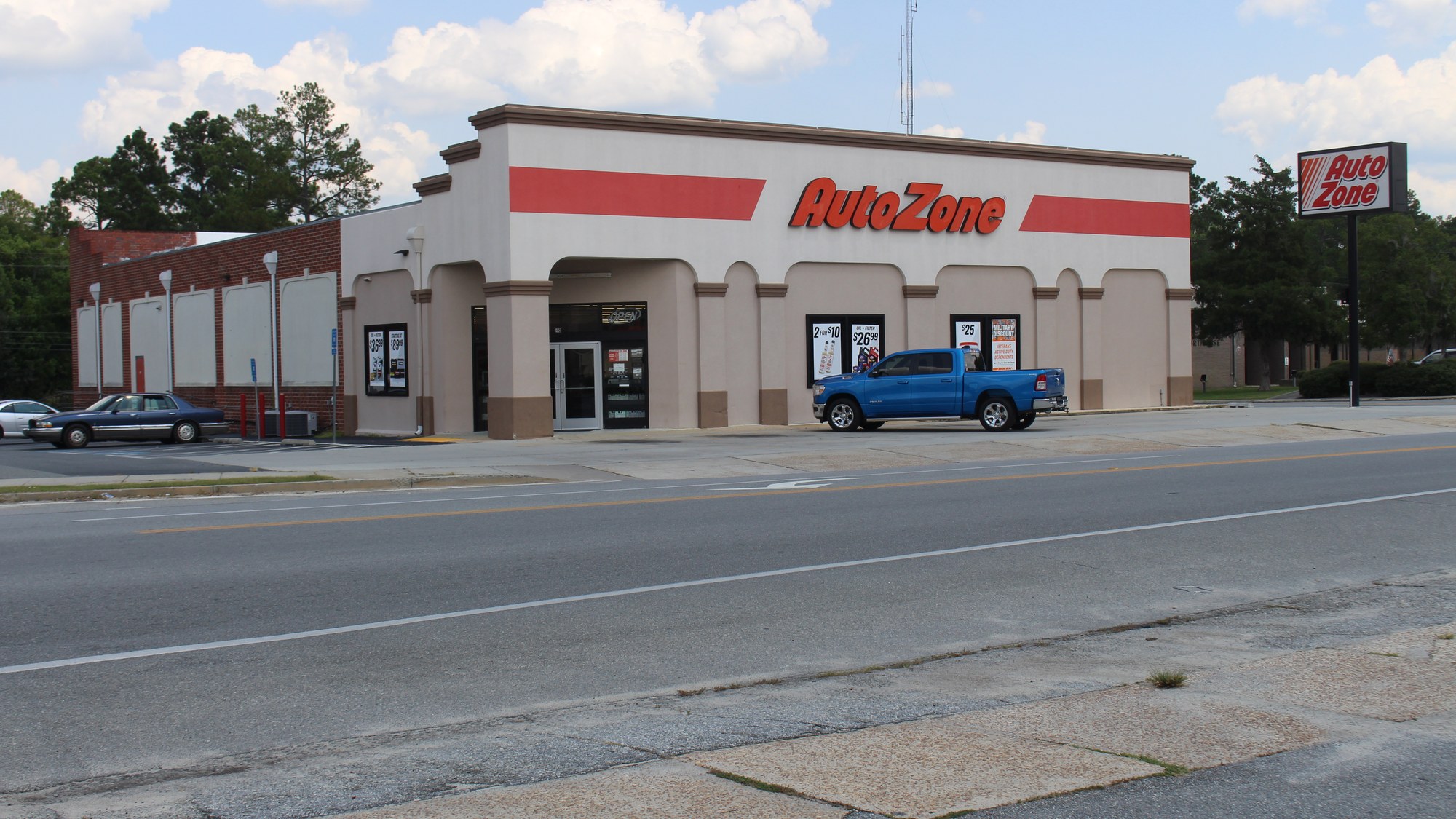
AutoZone said tariff refunds added 145 basis points to its fourth-quarter results as total sales rose 5.6% to $6.6 billion, the auto-parts retailer reported in results covering the 16 weeks ended August 29, 2026. The refunds followed the Supreme Court’s February ruling against tariffs imposed under the International Emergency Economic Powers Act, the same ruling behind similar refund benefits other large retailers have reported this earnings season. AutoZone’s diluted earnings per share reached $56.05, up from $48.71 a year earlier.
What the refund doesn’t reach: AutoZone’s 145-basis-point tariff-refund benefit sits inside its own sales math, not a customer’s parts-counter receipt, while The Senior Property Tax & Home-Cost Relief Kit covers a bill that has stayed high. See the circuit-breaker credit that includes renters →
What AutoZone Said About The Tariff-Refund Boost
AutoZone’s September 22 results credit tariff refunds with a 145-basis-point benefit in the fourth quarter and a smaller 48-basis-point benefit across the full fiscal year, the same category of refund the Supreme Court’s February ruling in Learning Resources, Inc. v. Trump set in motion by finding the International Emergency Economic Powers Act “does not authorize the President to impose tariffs,” according to the Court’s opinion, decided February 20, 2026. AutoZone reported total sales of $6.6 billion for the quarter, up 5.6% from a year earlier, in results covering the 16 weeks ended August 29, 2026.
The Same-Store Sales Behind The Headline Number
AutoZone’s domestic same-store sales rose 1.6% in the quarter, and total-company same-store sales rose 2.7%, or 1.5% in constant currency. Those percentages measure sales at stores open at least a year and run well below the 5.6% total-sales growth rate, a gap that reflects new-store openings adding to the total figure alongside whatever portion of the same-store gain the 145-basis-point tariff-refund credit itself represents. AutoZone’s release does not break out how much of the 1.6% domestic same-store figure came specifically from the tariff-refund benefit rather than from higher unit sales or existing pricing.
A Store Count That Keeps Climbing
AutoZone opened 175 new stores during the quarter, including 97 in the United States, 68 in Mexico and 10 in Brazil, bringing its full-year total to 374 new stores and its overall store count to 8,031, meaning nearly four in ten of the quarter’s new locations opened outside the United States. That international expansion adds to AutoZone’s overall store count without necessarily sharing the same tariff-refund dynamics at play domestically, since the refunds trace to U.S. import duties rather than to AutoZone’s operations abroad, and the release does not break out same-store sales separately for the Mexico and Brazil store bases. Net income for the quarter reached $931.6 million, up from $837.0 million a year earlier, a gain of about 11.3%, and full-year sales reached $20.3 billion, up 7.4%, according to the same release. The 374 stores AutoZone added over the full fiscal year works out to roughly a 4.9% increase in its total store count from a year earlier, a pace of physical expansion that runs independently of whatever tariff-refund benefit shows up in any single quarter’s same-store sales figure.
How Big The Refund Program Behind AutoZone’s Number Really Is
AutoZone’s 145 basis points is one line inside a far larger federal refund effort. The Congressional Budget Office reported that the government had issued about $110 billion in refunds tied to duties collected under the International Emergency Economic Powers Act by August 2026, according to its Monthly Budget Review. AutoZone imports auto parts and accessories from multiple countries, and its release does not state a dollar value behind its own 145-basis-point figure, expressing the benefit only as a percentage-point contribution to same-store sales rather than as a stated refund amount. The CBO’s figure is an economy-wide total covering every importer that paid duties under the same struck-down authority, not a per-company breakdown, so AutoZone’s own share of that $110 billion is not disclosed in either document.
What AutoZone’s Chief Executive Told Shareholders, And What The Refund Won’t Repeat
“I want to thank our entire organization for delivering another quarter of sales and earnings growth,” Phil Daniele, AutoZone’s president and chief executive officer, said in the September 22 release. Daniele’s statement credits the organization broadly rather than the tariff-refund benefit specifically, and the release includes no further comment from him breaking down how much of the quarter’s earnings growth came from the refund versus the underlying parts business. That distinction matters because a 145-basis-point benefit tied to a refund of previously collected duties is, by its nature, tied to money already paid rather than an ongoing rebate on future purchases, which means AutoZone’s next quarterly results are not guaranteed to carry a comparable boost unless a new round of refunds is issued. AutoZone’s release does not quantify how much of the earlier tariff cost reached a shopper replacing a battery, an alternator or a set of brake pads, and it does not describe any plan to lower prices now that a portion of the underlying duties has been refunded to the company; for a household that spends on auto parts to keep an older vehicle running longer rather than take on a car payment, the refund affects AutoZone’s own accounting, not the price marked on the part at the counter.
Home Costs A Tariff Refund Never Reaches
AutoZone’s tariff-refund benefit is a sales-math adjustment on the company’s own books, not a rebate that reaches a customer buying a battery or a set of brake pads at current shelf prices. The refund reflects money the retailer itself recovered after duties it paid were ruled unlawful, and it says nothing about the property-tax and utility costs that have continued for homeowners over the same period.
The Senior Property Tax & Home-Cost Relief Kit lays out the five kinds of property-tax relief and an application log and renewal calendar for tracking filing deadlines.
Look up the heating, cooling and home-repair help in The Senior Property Tax & Home-Cost Relief Kit.
This article was produced with AI assistance and checked against the primary sources linked above.