Millions of Americans with savings parked at the largest U.S. banks are earning just 0.01% annual percentage yield on their deposits, even as competitive accounts and government-backed savings bonds pay more than 4%. The gap between what big banks offer and what savers can actually get has widened to a striking degree in 2026, with the U.S. Treasury announcing a 4.26% rate on Series I savings bonds for the May through October 2026 period. For a household with $10,000 in a standard savings account at a major bank, the difference between 0.01% and 4.26% amounts to roughly $425 in lost annual interest.
Why the 0.01% savings rate persists at large banks
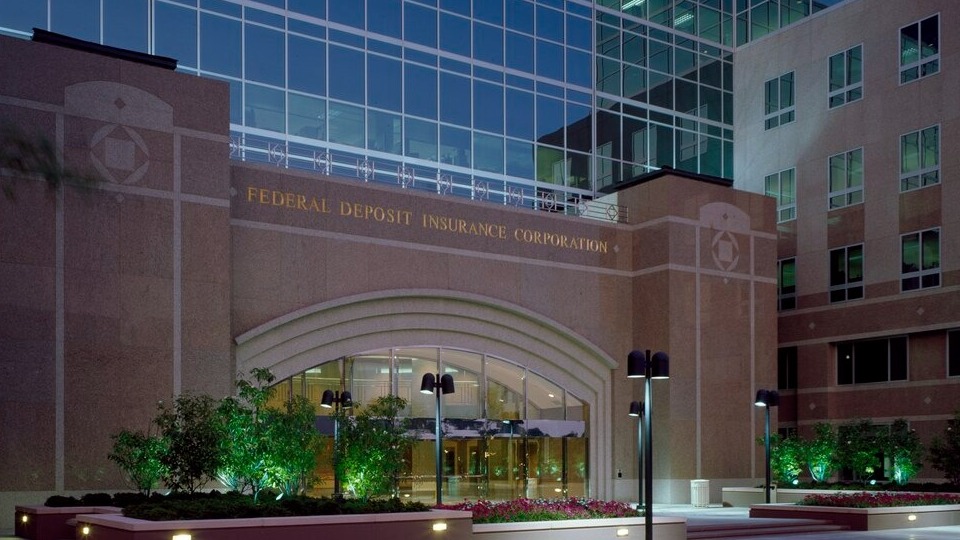
The Federal Deposit Insurance Corporation publishes national averages for savings account rates based on standard balance tiers. Those tables show the national rate for savings accounts stuck near 0.01%, a figure that has barely moved at the largest traditional institutions even as the Federal Reserve raised benchmark rates sharply in recent years. Online banks and credit unions, by contrast, have passed along higher yields to depositors far more aggressively.
One reason legacy banks can hold rates so low is customer inertia. Depositors who already have checking, direct deposit, and bill pay tied to a single institution face real friction when switching. Federal rules under Regulation DD require every bank to disclose APY using uniform calculation methods, which in theory makes comparison shopping straightforward. In practice, though, standardized disclosure has not forced large banks to compete on rate the way it has pressured digital-first entrants. Smaller online banks, which lack branch networks and their associated overhead, use higher APYs as their primary tool for attracting deposits. The result is a two-tier market: legacy giants pay near zero, while newer competitors fight for customers with rates above 4%.
Academic research on household finance suggests that many consumers simply do not move their cash even when better options are available. Studies of deposit behavior highlight how limited attention, habit, and the perception that all banks “pay about the same” can keep money in low-yield accounts for years. For the largest institutions, that inertia translates into a stable, low-cost funding base and little urgency to raise savings rates until competitive or regulatory pressure forces their hand.
FDIC data and Treasury bonds confirm the 400-fold rate gap
The scale of the disparity is documented across multiple federal data sources. The Bankrate Monitor savings series hosted by the Federal Reserve Bank of St. Louis tracks the national average savings account APY over time; the historical figures confirm that the broad average remains far below top-market offers. That series provides a credible baseline for measuring just how much ground typical savers lose by staying with a default account.
On the other side of the gap, the Bureau of the Fiscal Service announced that Series I savings bonds will yield 4.26% for bonds issued or adjusted between May and October 2026. These bonds are backed by the full faith and credit of the U.S. government, carry no default risk, and are available to any individual with a TreasuryDirect account. The 4.26% rate reflects a combination of a fixed rate and an inflation adjustment, making it a direct, risk-free alternative to a bank savings account paying 0.01%.
The arithmetic is blunt. A saver with $25,000 in a big-bank account earning 0.01% would collect $2.50 in annual interest. The same balance in a competitive high-yield account or in I bonds at 4.26% would generate roughly $1,065 over a year. Even after accounting for the purchase limits and holding-period rules that apply to savings bonds, the difference illustrates how much money is effectively left on the table when households accept default rates.
What savers can do to close the gap
For consumers, the first step is simply to check the APY on existing savings accounts. Because disclosures often appear in fine print, many customers are unaware that they are earning 0.01% or similarly low rates. If the yield is far below 4%, moving at least a portion of idle cash to a higher-paying account can substantially increase interest income without taking on stock-market risk.
High-yield savings accounts at online banks, federally insured money market deposit accounts, and government-backed savings bonds are among the most straightforward alternatives. Each option carries its own trade-offs in terms of access, transaction limits, and interest-rate variability, but all currently offer dramatically higher yields than the 0.01% tier at major brick-and-mortar institutions.
For policymakers and regulators, the persistence of ultra-low savings rates despite clear disclosure rules raises questions about whether current frameworks are enough to promote genuine competition. As long as inertia and complexity keep most households from moving their money, the largest banks can continue paying a fraction of what safer government instruments and smaller competitors offer. Until that changes, the 400-fold gap between headline savings rates and what is actually available in the market will remain a quiet but costly drain on household finances.
Free tool for readers: Built for Americans 55 to 80: a free, plain-English retirement check. See your Retirement Safety Score — your 0–100 number and a few steps — in about five minutes, no account needed.