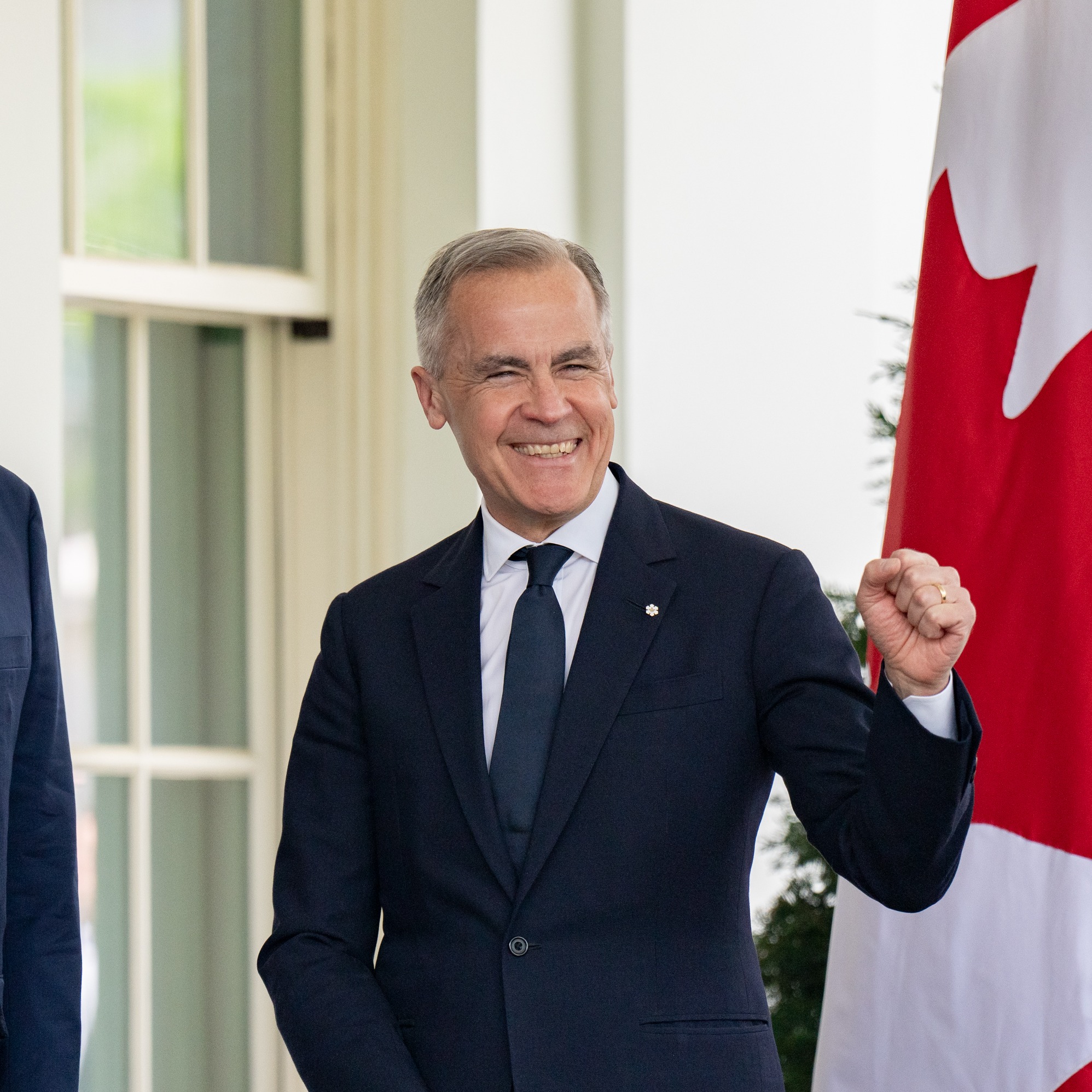
OTTAWA – Prime Minister Mark Carney stood before Parliament on April 27 and made an announcement decades in the making: Canada is getting its first federal sovereign wealth fund. Called the Canada Strong Fund, the vehicle launches with CAD $25 billion, approximately $18.4 billion USD, earmarked for large-scale infrastructure, energy, and housing projects that private financing alone has repeatedly failed to deliver.
The announcement, confirmed by the Associated Press, arrives at a moment of acute economic pressure. U.S. tariffs imposed under the Trump administration have disrupted cross-border supply chains, and capital investment in Canadian industry has trailed global competitors for years. Carney framed the fund as a direct countermeasure: public capital deployed to keep strategic projects moving when private markets pull back.
“This is patient capital for the projects Canada needs but keeps failing to build,” Carney said, according to Bloomberg’s reporting. The fund will target sectors where upfront costs are enormous and payback timelines stretch over decades: interprovincial energy corridors, transit systems, critical mineral processing, and affordable housing at scale.
How the fund is structured
The Canada Strong Fund draws loosely on sovereign wealth vehicles that have operated for decades in Norway, Singapore, and Australia, though its mandate is narrower. Norway’s Government Pension Fund Global, now worth more than $1.7 trillion after decades of oil-revenue contributions, invests broadly across global markets. The Canadian version, by contrast, is focused squarely on domestic project finance. Its closest analogue may be Australia’s Clean Energy Finance Corporation, which uses public capital to co-invest alongside private partners in projects aligned with national priorities.
Co-investment is central to the design. The Canada Strong Fund is not intended to operate as a solo government spender. Ottawa wants its capital to serve as an anchor, drawing private institutional investors, pension funds, and construction firms into project pipelines they might otherwise avoid.
If that model works, the effective capital deployed could far exceed the initial $18.4 billion USD. Canada’s major pension funds, including the Canada Pension Plan Investment Board and the Caisse de depot et placement du Quebec, already manage hundreds of billions in assets and have deep infrastructure expertise, making them natural potential partners.
The Washington Post noted that the USD equivalent of approximately $18.4 billion reflects exchange rates at the time of the announcement. How the fund manages currency exposure, and whether any portion could eventually be deployed outside Canada, has not been specified.
What prompted the move
Canada has talked about large-scale public investment vehicles before. Alberta’s Heritage Savings Trust Fund, established in 1976 with oil royalties, remains the country’s only sovereign wealth vehicle, and at roughly CAD $24 billion it has long been criticized for underperforming its potential. At the federal level, the political will for something similar never materialized.
What changed is the trade environment. Since the U.S. began imposing sweeping tariffs on Canadian goods, Ottawa has faced growing urgency to reduce economic dependence on its southern neighbor and build out domestic capacity in energy, manufacturing, and critical minerals.
At the same time, Canada’s infrastructure deficit has become harder to ignore. The Canadian Society for Civil Engineering has warned in its periodic infrastructure report cards that the country’s core public systems suffer from extensive deferred maintenance and unbuilt capacity spanning transportation, water, and energy networks. Housing affordability, particularly in Toronto, Vancouver, and Montreal, has reached crisis levels, with construction lagging behind population growth that remains elevated despite recent reductions to federal immigration targets.
Carney, a former governor of both the Bank of Canada and the Bank of England, has long argued that governments need to act as catalysts when private capital is too risk-averse to fund nationally important projects. The Canada Strong Fund puts that philosophy into practice with real money behind it.
Unanswered questions
For all the ambition behind the announcement, several critical details remain unresolved. No official legislation, governance charter, or investment policy statement has been released as of late April 2026. That leaves open some of the most consequential questions about how the fund will actually operate.
Chief among them: who makes the investment decisions? Sovereign wealth funds live or die by their independence from political interference. Norway’s fund is governed by strict ethical guidelines and an independent board. Singapore’s GIC operates at arm’s length from elected officials. If the Canada Strong Fund lacks similar safeguards, it risks becoming a vehicle for regional patronage or election-cycle spending. Conservative opposition members have already voiced that concern, arguing the fund needs ironclad governance rules before a single dollar is committed.
The selection criteria for projects are also unclear. Carney named broad sectors, but the specific metrics for evaluating proposals, measuring returns, and managing risk have not been published. Will the fund prioritize commercial viability, or will it accept below-market returns on projects deemed strategically important? How will regional balance be handled in a country where provincial politics can turn any federal spending decision into a grievance?
Fiscal implications deserve scrutiny as well. Canada’s federal debt-to-GDP ratio has climbed in recent years, and committing $25 billion to a new vehicle raises questions about whether the money comes from new borrowing, reallocation from existing programs, or some combination. The government has not yet clarified the funding mechanism.
No named financial institutions have gone on the record with commitments, and no formal capital-raising process has been announced. The gap between enthusiasm in principle and money on the table is one the fund will need to close quickly to build credibility.
Three signals that will reveal the fund’s true ambition
The Canada Strong Fund represents the largest single commitment of public capital to a dedicated investment vehicle in Canadian history. Whether it becomes a durable institution or a rebranded spending program depends entirely on the structural choices Ottawa makes in the coming months.
First, the governance framework. An independent board with real authority over investment decisions, insulated from cabinet interference, would mark a genuine departure from how Canada typically manages public capital. Second, the co-investment terms. If major pension funds and private infrastructure investors sign on as partners with clearly defined risk-sharing arrangements, the fund’s reach will multiply well beyond its initial endowment. Third, the first projects selected. Early choices will reveal whether the fund is targeting genuinely transformative infrastructure or simply repackaging commitments that would have been made anyway.
Legislation and a formal investment mandate are expected in May 2026. The government has indicated that the fund could begin deploying capital and selecting initial projects before the end of 2026, though no firm timeline for breaking ground has been set. Until those governing documents are public, the Canada Strong Fund remains the most ambitious fiscal promise a Canadian prime minister has made in a generation. What comes next will determine whether it delivers.