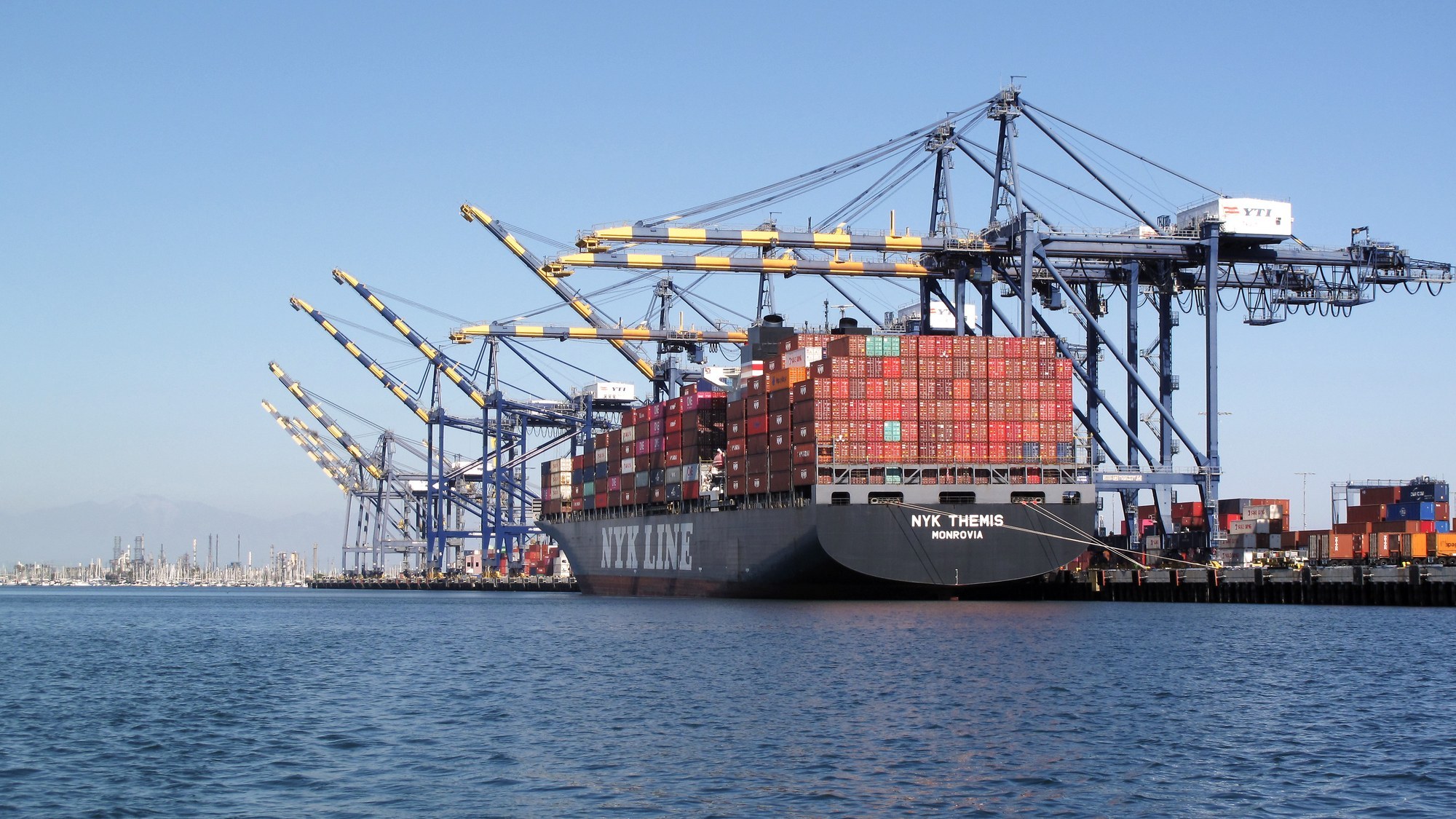
Customs and Border Protection is working through more than 53 million import entry summaries to strip out tariffs that the Supreme Court ruled unlawful in February. The agency puts the affected duties at an estimated $166 billion. The refunds run through a court-ordered process that began in the spring and is still being built out, and they flow to importers of record rather than to shoppers.
The Supreme Court ruling in Learning Resources v. Trump
A CBP notice published in the Federal Register on July 8, 2026 lays out the legal basis. In its words, “On February 20, 2026, the U.S. Supreme Court ruled in Learning Resources, Inc. v. Trump that all tariffs imposed by the President under the International Emergency Economic Powers Act (IEEPA) … since February 3, 2025, were unlawful.” The notice, filed as an information collection extension, is the agency’s own description of how it intends to unwind those duties, and it is the controlling record for the entry count and the dollar estimate cited here.
The ruling reaches only tariffs imposed under that emergency-powers statute. Duties collected under other trade authorities are not part of the refund process the notice describes. The notice dates the unlawful tariffs to February 3, 2025, which means the affected window runs for roughly a year before the Court spoke.
How Court of International Trade orders turned into reliquidation
The mechanism is a court order, not a new rulemaking. According to the notice, the Court of International Trade directed CBP on March 4, 2026, in Atmus Filtration, Inc. v. United States, to liquidate entries “without regard to the IEEPA duties” and to reliquidate those already liquidated on the same basis. Later amendments to the orders also apply.
Liquidation is the point at which CBP finalizes the duties owed on an import. Reliquidating means reopening that final calculation and redoing it without the struck-down tariff, so that the difference can be returned. At the scale described in the notice, with more than 53 million entry summaries, the work is largely a data-processing exercise, which is why the agency built a bulk submission route instead of handling entries one at a time.
The CAPE tool and the 330,000 respondents
Under the process in the notice, an importer of record, or its customs broker, submits a comma-separated values file to a tool called CAPE through the ACE Portal, CBP’s Automated Commercial Environment. The agency estimates 330,000 respondents will use the file-submission step. Seth D. Renkema, Branch Chief of CBP’s Economic Impact Analysis Branch, is the contact named in the notice, at 202-325-0056.
The notice does not describe any step for consumers. A household that paid more at the register because a retailer passed along tariff costs is not an importer of record and has no claim through this process. The refunds go to the companies that paid the duties at the border, and whether any of that money reaches customers depends on the businesses involved, not on anything in the CBP record.
What the Congressional Budget Office counts
The Congressional Budget Office has independently confirmed the size of the reversal. In a publication dated August 20, 2026, the agency records that “on February 20, 2026, the Supreme Court ruled that the Administration could not impose tariffs under IEEPA authority,” and it puts the IEEPA revenue refunded in fiscal year 2026 at $166 billion. That figure matches the one CBP uses in its notice, though the two agencies are describing the same total from different angles: CBP as an estimate across entry summaries awaiting processing, CBO as revenue the Treasury has refunded within the fiscal year.
The federal ledger already shows the effect. CBO’s monthly budget review, published September 9, 2026, reports that customs collections “were larger earlier in the year but have fallen since May, when the Administration began issuing refunds.” Customs duties for fiscal 2026 to date stood at $167 billion in that review.
What the record leaves open
The Federal Register notice is an information collection extension, which means its main purpose is to describe the paperwork burden of the refund process rather than to announce payment dates. That framing explains why it counts respondents and file submissions but says little about when any single importer will be paid.
Several pieces of the story sit outside the documents above. CBP’s own pages on the IEEPA refund process could not be read during the preparation of this article, so the timetable for individual payments rests on the Federal Register notice and the CBO reports. The notice does not set a claim deadline for importers, and no end date for the reliquidation work appears in it.
What the sources do establish is the size and direction of the correction. A tariff regime estimated at $166 billion is being reversed entry by entry under court supervision, and CBO’s September review shows the cash already moving back out of the Treasury. The Federal Register notice from CBP, with its 53 million entry summaries and its $166 billion estimate, remains the primary record against which every later figure will be measured.
Organizing Property Tax and Home-Cost Relief Applications
Homeowners and renters who face a property-tax bill or rising utility and repair costs often do not know which relief programs exist or which deadlines apply to them.
The Senior Property Tax & Home-Cost Relief Kit is an 11-page kit that lays out the 5 kinds of property-tax relief and includes an application log and renewal calendar for tracking each filing.
Open the kit to map out property-tax relief programs and renewal dates →
This article was drafted with AI assistance from the cited official sources and checked against them before publication.