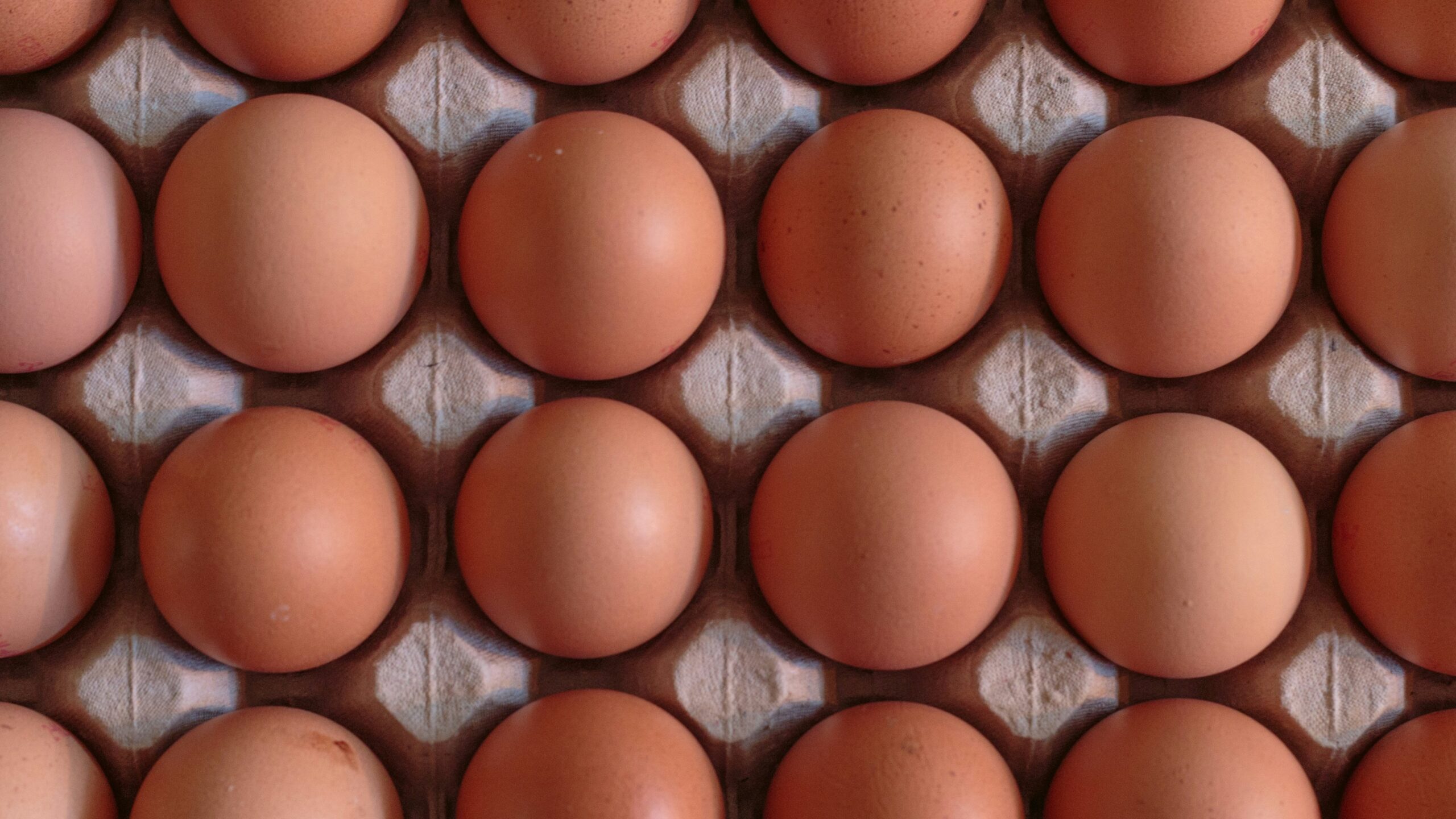
Grocery shoppers have caught an unusual break this year at the egg case. After a bird-flu-driven shortage sent a dozen eggs to record highs and kept prices climbing through 2025, government price data now shows a sharp reversal: eggs were selling for roughly $2.14 in the most recent readings, down about 30 percent from where prices stood a year earlier. It is one of the few grocery categories moving in a retiree’s favor this year.
What the Government’s Own Price Data Shows
The Bureau of Labor Statistics’ average-price series puts a dozen Grade A eggs at $2.141 in June 2026 and $2.189 in July 2026, the most recent month on record, with the next update due September 11. That is down from $2.348 in March and further still from the elevated prices of 2025, when supply shortages pushed the item into territory usually reserved for specialty groceries. The decline shows up in year-over-year terms too: retail egg prices were 25.7 percent lower in July 2026 than in July 2025, according to the U.S. Department of Agriculture’s Economic Research Service, which tracks the same government price data by category.
Free retirement updates: A quiet rule change can shrink your Social Security or Medicare check, and no one warns you. The free Retirement Shield newsletter catches these early and tells you what to do. Get it free.
Why Egg Prices Reversed So Sharply
The swing traces back to an outbreak of highly pathogenic avian influenza that began in 2022 and repeatedly thinned the nation’s egg-laying flocks, according to the USDA’s Food Price Outlook. Retail egg prices rose 32.2 percent in 2022 alone, then kept climbing in slower steps — up 1.4 percent in 2023, 8.5 percent in 2024 and 21.9 percent in 2025 — as the virus kept cutting into supply even as farmers rebuilt their flocks. This year has broken that pattern: USDA recorded fewer new bird-flu detections in the first quarter of 2026 than in the same period of 2025, and the supply of replacement pullets has been large enough to cover both normal flock turnover and unpredictable losses from the virus. With production recovering faster than demand, the agency now forecasts a 30.8 percent drop in egg prices for all of 2026 compared with 2025, with a range of 25.3 percent to 35.3 percent depending on how the rest of the year plays out.
A Break in One Aisle, Not the Whole Cart
The relief is real but narrow. Egg prices fell 0.4 percent from June to July even as the broader grocery bill kept climbing: the Consumer Price Index’s food-at-home category, which covers everything bought at a grocery store or supermarket, was still up 2.7 percent over the 12 months ending in July 2026. Even the narrower “meats, poultry, fish, and eggs” grouping that includes eggs was up 1.9 percent over the same span, because other proteins in that basket are moving the opposite direction — beef and veal prices alone were 9.4 percent higher in July 2026 than a year earlier, and USDA is forecasting a 9.8 percent increase for beef across all of 2026 as tight cattle supplies keep wholesale prices elevated. For a household on a fixed income, that means the egg carton is cheaper, but it is offsetting rather than eliminating pressure from the rest of the cart.
The two commodities are recovering on entirely different timelines because of basic biology. A laying flock can be rebuilt within roughly a year of a supply shock, which is one reason USDA’s replacement-pullet data already show egg supply catching up with demand. Cattle herds do not work that way. A Federal Reserve Bank of Kansas City analysis published in August 2026 found that cow-calf operations have historically waited about a year after cattle prices turn favorable relative to feed costs before expanding their herds, and that overall cattle inventories do not start growing until roughly two to three years after ranchers begin retaining heifers for breeding instead of selling them for slaughter. Beef consumption in 2026 is running about 8 percent above its 20-year average even as domestic production is projected to fall short of that average, a gap the Kansas City Fed’s research says imports have not been cheap enough to close. That is why the egg aisle can snap back within a single year while the meat case stays expensive for years at a stretch.
Whether the Price Relief Holds Into 2027
The current stretch of cheaper eggs is not guaranteed to continue. USDA’s Animal and Plant Health Inspection Service has confirmed 24 outbreaks of highly pathogenic avian influenza in commercial egg-laying flocks so far in 2026, resulting in the loss of 15.2 million birds across five states — Colorado, Indiana, North Carolina, Pennsylvania and Wisconsin — according to USDA data reported by High Plains Journal. That is a far smaller toll than the tens of millions of birds lost in prior years, which is part of why supply has recovered enough to push prices down, but the virus has not been eliminated, and a single detection on a large egg operation can still remove millions of hens from production at once. USDA’s own longer-range outlook adds a second caution: in the department’s most recent World Agricultural Supply and Demand Estimates, egg production is projected to keep climbing, from 9,120 million dozen in 2026 to 9,330 million dozen in 2027, yet the department’s farm-level egg price forecast — a different measurement than the retail figures cited above, but one tracking the same underlying market — is projected to rise, not fall, to 110 cents a dozen in 2027 from 97.6 cents in 2026. Read together, the two forecasts suggest this year’s relief reflects a temporary gap between fast-recovering supply and steady demand, one USDA itself expects to start narrowing again next year.
This article was produced with the assistance of AI and reviewed by The Financial Wire editorial team.
More Financial Reading
- The ideal retirement withdrawal rate so your savings actually last
- Adding someone to your bank account: tax traps and smart moves