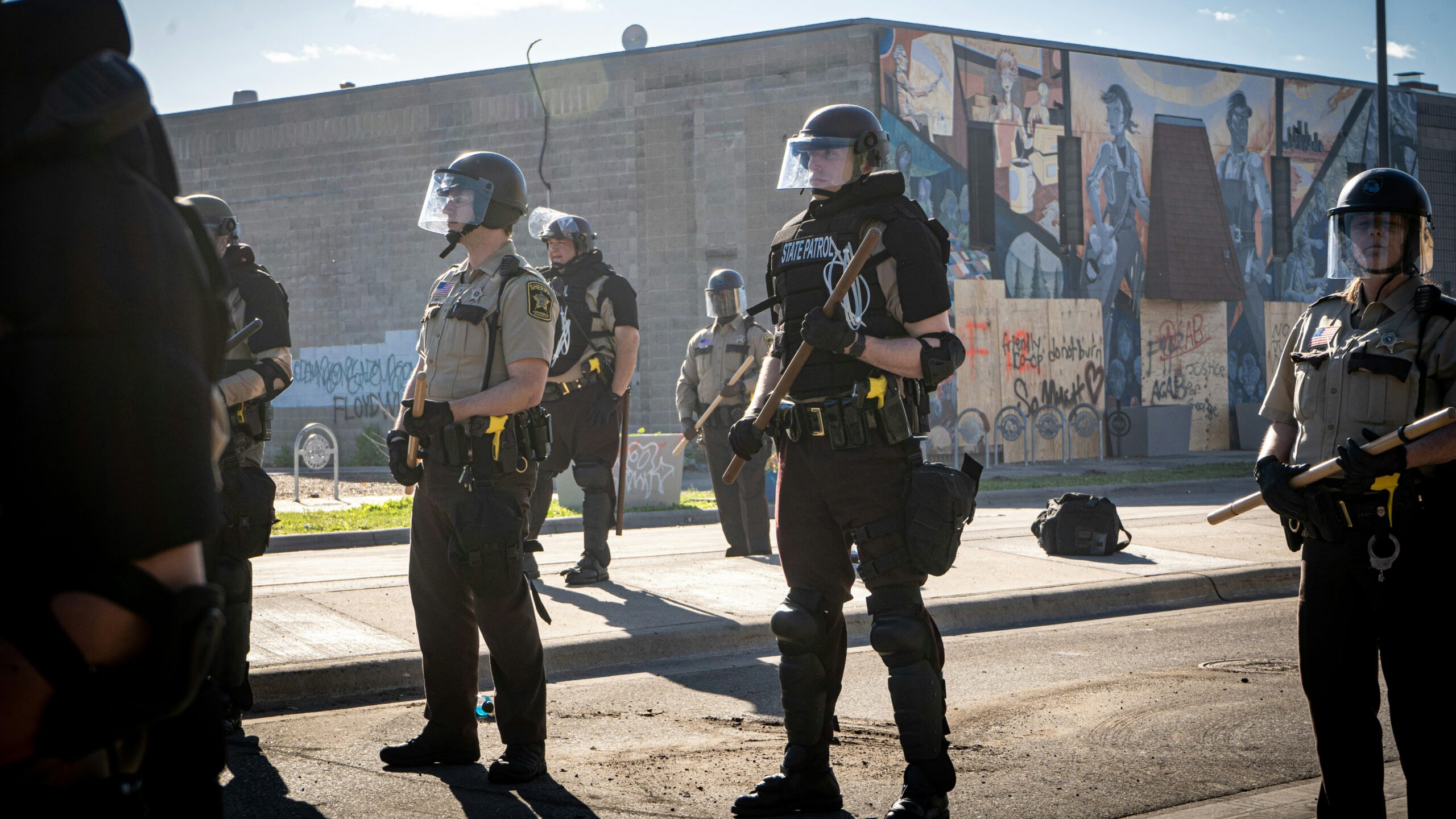
Federal agents knocked on doors across Minnesota in late April 2026, executing search warrants at five locations linked to providers accused of billing Medicaid millions for children’s therapy and disability services that were never properly delivered. For families who rely on those programs, the raids were the first visible sign that a sprawling fraud investigation had moved from paperwork to action. Neighbors near one targeted site in the Twin Cities described a morning of unmarked vehicles and agents carrying boxes of records, a scene that underscored the seriousness of the federal effort.
The U.S. Attorney’s Office for the District of Minnesota announced charges against six additional defendants and disclosed that a seventh had already pleaded guilty. According to the DOJ press release, the defendants named in the latest round of charges are Abdulkadir Nur Jama, Abdirizak Jama Aden, Sagal Mohamed Jama, Hamdi Abdi Omar, Abdirahman Mohamud Ahmed, and Fadumo Yusuf Aden. The defendant who pleaded guilty was identified as Ikran Abdi Omar. Prosecutors allege the group submitted fraudulent Medicaid claims for services staffed by unqualified workers across three state-funded programs: Early Intensive Developmental and Behavioral Intervention (EIDBI) services, Housing Stabilization Services, and Integrated Community Services.
The charges represent a sharp escalation. With seven defendants now facing federal prosecution and parallel state enforcement underway, authorities are signaling they believe the problem extends well beyond a single provider.
What prosecutors allege
EIDBI sits at the center of the case. The state-licensed program funds behavioral health therapy for children with autism and developmental disabilities up to age 21. EIDBI serves thousands of Minnesota children each year, and the program’s annual Medicaid expenditures run into the hundreds of millions of dollars, making it both a critical lifeline for families and a large target for fraud. Minnesota’s Department of Human Services requires providers to meet strict credentialing standards, including specific staff qualifications and clinical supervision protocols, before they can bill Medicaid.
According to federal charging documents, some providers claimed to meet those standards while deploying workers who lacked the required credentials. Prosecutors say supervisory signatures and treatment plans were fabricated to create the appearance of clinical oversight that did not exist. The result, the government alleges, was a stream of Medicaid reimbursements backed by fictitious paperwork.
The investigation reaches beyond children’s therapy. Federal filings describe defendants enrolling overlapping clients in Housing Stabilization Services and Integrated Community Services, programs designed to help people with disabilities maintain stable housing and participate in community life. Prosecutors allege the claims submitted for those programs did not reflect the type, duration, or intensity of support actually provided, and that the pattern was deliberate rather than the product of isolated billing errors.
The exact dollar amount allegedly stolen has not been broken down publicly by program, provider, or time period. The identities of the five raided locations have not been disclosed in federal filings reviewed for this report as of May 2026.
State enforcement moves in parallel
Minnesota’s Medicaid Fraud Control Unit executed its own search warrants as part of the same investigative push. At the state level, lawmakers have responded with proposed legislation aimed at closing the oversight gaps that allegedly allowed the fraud to persist.
House File 2354, introduced in the Minnesota Legislature, would enhance data analytics for detecting suspicious billing patterns, tighten provider qualification checks, and give the state faster authority to suspend payments when fraud is suspected. The bill’s progress through committee has not been publicly reported as of May 2026.
The convergence of federal charges and state legislative action reflects a shared recognition that existing safeguards failed to catch alleged schemes operating across multiple service lines simultaneously.
A state still reckoning with earlier scandals
Minnesota has confronted this kind of failure before. The Feeding Our Future case, covered extensively by the Associated Press, resulted in federal charges alleging more than $250 million in fraud through a pandemic-era child nutrition program. Trials in that case produced multiple convictions in 2024 and 2025, confirming substantial portions of the alleged fraud. Separate audits flagged widespread problems in the state’s child care assistance program. Together, those cases exposed deep structural weaknesses in how Minnesota screens providers and monitors claims in programs serving vulnerable populations.
Prosecutors have not drawn a direct connection between the current defendants and those earlier scandals. But the pattern of alleged fraud migrating from one benefit program to another raises a pointed question: whether the same oversight failures that enabled Feeding Our Future went unaddressed long enough for bad actors to exploit disability services.
Procedural road ahead and what families face
For the thousands of Minnesota families who depend on EIDBI and related programs, the investigation creates immediate uncertainty. Children receiving behavioral therapy through providers now under scrutiny could face disruptions in care. A parent navigating the EIDBI system might learn with little warning that a child’s provider is suspended, forcing a scramble to find a new clinician willing to take on a complex case. The Department of Human Services has not publicly detailed how it plans to ensure continuity of services for those families.
None of the raided providers or newly charged defendants have released public statements. Procedurally, the six newly charged defendants face initial appearances and arraignments in U.S. District Court for the District of Minnesota; as of May 2026, specific arraignment dates have not been publicly scheduled. Whether any of the six plan to contest the charges, negotiate plea deals, or cooperate with prosecutors remains unknown. The terms of Ikran Abdi Omar’s guilty plea, including whether it involves a cooperation agreement, have not been disclosed. Defense filings that might offer alternative explanations, such as disputes over credentialing interpretations or documentation errors tied to evolving program rules, have not yet appeared in court records. Federal fraud cases of this complexity typically take months or longer to reach trial, meaning definitive outcomes may not arrive until well after May 2026.
Legitimate providers, meanwhile, face the prospect of intensified audits and payment holds as investigators work to separate intentional fraud from routine billing mistakes. For an industry already stretched thin, the added scrutiny could slow reimbursements and complicate hiring at a time when qualified behavioral health workers are in short supply.
The most consequential answers will come from the courtroom: which allegations survive, which fall apart, and what systemic reforms prosecutors and judges demand as conditions of any sentences or settlements. The raids and new charges make one thing clear. Federal and state authorities believe the problem is far larger than any single provider, and they are treating it that way.