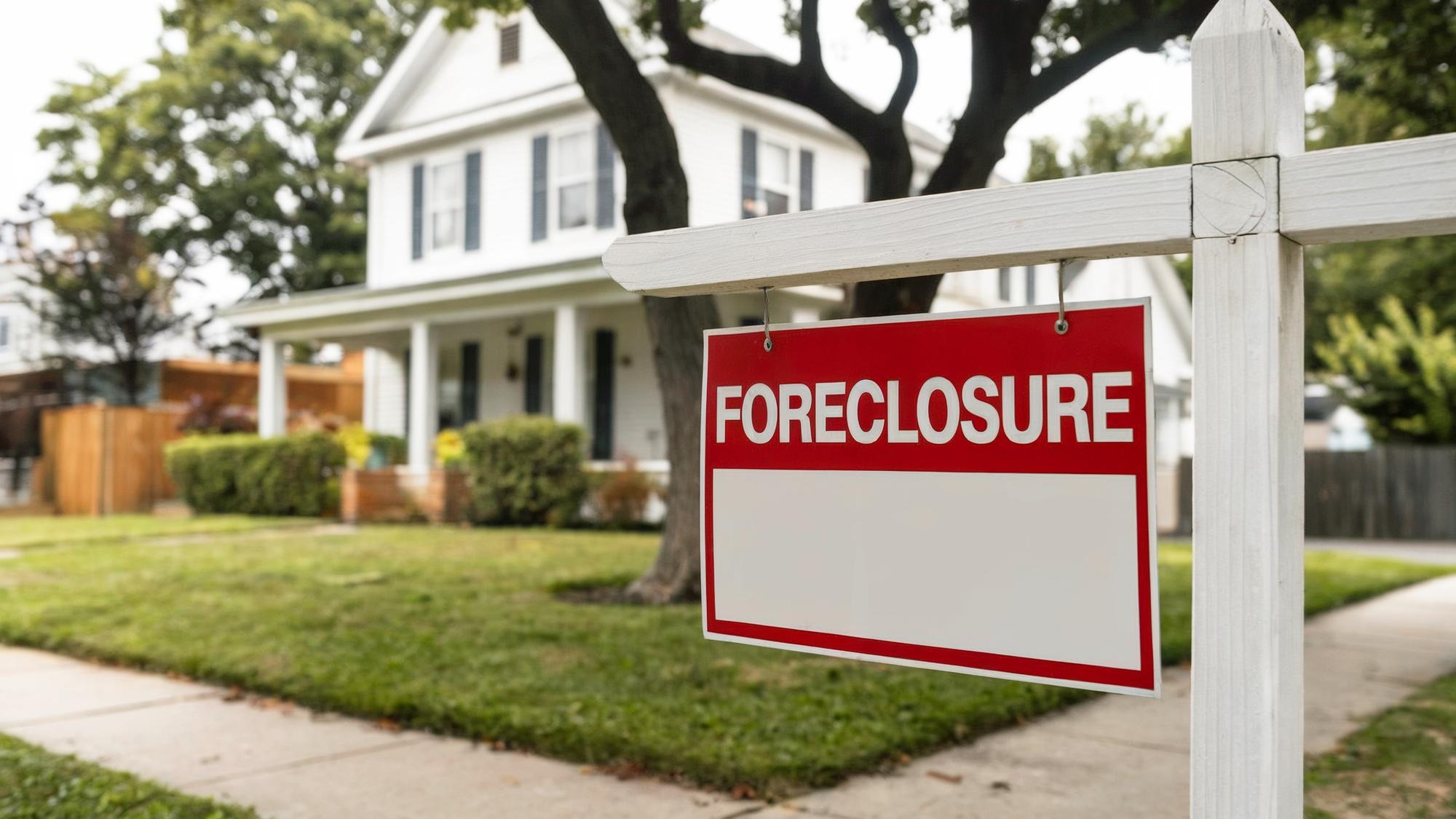
Lenders filed foreclosure notices on 118,727 U.S. properties during the first quarter of 2026, according to ATTOM’s Q1 2026 Foreclosure Market Report. That is a 26% jump from the same period last year and a 6% increase over the final quarter of 2025, marking the highest quarterly total since pandemic-era protections started expiring. The numbers have, predictably, set off alarm bells.
Here is the part that should quiet them: during the third quarter of 2009, the worst stretch of the Great Recession, ATTOM recorded more than 937,000 foreclosure filings in a single quarter. The current figure is roughly one-eighth of that peak. The housing market is absorbing more stress than it was 12 months ago, but comparing this moment to 2009 is like comparing a sprained ankle to a compound fracture.
Why filings are climbing now
ATTOM tracks three stages of the foreclosure pipeline: default notices, scheduled auctions, and completed bank repossessions. The firm counts only the most recent filing per property in a given quarter, which prevents double-counting and makes the totals conservative. ATTOM itself described the Q1 trend as the market “continuing to normalize” after years of artificially suppressed activity.
The most straightforward explanation is the long tail of pandemic relief. Between 2020 and 2023, federal forbearance programs and eviction moratoriums kept millions of struggling borrowers out of the foreclosure pipeline entirely. As those protections expired, mortgage servicers began working through a backlog of delinquent loans. Many borrowers who exited forbearance successfully modified their mortgages or caught up on payments. A portion did not, and their cases are now reaching the filing stage.
Elevated mortgage rates are compounding the pressure. With 30-year fixed rates running in the high-6% to low-7% range through much of 2025 and into 2026, according to Freddie Mac’s Primary Mortgage Market Survey, homeowners who might have refinanced into lower payments in a different rate environment have fewer escape routes. Borrowers who purchased near the top of the market with thin down payments or adjustable-rate products face the tightest squeeze.
How 2026 compares to the Great Recession
The gap between today’s numbers and the crisis peak is not just large. It reflects a fundamentally different housing market, and federal data backs that up from several angles.
The Office of the Comptroller of the Currency’s Mortgage Metrics Report for Q2 2009 documented hundreds of thousands of foreclosures in process at federally regulated banks during that single quarter. The Federal Housing Finance Agency’s crisis-era reporting on Fannie Mae and Freddie Mac loans showed millions of borrowers in some stage of distress between late 2009 and early 2010. Set against that backdrop, 118,727 filings spread across the entire country is a fraction of what the system was absorbing sixteen years ago.
The Federal Reserve’s delinquency-rate series for single-family residential mortgages at commercial banks tells a consistent story. During 2009 and into early 2010, that measure spiked above 11%. As of Q4 2025, the most recent reading available in the FRED series, the rate stood at roughly 1.8%. Delinquencies have ticked up from the historic lows reached during peak pandemic relief, but they remain a world apart from the double-digit territory that defined the last crisis.
The biggest structural difference may be homeowner equity. During the 2008 collapse, millions of borrowers owed more than their homes were worth, which meant foreclosure was often the only exit. In 2026, years of sustained home-price appreciation have left most owners sitting on substantial equity cushions. A homeowner who falls behind on payments today is far more likely to sell the property and walk away with cash than to lose it to the bank. That dynamic acts as a pressure valve that simply did not exist in 2009.
What the data does not tell us
The ATTOM report confirms the size of the increase but does not isolate the forces behind it. As of late May 2026, no major federal housing or banking regulator has published analysis attributing the Q1 rise to a single cause. Whether the filings are concentrated among post-forbearance borrowers, recent buyers stretched by high rates, or some combination remains an open question.
Geography is another gap. The 2009 crisis hit certain states far harder than others; Nevada, Florida, Arizona, and parts of California absorbed outsized damage. ATTOM publishes state-level breakdowns, but the Q1 2026 report does not identify which specific states or metros are driving the sharpest increases in the current cycle. A comprehensive, neighborhood-level picture comparable to what HUD assembled during the crisis has not been produced for this period, so it remains unclear whether today’s filings follow the old geographic pattern or are more evenly distributed.
Current economic conditions add another layer of uncertainty. As of mid-2026, the labor market has shown signs of cooling but has not deteriorated sharply, according to the Bureau of Labor Statistics’ most recent monthly reports. Whether that relative stability holds will matter: a 26% year-over-year increase in filings could flatten if the forbearance backlog clears and employment stays firm, accelerate if job losses mount, or reverse if mortgage rates decline enough to reopen refinancing options. Without updated guidance from the OCC, FHFA, or Federal Reserve tying current foreclosure activity to a specific economic scenario, any forecast should be treated with caution.
What at-risk homeowners should do before a default notice arrives
For borrowers who are current on their mortgages, this data is not a call to panic. Foreclosure filings are rising from an unusually low baseline, and the structural supports underneath the housing market, particularly homeowner equity and the tighter lending standards put in place after the last crisis, are far stronger than they were heading into 2008.
For homeowners who are already behind on payments or worried about falling behind, the window to act is before a default notice arrives, not after. The Department of Housing and Urban Development funds a national network of HUD-approved housing counselors who can walk borrowers through loss-mitigation options at no cost. Servicers are required under federal guidelines to evaluate struggling borrowers for loan modifications, repayment plans, and other alternatives before moving to foreclosure.
Foreclosure activity is returning toward pre-pandemic norms after years of suppression. The percentage increase is real and worth watching, but the absolute numbers remain modest by any historical measure. The single most important thing any at-risk homeowner can do is pick up the phone and ask for help while options are still on the table.