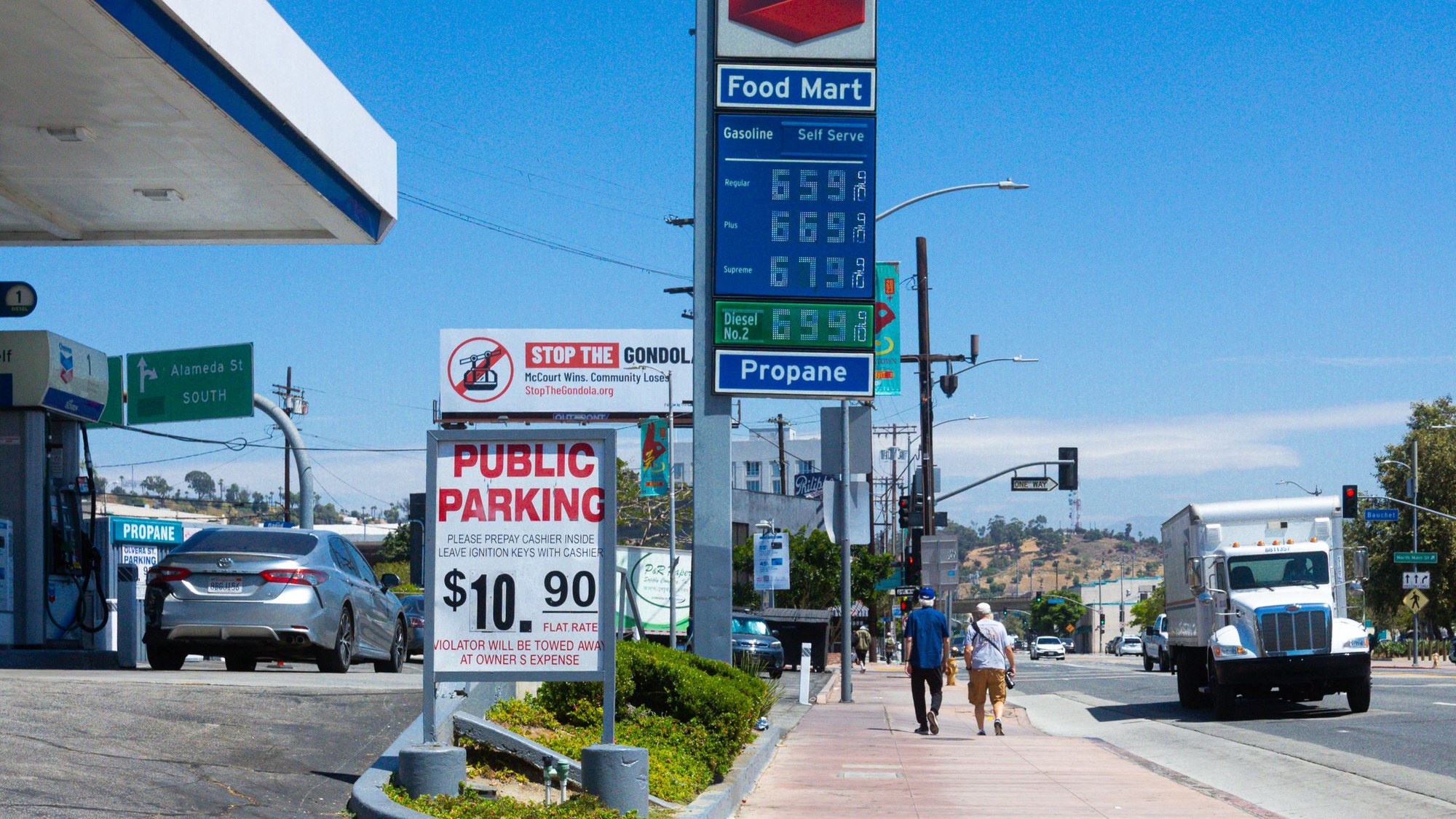
Gasoline averaged $4.18 a gallon on Halloween, with AAA’s daily survey putting regular unleaded at $4.1837 on Oct. 31. That is down from $4.30 a week earlier ($4.2957) and up from $3.04 a year ago ($3.0403). The one-week dip was about 11 cents, while the one-year climb was about $1.14.
The three comparisons point in different directions, and which one a driver leans on changes how the month feels. A trick-or-treat run that cost less than last Saturday still costs far more than the same errand did in October 2025. The gap between the two is the number that matters for a monthly budget.
On a 15-gallon fill-up, the week-ago drop saves about $1.70, and the year-ago jump costs about $17.15 more. Anyone who fills up twice a week is working with a bigger change than the headline dip suggests.
Stay ahead of government payment news: Miss an enrollment or claim deadline and the money can be gone. Join the Retirement Money Brief and we’ll send you our 2026 Government Check Reality Tracker as a welcome gift.
Get the Brief + the check tracker →
We may earn a commission from links on this page.
Day, week, month, year: four yardsticks, four stories
Day to day, the slide was gentle: Oct. 31 came in 2 cents under Oct. 30. AAA’s page lists four reference points for the national average of regular: $4.2046 the day before, $4.2957 a week ago, $4.4343 a month ago and $3.0403 a year ago. Measured against a month ago, Oct. 31 is about 25 cents cheaper. Measured against a year ago, it is $1.14 dearer.
A falling short-term trend and a high long-term level can both be true, and here they are. AAA’s page carried the headline “Gas Prices Dip Before Halloween,” but a dip of this size leaves the price well above where it stood in the fall of 2025.
About 83 cents under the record
AAA lists the record for regular at $5.0165, set on June 14, 2022. Oct. 31’s $4.1837 sits about 83 cents below that mark. Diesel is closer to its own ceiling: AAA put the national average at $6.3101 on Oct. 31, against a record of $6.5276 set on Sept. 22, 2026.
Mid-grade averaged $4.7028 and premium $5.0968 on the same day, according to the AAA survey. Drivers whose cars call for higher grades are paying 52 cents to 91 cents more per gallon than the regular figure.
Why did the price slip, and will it last?
AAA’s Oct. 29 weekly release, which showed regular down 5 cents on the week to $4.22, did not name a cause for the decline. It said crude above $100 a barrel is limiting further drops at the pump. Aixa Diaz, AAA’s media relations manager, is the release’s listed contact.
The Energy Information Administration’s weekly retail survey showed the same direction on a different clock: U.S. regular at $4.269 on Oct. 26, down 1.5 cents from the prior week, with the next release due Nov. 3. EIA’s October outlook expects Brent crude to average $105 a barrel in the fourth quarter, $14 above its September forecast, and assumes Middle East oil flows stay constrained through year-end.
Does the price depend heavily on the state?
Yes. Among the ten states AAA’s page lists, Hawaii was highest at $5.6646 and Delaware lowest at $3.9530, a spread of $1.71 a gallon. Maryland ($3.9957), Rhode Island ($4.1106) and New Jersey ($4.1293) all sat below the national figure. Vermont ($4.3213) and the District of Columbia ($4.2824) sat above it.
EIA’s regional table tells a similar story for the week ending Oct. 26. The Gulf Coast was cheapest at $3.702 a gallon and the West Coast highest at $5.417, with California at $5.888. The Midwest bucked the national trend, rising 12.4 cents on the week to $4.269, while Ohio climbed 33.1 cents to $4.380. A national dip does not mean every station is cheaper.
The page shows only those ten states plus the nationwide figure, so readers elsewhere need their own state’s page on the AAA site to see local averages.
Is your fuel cushion earning anything while you wait for gas to ease?
A one-week dip of 11 cents does not undo a $1.14 year-over-year jump, and a household that drives daily feels the higher level every time it fills up. Cash held in an account that pays almost nothing loses ground when that gap shows up in the monthly budget.
“Make Your Savings Pay You” is an 11-page guide that covers high-yield savings for the cushion you might need this year and Treasury bills from $100, free of state and local income tax. Its cash map worksheet shows what your cash earns now, found on your statement in five minutes.
Get the savings guide and cash map worksheet for your fuel cushion →
This article was produced with AI assistance and edited for accuracy against the sources linked above.