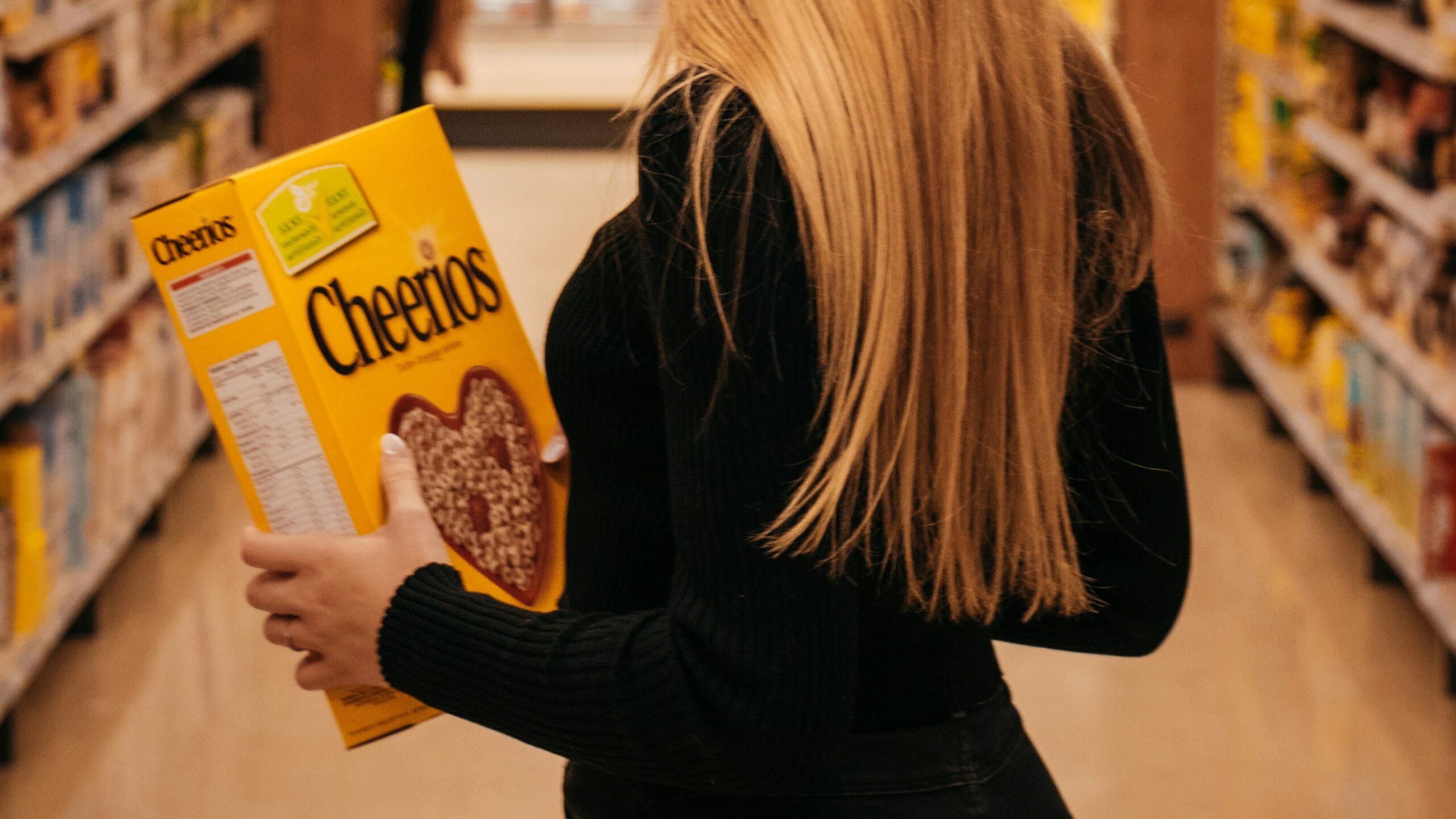
General Mills, the company behind Cheerios, Pillsbury, and dozens of other grocery staples, lowered its profit outlook after reporting fiscal 2026 third-quarter results for the period ended Feb. 22, 2026. The revision came as shoppers increasingly traded down to cheaper alternatives and relied more heavily on coupons, forcing the company to ramp up promotional spending. The shift signals that even large packaged-food makers with strong brand recognition are struggling to hold pricing power as consumer budgets tighten.
Promotional pressure forces a profit reset at General Mills
The timing of this outlook cut carries weight. Just three months earlier, General Mills had reaffirmed its full-year guidance alongside its second-quarter update, projecting confidence in its ability to manage costs and sustain margins. That reaffirmation now looks premature. Between the second and third quarters, the gap between what management expected and what shoppers actually did widened enough to force a downward revision.
The core problem is straightforward: households are spending more carefully on groceries. Rather than reaching for name-brand cereals, snacks, and baking products at full price, they are scanning for deals, clipping coupons, and switching to store brands. For General Mills, that behavior translates directly into thinner margins. Every coupon redeemed and every promotional discount offered eats into profit, even when unit volume holds steady or rises slightly.
This dynamic raises a pointed question about fiscal 2027. If the company cannot pull back on promotions without losing volume, organic sales growth will remain under pressure. Pricing power, the ability to raise shelf prices without losing customers, has been the primary margin engine for packaged-food companies since the inflationary wave that began several years ago. When that engine stalls, companies must either cut costs elsewhere or accept lower profitability. General Mills appears to be confronting that tradeoff now.
Promotional intensity also has strategic implications. Heavy discounting can train shoppers to wait for deals, undermining the very brand equity that once justified premium pricing. At the same time, pulling back too quickly risks ceding shelf space and category share to private labels that are already priced lower. Navigating that balance will be central to how General Mills approaches the next several quarters.
SEC filing and prior guidance tell a split story
General Mills disclosed the third-quarter results and revised outlook through a regulatory filing with the Securities and Exchange Commission. The document covers the reporting period ended Feb. 22, 2026, and represents the company’s official, regulated disclosure to investors. It outlines both the quarter’s financial performance and the updated expectations for the remainder of the fiscal year.
The contrast with the prior quarter’s message is sharp. In December, the company used its second-quarter earnings communication to reaffirm the same full-year outlook it had set at the start of fiscal 2026. At that point, management signaled that its brands were holding up and that cost controls were working. The third-quarter filing tells a different story, one shaped by accelerating trade-down behavior and the promotional spending required to defend market share against private-label competitors.
This two-quarter arc matters for investors and grocery industry watchers alike. A single quarter of weak results can be dismissed as noise. But a company that reaffirms guidance and then cuts it within one reporting cycle is acknowledging that conditions changed faster than expected, or that earlier confidence was misplaced. Either reading suggests the competitive environment for branded food makers is more challenging than it appeared at the end of 2025.
The updated outlook also serves as a reality check on how far cost savings can go in offsetting weaker pricing power. General Mills, like many peers, has spent years streamlining operations, simplifying product lines, and pushing for efficiencies in manufacturing and logistics. Those efforts helped cushion the blow of higher input costs and supported earnings growth even as volumes softened. The latest guidance cut implies that efficiency gains alone are no longer enough to fully counteract the impact of stepped-up promotions.
What the reset means for investors and the grocery aisle
For shareholders, the near-term consequence is a lower earnings trajectory and potentially more volatile results as management tests how much promotional support is necessary to keep shoppers loyal. The company’s next few quarters will likely focus on fine-tuning that balance, with particular attention to categories where private-label competition is strongest and brand differentiation is weakest.
For consumers, the pressure on General Mills may translate into more frequent deals on familiar products, at least in the short run. Deeper discounts and more aggressive couponing can provide some relief to households facing tight budgets. Over the longer term, however, sustained margin compression could prompt companies to trim underperforming lines, reduce package sizes, or push through selective price increases once they believe the market can bear them.
Ultimately, the third-quarter reset underscores how sensitive even dominant food brands have become to shifts in shopper behavior. As consumers scrutinize every dollar at the grocery store, the balance of power between branded manufacturers and retailers is subtly tilting. General Mills’ revised outlook is one of the clearest signs yet that the era of easy pricing gains in the packaged-food aisle is giving way to a more promotional, and less predictable, marketplace.